
As the calendar turns to the final days of 2025, the promise of a truly "universal AI assistant" has shifted from the realm of science fiction into the palm of our hands. At the center of this transformation is Project Astra, a sweeping research initiative from Google DeepMind that has fundamentally changed how we interact with technology. No longer confined to text boxes or static voice commands, Astra represents a new era of "agentic AI"—a system that can see, hear, remember, and reason about the physical world in real-time.
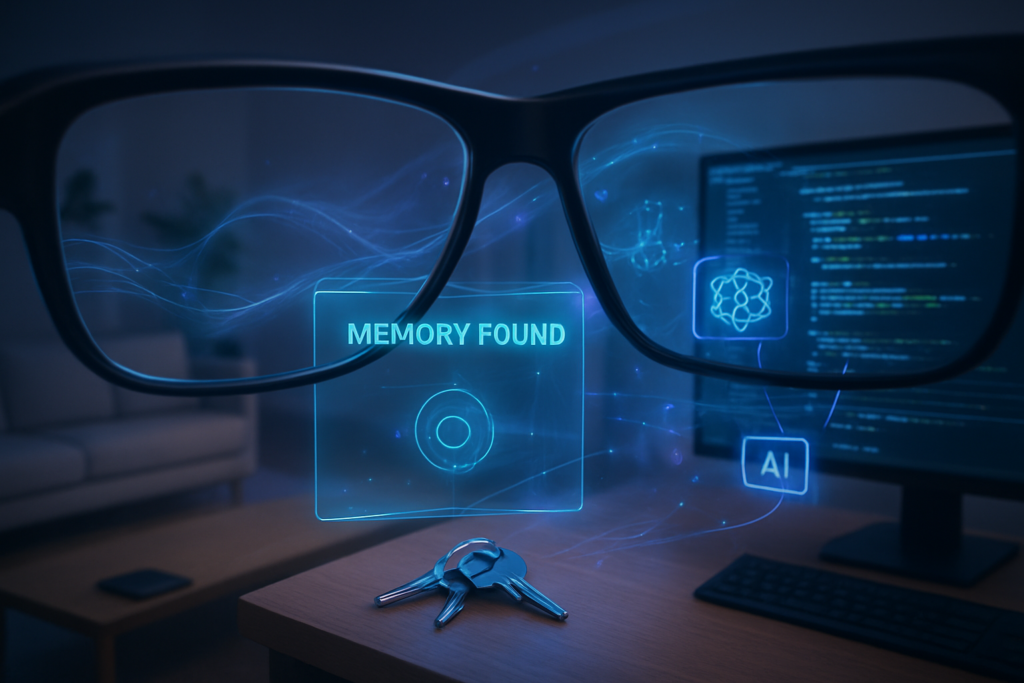
What began as a viral demonstration at Google I/O 2024 has matured into a sophisticated suite of capabilities now integrated across the Google ecosystem. Whether it is helping a developer debug complex system code by simply looking at a monitor, or reminding a forgetful user that their car keys are tucked under a sofa cushion it "saw" twenty minutes ago, Astra is the realization of Alphabet Inc.'s (NASDAQ: GOOGL; NASDAQ: GOOG) vision for a proactive, multimodal companion. Its immediate significance lies in its ability to collapse the latency between human perception and machine intelligence, creating an interface that feels less like a tool and more like a collaborator.
The Architecture of Perception: Gemini 2.5 Pro and Multimodal Memory
At the heart of Project Astra’s 2025 capabilities is the Gemini 2.5 Pro model, a breakthrough in neural architecture that treats video, audio, and text as a single, continuous stream of information. Unlike previous generations of AI that processed data in discrete "chunks" or required separate models for vision and speech, Astra utilizes a native multimodal framework. This allows the assistant to maintain a latency of under 300 milliseconds—fast enough to engage in natural, fluid conversation without the awkward pauses that plagued earlier AI iterations.
Astra’s technical standout is its Contextual Memory Graph. This feature allows the AI to build a persistent spatial and temporal map of its environment. During recent field tests, users demonstrated Astra’s ability to recall visual details from hours prior, such as identifying which shelf a specific book was placed on or recognizing a subtle change in a laboratory experiment. This differs from existing technologies like standard RAG (Retrieval-Augmented Generation) by prioritizing visual "anchors" and spatial reasoning, allowing the AI to understand the "where" and "when" of the physical world.
The industry's reaction to Astra's full rollout has been one of cautious awe. AI researchers have praised Google’s "world model" approach, which enables the assistant to simulate outcomes before suggesting them. For instance, when viewing a complex coding environment, Astra doesn't just read the syntax; it understands the logic flow and can predict how a specific change might impact the broader system. This level of "proactive reasoning" has set a new benchmark for what is expected from large-scale AI models in late 2025.
A New Front in the AI Arms Race: Market Implications
The maturation of Project Astra has sent shockwaves through the tech industry, intensifying the competition between Google, OpenAI, and Microsoft (NASDAQ: MSFT). While OpenAI’s GPT-5 has made strides in complex reasoning, Google’s deep integration with the Android operating system gives Astra a strategic advantage in "ambient computing." By embedding these capabilities into the Samsung (KRX: 005930) Galaxy S25 and S26 series, Google has secured a massive hardware footprint that its rivals struggle to match.
For startups, Astra represents both a platform and a threat. The launch of the Agent Development Kit (ADK) in mid-2025 allowed smaller developers to build specialized "Astra-like" agents for niche industries like healthcare and construction. However, the sheer "all-in-one" nature of Astra threatens to Sherlock many single-purpose AI apps. Why download a separate app for code explanation or object tracking when the system-level assistant can perform those tasks natively? This has forced a strategic pivot among AI startups toward highly specialized, proprietary data applications that Astra cannot easily replicate.
Furthermore, the competitive pressure on Apple Inc. (NASDAQ: AAPL) has never been higher. While Apple Intelligence has focused on on-device privacy and personal context, Project Astra’s cloud-augmented "world knowledge" offers a level of real-time environmental utility that Siri has yet to fully achieve. The battle for the "Universal Assistant" title is now being fought not just on benchmarks, but on whose AI can most effectively navigate the physical realities of a user's daily life.
Beyond the Screen: Privacy and the Broader AI Landscape
Project Astra’s rise fits into a broader 2025 trend toward "embodied AI," where intelligence is no longer tethered to a chat interface. It represents a shift from reactive AI (waiting for a prompt) to proactive AI (anticipating a need). However, this leap forward brings significant societal concerns. An AI that "remembers where you left your keys" is an AI that is constantly recording and analyzing your private spaces. Google has addressed this with "Privacy Sandbox for Vision," which purports to process visual memory locally on-device, but skepticism remains among privacy advocates regarding the long-term storage of such intimate metadata.
Comparatively, Astra is being viewed as the "GPT-3 moment" for vision-based agents. Just as GPT-3 proved that large language models could handle diverse text tasks, Astra has proven that a single model can handle diverse real-world visual and auditory tasks. This milestone marks the end of the "narrow AI" era, where different models were needed for translation, object detection, and speech-to-text. The consolidation of these functions into a single "world model" is perhaps the most significant architectural shift in the industry since the transformer was first introduced.
The Future: Smart Glasses and Project Mariner
Looking ahead to 2026, the next frontier for Project Astra is the move away from the smartphone entirely. Google’s ongoing collaboration with Samsung under the "Project Moohan" codename is expected to bear fruit in the form of Android XR smart glasses. These devices will serve as the native "body" for Astra, providing a heads-up, hands-free experience where the AI can label the world in real-time, translate street signs instantly, and provide step-by-step repair instructions overlaid on physical objects.
Near-term developments also include the full release of Project Mariner, an agentic extension of Astra designed to handle complex web-based tasks. While Astra handles the physical world, Mariner is designed to navigate the digital one—booking multi-leg flights, managing corporate expenses, and conducting deep-dive market research autonomously. The challenge remains in "grounding" these agents to ensure they don't hallucinate actions in the physical world, a hurdle that experts predict will be the primary focus of AI safety research over the next eighteen months.
A New Chapter in Human-Computer Interaction
Project Astra is more than just a software update; it is a fundamental shift in the relationship between humans and machines. By successfully combining real-time multimodal understanding with long-term memory and proactive reasoning, Google has delivered a prototype for the future of computing. The ability to "look and talk" to an assistant as if it were a human companion marks the beginning of the end for the traditional graphical user interface.
As we move into 2026, the significance of Astra in AI history will likely be measured by how quickly it becomes invisible. When an AI can seamlessly assist with code, chores, and memory without being asked, it ceases to be a "tool" and becomes part of the user's cognitive environment. The coming months will be critical as Google rolls out these features to more regions and hardware, testing whether the world is ready for an AI that never forgets and always watches.
This content is intended for informational purposes only and represents analysis of current AI developments.
TokenRing AI delivers enterprise-grade solutions for multi-agent AI workflow orchestration, AI-powered development tools, and seamless remote collaboration platforms.
For more information, visit https://www.tokenring.ai/.