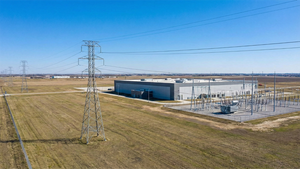


As the global demand for artificial intelligence reaches a fever pitch, the semiconductor industry is facing an existential reckoning: how to produce the world’s most advanced chips without exhausting the planet’s resources. In a landmark shift for 2025, the industry’s two most critical growth hubs—Texas and Gujarat, India—have become the front lines for a new era of "Green Fabs." These multi-billion dollar manufacturing sites are no longer just about transistor density; they are being engineered as self-sustaining ecosystems powered by massive solar and wind arrays to mitigate the staggering environmental costs of AI hardware production.
The immediate significance of this transition cannot be overstated. With the International Energy Agency (IEA) warning that data center electricity consumption could double to nearly 1,000 TWh by 2030, the "embodied carbon" of the chips themselves has become a primary concern for tech giants. By integrating renewable energy directly into the fabrication process, companies like Samsung Electronics (KRX: 005930), Texas Instruments (NASDAQ: TXN), and the Tata Group are attempting to decouple the explosive growth of AI from its carbon footprint, effectively rebranding silicon as a "low-carbon" commodity.
Technical Foundations: The Rise of the Sustainable Mega-Fab
The technical complexity of a modern semiconductor fab is unparalleled, requiring millions of gallons of ultrapure water (UPW) and gigawatts of electricity to operate. In Texas, Samsung’s Taylor facility—a $40 billion investment—is setting a new benchmark for resource efficiency. The site, which began installing equipment for 2nm chip production in late 2024, utilizes a "closed-loop" water system designed to reclaim and reuse up to 75% of process water. This is a critical advancement over legacy fabs, which often discharged millions of gallons of wastewater daily. Furthermore, Samsung has leveraged its participation in the RE100 initiative to secure 100% renewable electricity for its U.S. operations through massive Power Purchase Agreements (PPAs) with Texas wind and solar providers.
Across the globe in Gujarat, India, Tata Electronics has broken ground on the country’s first "Mega Fab" in the Dholera Special Investment Region. This facility is uniquely positioned within one of the world’s largest renewable energy zones, drawing power from the Dholera Solar Park. In partnership with Powerchip Semiconductor Manufacturing Corp (PSMC), Tata is implementing "modularization" in its construction to reduce the carbon footprint of the build-out phase. The technical goal is to achieve near-zero liquid discharge (ZLD) from day one, a necessity in the water-scarce climate of Western India. These "greenfield" projects differ from older "brownfield" upgrades because sustainability is baked into the architectural DNA of the plant, utilizing AI-driven "digital twin" models to optimize energy flow in real-time.
Initial reactions from the industry have been overwhelmingly positive, though tempered by the scale of the challenge. Analysts at TechInsights noted in late 2025 that the shift to High-NA EUV (Extreme Ultraviolet) lithography—while energy-intensive—is actually a "green" win. These machines, produced by ASML (NASDAQ: ASML), allow for single-exposure patterning that eliminates dozens of chemical-heavy processing steps, effectively reducing the energy used per wafer by an estimated 200 kWh.
Strategic Positioning: Sustainability as a Competitive Moat
The move toward green manufacturing is not merely an altruistic endeavor; it is a calculated strategic play. As major AI players like Nvidia (NASDAQ: NVDA), Apple (NASDAQ: AAPL), and Tesla (NASDAQ: TSLA) face tightening ESG (Environmental, Social, and Governance) reporting requirements, such as the EU’s Corporate Sustainability Reporting Directive (CSRD), they are increasingly favoring suppliers who can provide "low-carbon silicon." For these companies, the carbon footprint of their supply chain (Scope 3 emissions) is the hardest to control, making a green fab in Texas or Gujarat a highly attractive partner.
Texas Instruments has already capitalized on this trend. As of December 17, 2025, TI announced that its 300mm manufacturing operations are now 100% powered by renewable energy. By providing clients with precise carbon-intensity data per chip, TI has created "transparency as a service," allowing Apple to calculate the exact footprint of the power management chips used in the latest iPhones. This level of data granularity has become a significant competitive advantage, potentially disrupting older fabs that cannot provide such detailed environmental metrics.
In India, Tata Electronics is positioning itself as a "georesilient" and sustainable alternative to East Asian manufacturing hubs. By offering 100% green-powered production, Tata is courting Western firms looking to diversify their supply chains while maintaining their net-zero commitments. This market positioning is particularly relevant for the AI sector, where the "energy crisis" of training large language models (LLMs) has put a spotlight on the environmental ethics of the entire hardware stack.
The Wider Significance: Mitigating the AI Energy Crisis
The integration of clean energy into fab projects fits into a broader global trend of "Green AI." For years, the focus was solely on making AI models more efficient (algorithmic efficiency). However, the industry has realized that the hardware itself is the bottleneck. The environmental challenges are daunting: a single modern fab can consume as much water as a small city. In Gujarat, the government has had to commission a dedicated desalination plant for the Dholera region to ensure that the semiconductor industry doesn't compete with local agriculture for water.
There are also potential concerns regarding "greenwashing" and the reliability of renewable grids. Solar and wind are intermittent, while a semiconductor fab requires 24/7 "five-nines" reliability—99.999% uptime. To address this, 2025 has seen a surge in interest in Small Modular Reactors (SMRs) and advanced battery storage to provide carbon-free baseload power. This marks a significant departure from previous industry milestones; while the 2010s were defined by the "mobile revolution" and a focus on battery life, the 2020s are being defined by the "AI revolution" and a focus on planetary sustainability.
The ethical implications are also coming to the fore. As fabs move into regions like Texas and Gujarat, they bring high-paying jobs but also place immense pressure on local utilities. The "Texas Miracle" of low-cost energy is being tested by the sheer volume of new industrial demand, leading to a complex dialogue between tech giants, local communities, and environmental advocates regarding who gets priority during grid-stress events.
Future Horizons: From Solar Parks to Nuclear Fabs
Looking ahead to 2026 and beyond, the industry is expected to move toward even more radical energy solutions. Experts predict that the next generation of fabs will likely feature on-site nuclear micro-reactors to ensure a steady stream of carbon-free energy. Microsoft (NASDAQ: MSFT) and Intel (NASDAQ: INTC) have already begun exploring such partnerships, signaling that the "solar/wind" era may be just the first step in a longer journey toward energy independence for the semiconductor sector.
Another frontier is the development of "circular silicon." Companies are researching ways to reclaim rare earth metals and high-purity chemicals from decommissioned chips and manufacturing waste. If successful, this would transition the industry from a linear "take-make-waste" model to a circular economy, further reducing the environmental impact of the AI revolution. The challenge remains the extreme purity required for chipmaking; any recycled material must meet the same "nine-nines" (99.9999999%) purity standards as virgin material.
Conclusion: A New Standard for the AI Era
The transition to clean-energy-powered fabs in Gujarat and Texas represents a watershed moment in the history of technology. It is a recognition that the "intelligence" provided by AI cannot come at the cost of the environment. The key takeaways from 2025 are clear: sustainability is now a core technical specification, water recycling is a prerequisite for expansion, and "low-carbon silicon" is the new gold standard for the global supply chain.
As we look toward 2026, the industry’s success will be measured not just by Moore’s Law, but by its ability to scale responsibly. The "Green AI" movement has successfully moved from the fringe to the center of corporate strategy, and the massive projects in Texas and Gujarat are the physical manifestations of this shift. For investors, policymakers, and consumers, the message is clear: the future of AI is being written in silicon, but it is being powered by the sun and the wind.
This content is intended for informational purposes only and represents analysis of current AI developments.
TokenRing AI delivers enterprise-grade solutions for multi-agent AI workflow orchestration, AI-powered development tools, and seamless remote collaboration platforms.
For more information, visit https://www.tokenring.ai/.