

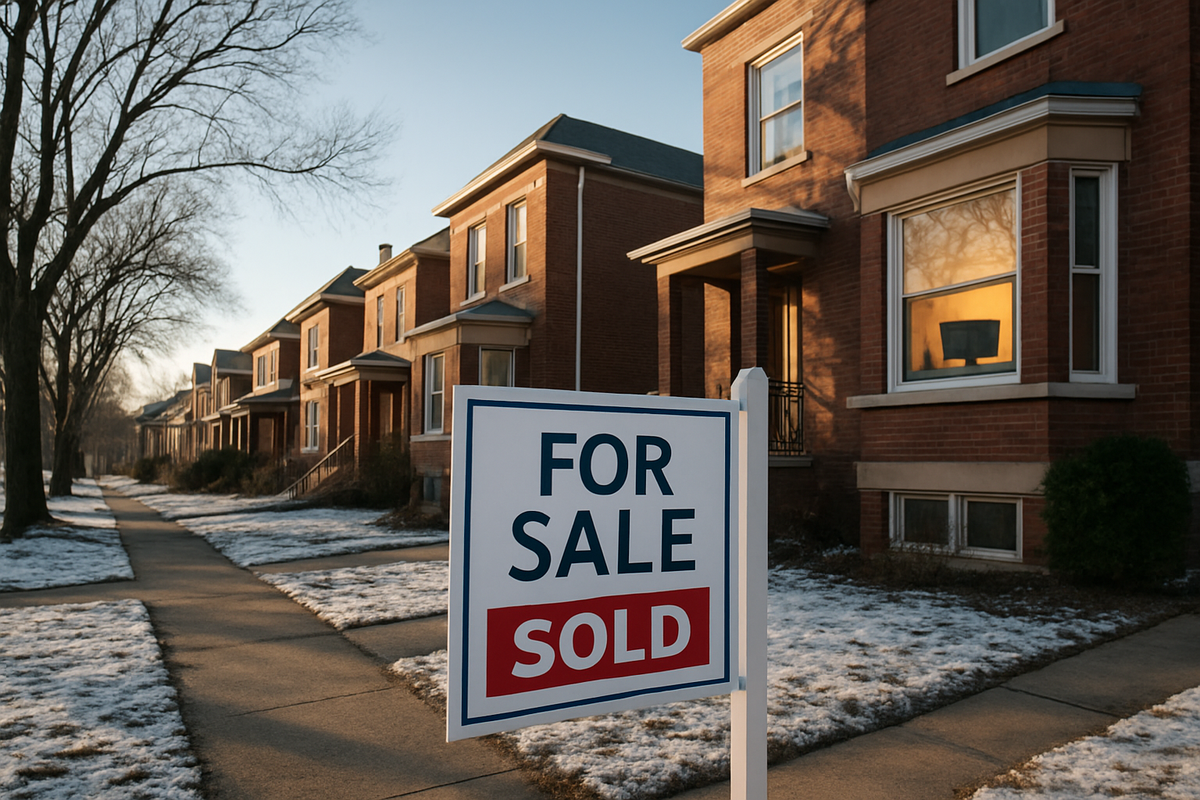
The U.S. housing market caught analysts off guard this February as new data from the Federal Housing Finance Agency (FHFA) revealed a surprising 0.6% month-over-month increase in home prices. This uptick comes at a time when many economists predicted a stagnant winter season, signaling a "slow thaw" in a market that has been frozen by high interest rates and limited inventory for years. While the national average year-over-year growth has cooled to a modest 1.4%—the slowest annual appreciation since 2011—the month-over-month surge suggests that underlying demand remains remarkably resilient.
The immediate implications of this data suggest a widening divide in the American real estate landscape. While high-cost coastal hubs and pandemic-era "boomtowns" in the Sun Belt are seeing price corrections, affordable regions in the Midwest and Northeast are propping up the national average. This unexpected momentum is being fueled by a combination of a permanent shift toward hybrid work and a desperate search for affordability among a generation of buyers who have been sidelined by the pricing surges of the early 2020s.
Regional Resilience and the "Slow Thaw" of 2026
The 0.6% monthly jump reported by the FHFA is more than just a statistical anomaly; it represents a tactical shift by homebuyers moving into the 2026 spring selling season. Throughout 2025, the market was characterized by a "lock-in effect," where homeowners with low-interest mortgages refused to sell, keeping inventory at historic lows. However, as we move through February 2026, a slight stabilization in mortgage rates and continued wage growth have finally coaxed some buyers back into the fold. This movement is most visible in the Midwest and Northeast, where structural undersupply meets relatively lower entry points.
Chicago, IL, has emerged as a national standout. Despite harsh winter weather that typically dampens sales, median prices in the Chicago metro area rose nearly 9% year-over-year in early 2026. Similarly, Newark, NJ, and the surrounding Northern New Jersey markets have seen appreciation rates hover around 5.5%. These areas are benefiting from "infill" buyers—professionals who are no longer tethered to a daily five-day commute in Manhattan or downtown Chicago but still require proximity to major urban hubs for hybrid office schedules. The resilience in these markets is contrasting sharply with the cooling national average of 1.4% year-over-year growth, which is being dragged down by inventory surges and price cuts in states like Florida and Texas.
Corporate Winners and Losers in a Fragmented Market
The uneven nature of this recovery has created a complex environment for public companies in the real estate sector. Homebuilders like D.R. Horton (NYSE: DHI) and Lennar (NYSE: LEN) are currently the "volume engines" of the market. D.R. Horton reported a significant 27% quarter-over-quarter increase in housing starts, using its massive scale to offer mortgage rate buydowns that private sellers simply cannot match. While these incentives have compressed profit margins—leading to a dip in net income—they have allowed the big builders to capture a larger share of the entry-level market.
On the technology and platform side, the landscape has seen radical consolidation. Rocket Companies (NYSE: RKT) has positioned itself as a dominant force following its strategic acquisition of Redfin, aiming to control the entire mortgage and brokerage pipeline. This move has allowed them to maintain higher margins even as total home sale volumes remain historically low. Conversely, Zillow Group (NASDAQ: Z) has seen significant volatility, with its stock facing pressure following forecasts of a weak Q1 2026. However, Zillow is finding success in its "Rental" segment, which grew 45% year-over-year, as many would-be buyers are forced to remain in the rental market due to the ongoing affordability crisis.
Hybrid Work and the New Affordability Standard
This surge in regional prices fits into a broader industry trend where "location" is being redefined. The "return-to-office" mandates of 2024 and 2025 have settled into a permanent hybrid standard by early 2026. This has not eliminated the need for urban proximity but has expanded the "commutable" radius. Newark and Chicago are prime beneficiaries because they offer the necessary infrastructure—transit connectivity and high-speed internet—for a hybrid lifestyle at a fraction of the cost of San Francisco or New York City. This shift is a primary reason why the Northeast and Midwest are currently the nation’s pillars of price growth.
Historically, a 1.4% annual growth rate would be seen as a sign of a healthy, stable market. However, when compared to the 53% surge in prices since 2019, it highlights a deep-seated affordability gap. With median household incomes only rising 24% in that same period, the market is undergoing a painful recalibration. The 0.6% monthly increase shows that while prices aren't falling nationally, the "velocity" of growth has shifted. We are no longer in a speculative frenzy; we are in a market driven by necessity and regional value hunting.
Looking Ahead: Strategic Pivots and Market Scenarios
In the short term, the primary challenge for the housing market will be the "affordability ceiling." The median age of the first-time homebuyer has reached 40 in 2026, a historic high that underscores the financial barriers remaining. Builders and lenders will likely continue to pivot toward creative financing and smaller "tiny-home" footprints to keep monthly payments manageable. If the 0.6% month-over-month growth continues into the summer, it could prompt the Federal Reserve to maintain higher interest rates for longer to prevent a resurgence of housing-driven inflation.
Long-term, the market is likely to see a "bifurcation of value." Residential Real Estate Investment Trusts (REITs) like AvalonBay Communities (NYSE: AVB) are already signaling caution, with modest revenue growth forecasts as operating expenses rise. Investors should prepare for a scenario where "Growth" is found in industrial and logistics real estate—led by companies like Prologis (NYSE: PLD)—while residential growth remains tethered to specific, affordable geographic pockets.
Investor Takeaway and Market Outlook
The surprise 0.6% increase in FHFA home prices serves as a reminder that the U.S. housing market is far from a monolith. While the national 1.4% year-over-year figure suggests a cooling trend, the localized strength in the Midwest and Northeast reveals a market that is still very much alive in areas where value and utility align. For investors, the key takeaway is that the "easy money" era of universal price appreciation is over. Success in the current market requires a granular approach, focusing on regions with strong hybrid-work appeal and companies with the balance sheets to offer buyer incentives.
Moving forward, the primary metrics to watch will be inventory levels in the Sun Belt and the persistence of the hybrid work model. If inventory continues to pile up in previously hot markets, the national year-over-year average could dip into negative territory by late 2026, even as Newark and Chicago continue to climb. For now, the "slow thaw" continues, and the housing market remains a resilient, if complicated, cornerstone of the American economy.
This content is intended for informational purposes only and is not financial advice