
As of early February 2026, the technology and financial sectors are bracing for what could be the most significant corporate consolidation of the decade. Recent reports indicate that Elon Musk is in advanced discussions to merge his private aerospace giant, SpaceX, with his artificial intelligence venture, xAI. This potential "super-merger" aims to create a vertically integrated technology powerhouse, leverage the massive cash flows from the Starlink satellite constellation to fund the voracious capital appetite of frontier AI development, and establish a new paradigm of "Orbital Compute."
The immediate implications of such a tie-up are profound, suggesting a shift toward a "unified Musk empire" where the boundaries between space exploration, artificial intelligence, and terrestrial transportation become increasingly porous. For investors in Tesla, Inc. (NASDAQ: TSLA), the move signals a potential restructuring of Musk’s attention and assets, raising critical questions about corporate governance, cross-company subsidies, and the long-term roadmap for Musk’s only publicly traded pillar.
The Vision: Orbital Compute and the "Muskonomy"
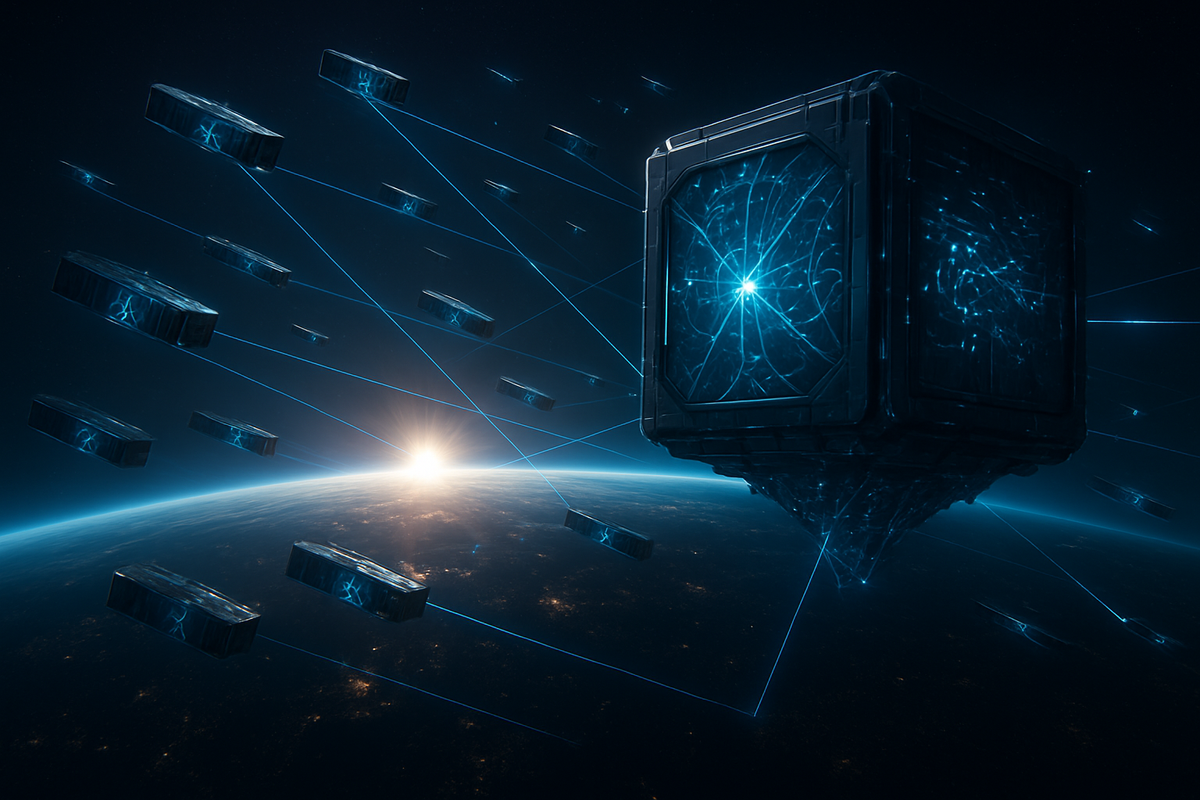
The reported negotiations, which gained significant momentum in late January 2026, center on a strategic share swap that would value the combined private entity at a staggering figure nearing $1 trillion. The vision, articulated by Musk at the World Economic Forum in Davos just weeks ago, involves moving massive AI compute clusters into Earth's orbit. By utilizing SpaceX’s Starlink infrastructure, Musk aims to bypass terrestrial constraints such as high real estate costs, regulatory hurdles regarding energy consumption, and the expensive cooling requirements of traditional data centers, instead utilizing the vacuum of space and abundant solar energy.
This move follows a relentless timeline of expansion for xAI throughout 2025. After completing a massive Series E funding round that valued the AI startup at $230 billion, xAI reportedly scaled its "Colossus" supercomputer in Memphis to over 200,000 H100 chips provided by Nvidia Corp. (NASDAQ: NVDA). However, the roadmap to reach one million units by 2027 requires capital expenditures that exceed the typical venture capital model, prompting Musk to look toward the robust balance sheet of SpaceX, which has seen its Starlink revenue soar as it becomes a global telecommunications standard.
Key stakeholders in this transition include SpaceX CFO Bret Johnsen, who recently registered two new holding entities in Nevada to facilitate the merger, and a consortium of high-profile investors including Valor Equity Partners and several Middle Eastern sovereign wealth funds. These players are betting on a "closed-loop" ecosystem where SpaceX provides the hardware and launch capabilities, xAI provides the intelligence, and entities like Tesla provide the physical robotics and data-gathering fleet.
Initial market reactions have been a volatile mix of awe and skepticism. Following the leak of the merger talks on January 30, 2026, shares of Tesla, Inc. (NASDAQ: TSLA) surged 4.5% in after-hours trading as bullish analysts cheered the prospect of a unified "Muskonomy" that could eventually rival the market caps of Apple Inc. (NASDAQ: AAPL) or Microsoft Corp. (NASDAQ: MSFT). However, the rally was tempered by institutional investors expressing concern over the lack of transparency in private-to-private transactions that heavily influence a public company’s strategic direction.
Winners, Losers, and the Battle for Infrastructure
The primary winners of this consolidation are likely to be the private shareholders of xAI, who would gain liquidity and a connection to the high-margin, cash-generating satellite business of SpaceX. Furthermore, Nvidia Corp. (NASDAQ: NVDA) stands to benefit as its role shifts from a mere supplier to a foundational partner in the world’s first orbital data network. If the merger succeeds in lowering the cost of compute, xAI’s "SuperGrok" models could gain a decisive price-performance advantage over competitors like Alphabet Inc. (NASDAQ: GOOGL).
On the other hand, the move presents a complex risk profile for Tesla, Inc. (NASDAQ: TSLA) shareholders. While the synergy between xAI’s large language models and Tesla’s Full Self-Driving (FSD) and Optimus robotics programs is clear, critics argue that Tesla may essentially become a "funding vehicle" or a data source for Musk’s private interests. There is also the threat of dilution; if Musk eventually seeks to bring the entire conglomerate public via a massive SpaceX IPO or a Tesla acquisition of the private entities, current Tesla investors could see their ownership significantly watered down to pay for the high-risk AI bets.
Competitors in the traditional cloud and AI space, such as Amazon.com, Inc. (NASDAQ: AMZN) and Microsoft Corp. (NASDAQ: MSFT), could find themselves at a disadvantage in a race where infrastructure is literally "off-planet." While these tech giants have deep pockets, they lack the proprietary launch capabilities that give Musk a near-monopoly on space-based hardware deployment. The "loser" in this scenario could be the traditional regulatory framework, which struggles to keep pace with a corporate structure that spans multiple jurisdictions and reaches beyond Earth's atmosphere.
Industry Significance and Regulatory Hurdles
This event fits into a broader industry trend of "vertical AI integration," where software companies are increasingly forced to build or own their own energy and compute infrastructure to survive. As the power requirements for training next-generation models hit the limits of national power grids, Musk’s pivot to space represents a radical but logical extension of this trend. It mirrors the historical precedents of the industrial age, where barons like Carnegie or Rockefeller sought to own every step of their production chains, from raw materials to distribution.
However, the regulatory implications are unprecedented. Because SpaceX is a critical contractor for the U.S. Department of Defense and NASA, a merger with a data-hungry AI company—especially one with significant foreign investment—is already drawing the attention of the Committee on Foreign Investment in the United States (CFIUS). The Federal Trade Commission (FTC) and the SEC are also reportedly monitoring the potential for "self-dealing," given that Tesla (NASDAQ: TSLA) has already disclosed multi-billion dollar investments into xAI.
The ripple effects on partners and competitors will be felt in the talent wars as well. By consolidating his ventures, Musk creates a "super-gravity" for engineering talent, offering the chance to work on the world's most advanced rockets and AI models simultaneously. This could force other tech leaders to consider similar, albeit less terrestrial, consolidations to stay relevant. The move sets a historical precedent: it is no longer enough to be an AI company; one must now be an energy and infrastructure company.
The Road Ahead: Short-Term Pivots and Long-Term Outcomes
In the short term, the market should expect a series of regulatory filings and potential legal challenges from minority shareholders concerned about the interplay between Musk’s private and public interests. Strategically, the next 12 to 18 months will likely see the first "Orbital Compute" test satellites launched via Starship. These prototypes will be the proof of concept for whether AI training can truly be offloaded to space, a pivot that would require a total reimagining of satellite thermal management and data transmission.
Long-term, the most significant outcome could be the long-awaited SpaceX IPO, potentially restructured to include the xAI assets. This would create a trillion-dollar public entity that would likely cannibalize investment from traditional aerospace and big tech stocks. Challenges remain, particularly in the realm of international space law and the management of orbital debris, but the market opportunity for a ubiquitous, space-based AI "brain" is virtually limitless if the technical hurdles can be cleared.
Conclusion: A New Era of Private Power
The proposed combination of SpaceX and xAI represents the culmination of Elon Musk’s decade-long effort to integrate his diverse portfolio into a singular, world-shaping entity. By bridging the gap between the infrastructure of space and the intelligence of AI, Musk is attempting to solve the two greatest bottlenecks facing the technology sector today: energy and compute. The move reinforces the "Muskonomy" as a dominant force in the global economy, but it also elevates the risks associated with the concentrated power of a single individual over critical public and private infrastructure.
Moving forward, the market will likely see increased volatility in Tesla, Inc. (NASDAQ: TSLA) as it becomes more deeply entwined with Musk’s broader ambitions. Investors must carefully watch for the outcome of regulatory reviews and the technical success of early orbital compute tests. The lasting impact of this merger, if realized, will not just be felt on Wall Street, but in the very way humanity processes information and reaches for the stars.
This content is intended for informational purposes only and is not financial advice.