As the calendar turned toward the final days of February 2025, the narrative surrounding Nike, Inc. (NYSE: NKE) underwent a seismic shift that continues to resonate across the athletic apparel landscape today. For nearly two years, the Oregon-based giant had been mired in a "valuation trough," struggling with an over-reliance on direct-to-consumer (DTC) sales and a perceived lack of product innovation that allowed upstart competitors to chip away at its dominant market share. However, a decisive mid-February upgrade from top Wall Street analysts served as the primary catalyst for a dramatic share price rally, signaling what many believed was the definitive end of the "Nike Bear Market."
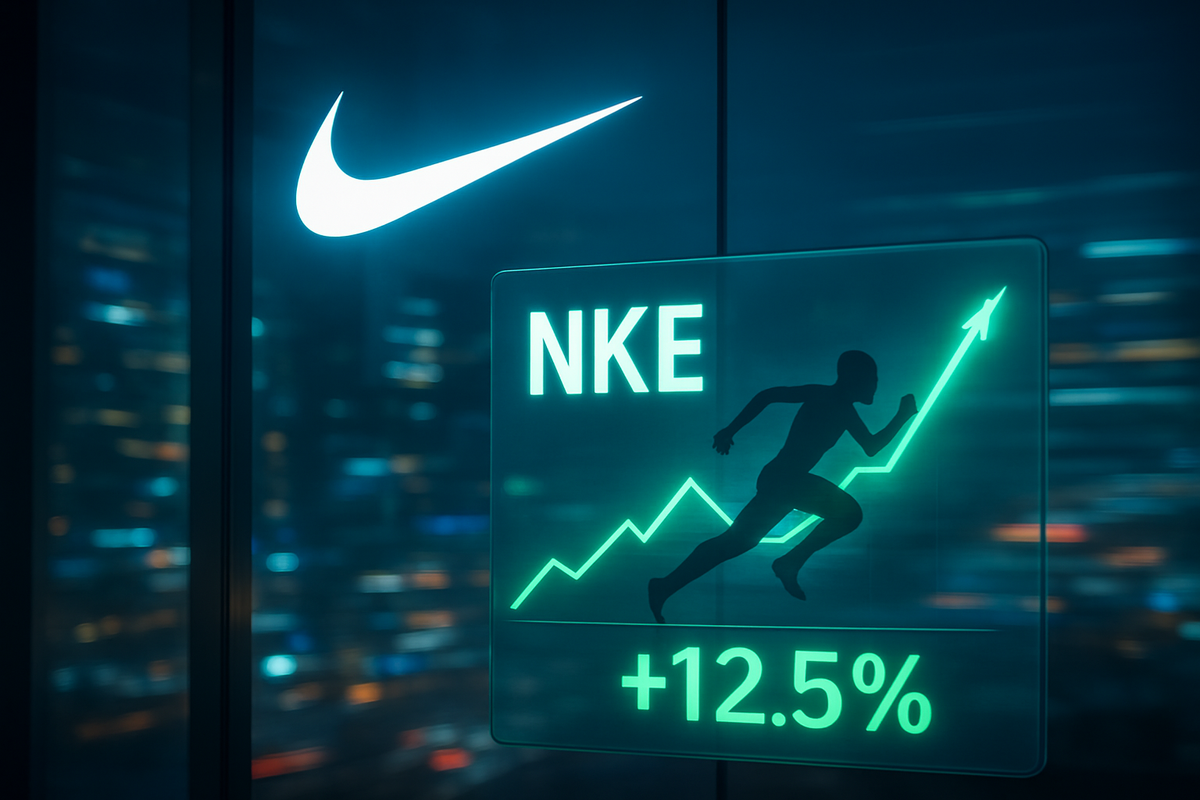
The immediate implications of this rally were profound. Not only did Nike shares surge nearly 6% in a single trading session, but the move also triggered a sector-wide re-rating for athletic retailers and wholesale partners. Investors, who had previously been cautious about the company’s "Win Now" turnaround strategy under then-new CEO Elliott Hill, suddenly found themselves racing to re-establish positions in the Dow component. This surge provided a necessary injection of confidence for the broader retail market, proving that even a legacy heavyweight could reclaim its momentum with the right strategic pivot and institutional backing.
A "V-Shaped" Vision: Inside the Jefferies Upgrade
The spark that ignited the late-February rally came on February 24, 2025, when Randal Konik, a prominent analyst at Jefferies Financial Group Inc. (NYSE: JEF), issued a bold research note that quickly became the talk of trading floors. Konik upgraded Nike from "Hold" to "Buy" and took the unusual step of explicitly advising clients to buy the stock "aggressively." The firm also hiked its price target from a conservative $75 to a lofty $115, suggesting that the market was drastically underestimating the speed of Nike’s recovery.
The timeline leading up to this moment was characterized by a period of painful self-correction. Following the departure of former CEO John Donahoe in late 2024, Nike had begun a systematic retreat from its "DTC-only" posture. By February 2025, early data began to show that Nike’s renewed focus on "Performance over Lifestyle"—specifically in its core running and basketball categories—was starting to bear fruit. The market’s reaction was swift and decisive: NKE shares jumped from the low $70s to close at $80.90 on the day of the upgrade, outperforming the S&P 500 by a wide margin.
Key stakeholders, including institutional heavyweights like Bill Ackman’s Pershing Square Capital Management, were instrumental in stabilizing the floor for the stock during this period. The Jefferies note served as the final piece of the puzzle, providing the fundamental justification for long-term investors to move off the sidelines. The industry's initial reaction was one of relief; if Nike could fix its inventory and innovation pipeline, the entire footwear ecosystem stood to benefit from increased consumer traffic.
Winners and Losers of the Nike Resurgence
While Nike (NYSE: NKE) was the clear primary winner of the February rally, the ripple effects extended far beyond Beaverton. Wholesale partners like Foot Locker, Inc. (NYSE: FL) and Dick's Sporting Goods (NYSE: DKS) saw their shares climb in tandem. These retailers had previously suffered as Nike pulled back its top-tier inventory to prioritize its own website; the analyst-confirmed pivot back to these partnerships suggested a more lucrative and balanced inventory environment for the fiscal years 2025 and 2026.
Conversely, the rally signaled a tougher road ahead for the "disruptor" brands that had thrived in Nike's shadow. For much of 2024, On Holding AG (NYSE: ONON) and Hoka, owned by Deckers Outdoor Corp (NYSE: DECK), had capitalized on Nike's stagnation to capture the premium technical running market. When analysts began calling for an "aggressive buy" of Nike based on its new "Air" innovation pipeline, the "scarcity value" of these smaller brands was momentarily called into question. While they remained strong, the "free ride" they enjoyed during Nike’s product drought had effectively ended.
The broader retail sector also felt the impact. Lululemon Athletica Inc. (NASDAQ: LULU) and Adidas AG (OTC: ADDYY) found themselves in a more competitive promotional environment as Nike ramped up its marketing spend. For Adidas specifically, the Nike rally served as a reminder that the "Samba" and "Gazelle" lifestyle trends would eventually have to compete with a refreshed Nike performance catalog, forcing the German rival to accelerate its own technical innovation cycles.
Broader Significance: The Return of the "Performance" Era
The February 2025 rally was more than just a momentary stock spike; it represented a broader industry trend toward technical excellence over fashion-led growth. For years, the market had rewarded companies that prioritized "athleisure" and lifestyle sneakers. However, the Jefferies upgrade highlighted a shift in consumer demand back toward "elite" performance gear. This event served as a historical precedent for how legacy brands can navigate the "DTC Trap"—the realization that while direct sales offer better margins, wholesale partnerships are essential for global scale and brand ubiquity.
From a regulatory and policy standpoint, the rally occurred just as new discussions regarding international trade and tariffs were beginning to surface in early 2025. Nike’s ability to rally despite these macro concerns signaled to the market that brand power and supply chain agility could outweigh geopolitical headwinds. Historically, the rally drew comparisons to Nike’s 2017 recovery, where a similar focus on "Edit to Amplify" (cutting underperforming lines to focus on hits) led to a multi-year bull run.
Furthermore, the event underscored the power of analyst sentiment in the "post-hype" retail economy. In an era where retail investors often follow social media trends, the 2025 Nike rally was a classic example of "old school" institutional research—deep-dive inventory analysis and CEO track record vetting—driving significant market movements. It reaffirmed that for a company of Nike's size, fundamental shifts in distribution strategy are more important than any single celebrity endorsement or marketing campaign.
The Horizon: Challenges and Catalysts in 2026
As we look back from January 27, 2026, the long-term impact of that February surge remains a subject of intense debate among market watchers. While the rally provided a crucial floor, the road since has been far from linear. Nike’s stock currently sits near the $65 range, suggesting that the "V-shaped" recovery predicted by some analysts in early 2025 has transitioned into a more "U-shaped" or jagged climb. The initial excitement of the "Win Now" strategy has met the reality of a slowing Chinese economy and the complexities of re-tooling a global manufacturing machine.
The next short-term catalyst for Nike is undoubtedly the 2026 FIFA World Cup. Much of the strategic pivot discussed during the February 2025 rally was designed to culminate in this event, with Nike expected to debut its most advanced "Air" technology to date. To succeed, Nike will need to execute a flawless multi-channel launch, proving that it can successfully marry its DTC app ecosystem with the physical shelf space of its wholesale partners.
The potential for further strategic pivots remains. Some analysts suggest that Nike may need to consider more aggressive restructuring in its non-core apparel lines to protect margins as shipping costs and tariffs fluctuate. The challenge for the remainder of 2026 will be maintaining the "performance" narrative while successfully navigating a macro environment that has become increasingly volatile since the high-water mark of early 2025.
Conclusion: Lessons from the February Rally
The late-February 2025 rally stands as a pivotal chapter in Nike’s modern history. It was the moment the market stopped asking "What’s wrong with Nike?" and started asking "How high can they go?" The key takeaway for investors is the importance of leadership and distribution: the transition to Elliott Hill and the humble return to wholesale partners were the twin engines that allowed the "Aggressive Buy" recommendation to take flight.
Moving forward, the market remains cautiously optimistic but demanding. The days of Nike being a "set it and forget it" stock are over; it is now a story of execution and innovation. Investors should keep a close watch on quarterly margin reports and market share data in the running category over the coming months. While the 2025 rally proved that Nike’s brand remains an apex predator in the retail world, its lasting impact will be measured by whether the company can maintain that "aggressive" momentum through the 2026 World Cup and beyond.
This content is intended for informational purposes only and is not financial advice.