

Pioneering Historical Chronicle Exposes Seven Centuries of Mystical Beliefs, Community Fear, and National Character
History buffs, folklore enthusiasts, and readers who find the mysteries of the Emerald Isle hard to resist have a new publication to discover that promises to be of great value. "A Compendium of Irish Witchcraft " is officially on sale, providing an all-in-one and eerie way to explore the intricate and historically melting pot of Ireland's sorcery, superstition, and the supernatural.
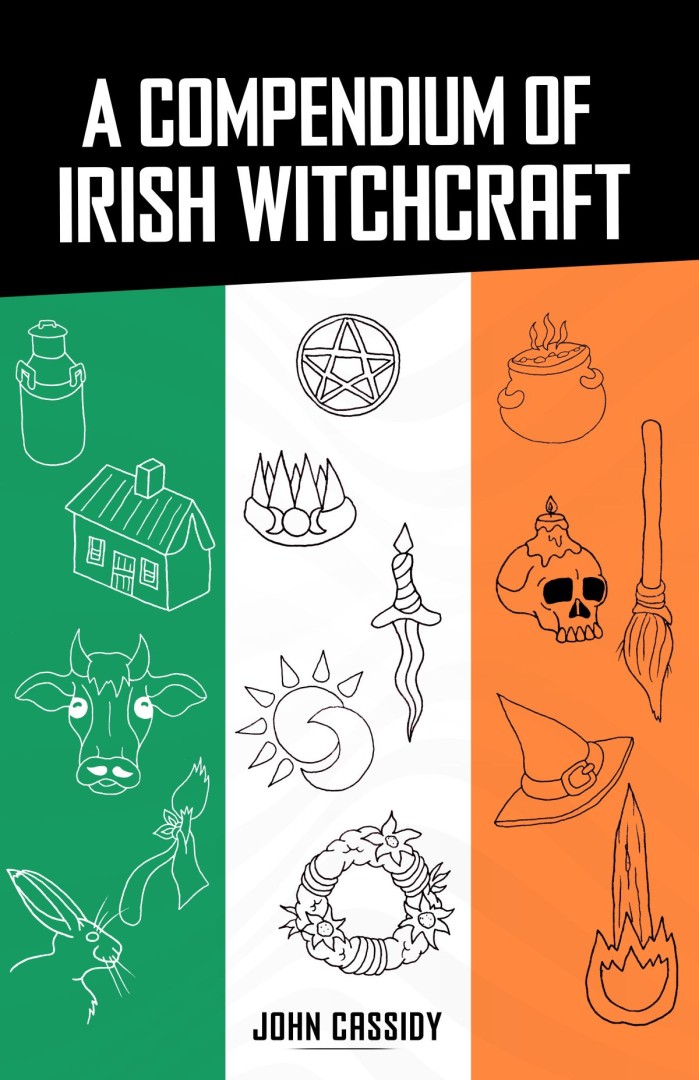
This knowledgeable author with a scientist's background and a great enthusiasm for the paranormal has opened a new window for us on Irish witch trials. John Cassidy has gone all the way back to the myth and has taken the historical realities of the Irish witch. "The timeline in "A Compendium of Irish Witchcraft" leaps from the 14th century when Petronella de Meath was burnt to today's Wicca 2025, while at the same time it is erasing the centuries-old false notions and bringing the truth out. It presents the accused of witchcraft throughout the history of Ireland in a new way, with the help of sympathetic and facts-based view.
Bringing Ireland's Hidden History to Light
As a result of the previously mentioned purges that took place roughly between 1400 and 1750, around 100,000 people lost their lives in total. In stark contrast to this picture, the experience of Ireland is in the end one of hardiness, village cults, and unique cultural heritage. This painstakingly investigated volume examines why Ireland witnessed strikingly fewer inquisitions and capital punishments compared to neighboring Scotland and England, while investigating the captivating traditions that lingered into the 1900s.
"Being rooted in scientific inquiry, I've perpetually been drawn to unexplained phenomena," shares Dr. Cassidy, Distinguished Professor Emeritus of Analytical Chemistry at Dublin's Technological University. "What genuinely astonished me was encountering legal proceedings concerning 'dairy thieves' operating through mystical means well into the twentieth century. This demonstrates how profoundly village customs remained embedded within Irish communal life, even during relatively recent eras."
From Medieval Accusations to Contemporary Spiritual Circles: Seven Hundred Years Documented
The manuscript chronicles Ireland's most notorious sorcery accusations, commencing with Dame Alice Kyteler in 1324 Ireland's inaugural documented immolation for alleged witchcraft. Contrasting typical defendants, Kyteler belonged to prosperous Anglo-Norman circles, and her legal ordeal exposed medieval authority conflicts as much as it revealed convictions about magical harm.
Enthusiasts will encounter the sorrowful account of Florence Newton, Youghal's alleged enchantress, who purportedly cursed a household servant through physical contact; the Islandmagee assembly of 1711, Ireland's final significant tribunal employing ghostly testimony; and the devastating chronicle of Bridget Cleary, consumed by flames in 1895 at her spouse's hands due to changeling suspicions.
"These weren't merely legal proceedings they served as portals into Irish civilization, exposing rifts between religious denominations, Norman settlers and indigenous inhabitants, scholarly classes and countryside dwellers," observes Dr. Cassidy. "Each accusation communicates something meaningful about its historical moment."
The Distinctively Irish Mystery of Dairy Enchantresses
Among the manuscript's most intriguing disclosures involves "dairy enchantresses"; village healers thought to command abilities for appropriating milk yields and butter supplies from neighboring livestock, frequently through shape-shifting into hares during springtime celebrations. These countryside mystics received measured acceptance specifically because communities viewed them less as devil-aligned conspirators, more as tradition-keepers connected to Ireland's ancestral fairy realm.
The volume equally honors Ireland's celebrated wise-folk, featuring Biddy Early from Clare County, whose mystical vessel for divination and botanical remedies established her legendary status, and Moll Anthony from Kildare County, who preserved harmonious connections with otherworldly beings.
Rectifying Historical Distortions Through Academic Rigor
A Compendium of Irish Witchcraft relies substantially upon original documentation, incorporating tribunal records, newspaper repositories extending back centuries, and eyewitness testimonies. This scholarly methodology distinguishes it from sensationalized reinterpretations, delivering readers accurate, compassionate depictions of accused individuals; predominantly women who were aged, forthright, or merely unconventional.
"The stereotypical depiction the aged crone with brewing vessel and flying staff; represented manufactured fear from male-dominated institutions protecting ecclesiastical authority from dissent," Dr. Cassidy clarifies. "Authentic circumstances proved far more nuanced and frequently heartbreaking. These were genuine community members, repeatedly targeted through residential disputes, envy, or simply existing vulnerably within their neighborhoods."
Modern Witchcraft: From Persecution to Recognition
The manuscript's concluding segments document witchcraft's metamorphosis in Ireland from feared activity to constitutionally protected spirituality. The coming of Stewart and Janet Farrar in 1976 brought along organized nature-worship to Ireland, eventually leading to the official recognition of the Aquarian Tabernacle Church by the government in 1999. The 2022 population census of Ireland counted 2,909 people as nature-based practitioners, which indicates the continuing allure of seasonal spirituality.
Present-day practitioners featured throughout the manuscript emphasize their foundational principle: "Pursue your intentions while causing zero damage." Modern Irish spiritual practitioners observe eight seasonal celebrations honoring natural cycles, revere Celtic ancestral deities, and perceive their devotion as an indigenous substitute for imported theological systems.
A Cultural Dialogue About Justice, Fear, and Belief
For university researchers, this work supplies meticulous chronological examination. For everyday enthusiasts, it delivers gripping narrative that resurrects silenced testimonies. For individuals claiming Irish ancestry, it brightens a lesser-known dimension of ethnic identity.
"My intention was presenting the full spectrum of Ireland's magical practitioners across seven hundred years," states Dr. Cassidy. "From harmful accusations to beneficial healing traditions, from community rejection to broad acceptance; this narrates how societies address the inexplicable, the alarming, and the unconventional."
About the Author
Dr. John Cassidy holds the title of Distinguished Professor Emeritus of Analytical Chemistry at Dublin's Technological University, where he continues to be interested in professional research in historical chemistry, mysticism and unexplained facts. He has Master’s and Ph.D. degrees from Utah University and has been the adviser of twenty doctoral students throughout his celebrated academic career.
Media Contact
Company Name: Book Writers Hub
Contact Person: John Cassidy
Email: Send Email
Country: United States
Website: https://www.amazon.com/Compendium-Irish-Witchcraft-John-Cassidy-ebook/dp/B0FZ6BXTQF/ref=tmm_kin_swatch_0