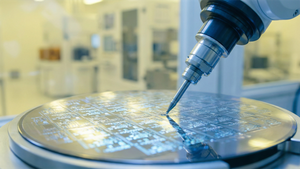


The artificial intelligence industry has officially entered a new era of high-performance computing following the blockbuster announcements at CES 2026. As NVIDIA (NASDAQ: NVDA) pulls back the curtain on its next-generation "Vera Rubin" GPU architecture, a fierce "memory war" has erupted among the world’s leading semiconductor manufacturers. SK Hynix (KRX: 000660), Micron Technology (NASDAQ: MU), and Samsung Electronics (KRX: 005930) are now locked in a high-stakes race to supply the High Bandwidth Memory (HBM) required to prevent the world’s most powerful AI chips from hitting a "memory wall."
This development marks a critical turning point in the AI hardware roadmap. While HBM3E served as the backbone for the Blackwell generation, the shift to HBM4 represents the most significant architectural leap in memory technology in a decade. With the Vera Rubin platform demanding staggering bandwidth to process 100-trillion parameter models, the ability of these three memory giants to scale HBM4 production will dictate the pace of AI innovation for the remainder of the 2020s.
The Architectural Leap: From HBM3E to the HBM4 Frontier
The technical specifications of HBM4, unveiled in detail during the first week of January 2026, represent a fundamental departure from previous standards. The most transformative change is the doubling of the memory interface width from 1024 bits to 2048 bits. This "widening of the pipe" allows HBM4 to move significantly more data at lower clock speeds, directly addressing the thermal and power efficiency challenges that plagued earlier high-performance systems. By operating at lower frequencies while delivering higher throughput, HBM4 provides the energy efficiency necessary for data centers that are now managing GPUs with power draws exceeding 1,000 watts.
NVIDIA’s new Rubin GPU is the primary beneficiary of this advancement. Each Rubin unit is equipped with 288 GB of HBM4 memory across eight stacks, achieving a system-level bandwidth of 22 TB/s—nearly triple the performance of early Blackwell systems. Furthermore, the industry has successfully moved from 12-layer to 16-layer vertical stacking. SK Hynix recently demonstrated a 48 GB 16-layer HBM4 module that fits within the strict 775µm height requirement set by JEDEC. Achieving this required thinning individual DRAM wafers to approximately 30 micrometers, a feat of precision engineering that has left the AI research community in awe of the manufacturing tolerances now possible in mass production.
Industry experts note that HBM4 also introduces the "logic base die" revolution. In a strategic partnership with Taiwan Semiconductor Manufacturing Company (NYSE: TSM), SK Hynix has begun manufacturing the base die of its HBM stacks using advanced 5nm and 12nm logic processes rather than traditional memory nodes. This allows for "Custom HBM" (cHBM), where specific logic functions are embedded directly into the memory stack, drastically reducing the latency between the GPU's processing cores and the stored data.
A Three-Way Battle for AI Dominance
The competitive landscape for HBM4 is more crowded and aggressive than any previous generation. SK Hynix currently holds the "pole position," maintaining an estimated 60-70% share of NVIDIA’s initial HBM4 orders. Their "One-Team" alliance with TSMC has given them a first-mover advantage in integrating logic and memory. By leveraging its proprietary Mass Reflow Molded Underfill (MR-MUF) technology, SK Hynix has managed to maintain higher yields on 16-layer stacks than its competitors, positioning it as the primary supplier for the upcoming Rubin Ultra chips.
However, Samsung Electronics is staging a massive comeback after a period of perceived stagnation during the HBM3E cycle. At CES 2026, Samsung revealed that it is utilizing its "1c" (10nm-class 6th generation) DRAM process for HBM4, claiming a 40% improvement in energy efficiency over its rivals. Having recently passed NVIDIA’s rigorous quality validation for HBM4, Samsung is ramping up capacity at its Pyeongtaek campus, aiming to produce 250,000 wafers per month by the end of the year. This surge in volume is designed to capitalize on any supply bottlenecks SK Hynix might face as global demand for Rubin GPUs skyrockets.
Micron Technology is playing the role of the aggressive expansionist. Having skipped several intermediate steps to focus entirely on HBM3E and HBM4, Micron is targeting a 30% market share by the end of 2026. Micron’s strategy centers on being the "greenest" memory provider, emphasizing lower power consumption per bit. This positioning is particularly attractive to hyperscalers like Google (NASDAQ: GOOGL) and Microsoft (NASDAQ: MSFT), who are increasingly constrained by the power limits of their existing data center infrastructure.
Breaking the Memory Wall and the Future of AI Scaling
The shift to HBM4 is more than just a spec bump; it is a vital response to the "Memory Wall"—the phenomenon where processor speeds outpace the ability of memory to deliver data. As AI models grow in complexity, the bottleneck has shifted from raw FLOPs (Floating Point Operations per Second) to memory bandwidth and capacity. Without the 22 TB/s throughput offered by HBM4, the Vera Rubin architecture would be unable to reach its full potential, effectively "starving" the GPU of the data it needs to process.
This memory race also has profound geopolitical and economic implications. The concentration of HBM production in South Korea and the United States, combined with advanced packaging in Taiwan, creates a highly specialized and fragile supply chain. Any disruption in HBM4 yields could delay the deployment of the next generation of Large Language Models (LLMs), impacting everything from autonomous driving to drug discovery. Furthermore, the rising cost of HBM—which now accounts for a significant portion of the total bill of materials for an AI server—is forcing a strategic rethink among startups, who must now weigh the benefits of massive model scaling against the escalating costs of memory-intensive hardware.
The Road Ahead: 16-Layer Stacks and Beyond
Looking toward the latter half of 2026 and into 2027, the focus will shift from initial production to the mass-market adoption of 16-layer HBM4. While 12-layer stacks are the current baseline for the standard Rubin GPU, the "Rubin Ultra" variant is expected to push per-GPU memory capacity to over 500 GB using 16-layer technology. The primary challenge remains yield; the industry is currently transitioning toward "Hybrid Bonding" techniques, which eliminate the need for traditional bumps between layers, allowing for even more layers to be packed into the same vertical space.
Experts predict that the next frontier will be the total integration of memory and logic. We are already seeing the beginnings of this with the SK Hynix/TSMC partnership, but the long-term roadmap suggests a move toward "Processing-In-Memory" (PIM). In this future, the memory itself will perform basic computational tasks, further reducing the need to move data back and forth across a bus. This would represent a fundamental shift in computer architecture, moving away from the traditional von Neumann model toward a truly data-centric design.
Conclusion: The Memory-First Era of Artificial Intelligence
The "HBM4 war" of 2026 confirms that we have entered the era of the memory-first AI architecture. The announcements from NVIDIA, SK Hynix, Samsung, and Micron at the start of this year demonstrate that the hardware constraints of the past are being systematically dismantled through sheer engineering will and massive capital investment. The transition to a 2048-bit interface and 16-layer stacking is a monumental achievement that provides the necessary runway for the next three years of AI development.
As we move through the first quarter of 2026, the industry will be watching yield rates and production ramps closely. The winner of this memory war will not necessarily be the company with the fastest theoretical speeds, but the one that can reliably deliver millions of HBM4 stacks to meet the insatiable appetite of the Rubin platform. For now, the "One-Team" alliance of SK Hynix and TSMC holds the lead, but with Samsung’s 1c process and Micron’s aggressive expansion, the battle for the heart of the AI data center is far from over.
This content is intended for informational purposes only and represents analysis of current AI developments.
TokenRing AI delivers enterprise-grade solutions for multi-agent AI workflow orchestration, AI-powered development tools, and seamless remote collaboration platforms.
For more information, visit https://www.tokenring.ai/.