
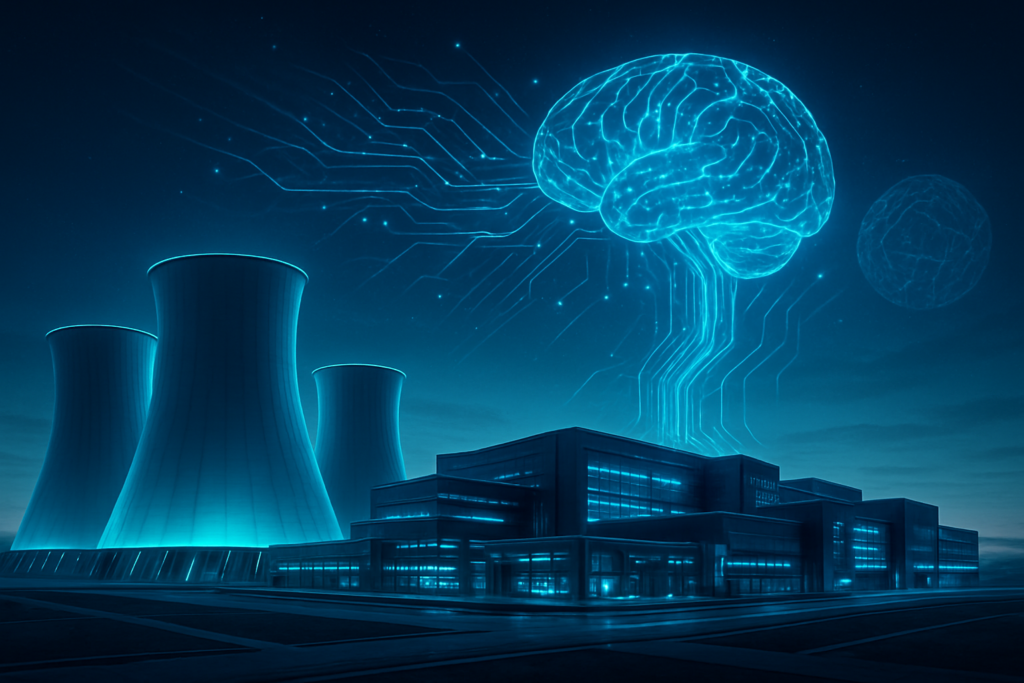
In a move that fundamentally reshapes the relationship between Big Tech and the global energy grid, Meta Platforms, Inc. (NASDAQ: META) has announced a staggering 6.6-gigawatt (GW) nuclear energy portfolio to fuel its next generation of AI infrastructure. On January 9, 2026, the social media and AI titan unveiled a series of landmark agreements with Vistra Corp (NYSE: VST), Oklo Inc (NYSE: OKLO), and the Bill Gates-founded TerraPower. These multi-decade partnerships represent the single largest private procurement of nuclear power in history, marking a decisive shift toward permanent, carbon-free baseload energy for the massive compute clusters required to achieve artificial general intelligence (AGI).
The announcement solidifies Meta’s transition from a software-centric company to a vertically integrated compute-and-power powerhouse. By securing nearly seven gigawatts of dedicated nuclear capacity, Meta is addressing the "energy wall" that has threatened to stall AI scaling. The deal specifically targets the development of "Gigawatt-scale" data center clusters—industrial-scale supercomputers that consume as much power as a mid-sized American city. This strategic pivot ensures that as Meta’s AI models grow in complexity, the physical infrastructure supporting them will remain resilient, sustainable, and independent of the fluctuating prices of the traditional energy market.
The Architecture of Atomic Intelligence: SMRs and Legacy Uprates
Meta’s nuclear strategy is a sophisticated three-pronged approach that blends the modernization of existing infrastructure with the pioneering of next-generation reactor technology. The cornerstone of the immediate energy supply comes from Vistra Corp, with Meta signing 20-year Power Purchase Agreements (PPAs) to source over 2.1 GW from the Perry, Davis-Besse, and Beaver Valley nuclear plants. Beyond simple procurement, Meta is funding "uprates"—technical modifications to existing reactors that increase their efficiency and output—adding an additional 433 MW of new, carbon-free capacity to the PJM grid. This "brownfield" strategy allows Meta to bring new power online faster than building from scratch.
For its long-term needs, Meta is betting heavily on Small Modular Reactors (SMRs). The partnership with Oklo Inc involves the development of a 1.2 GW "nuclear campus" in Pike County, Ohio. Utilizing Oklo’s Aurora Powerhouse technology, this campus will feature a fleet of fast fission reactors that can operate on both fresh and recycled nuclear fuel. Unlike traditional massive light-water reactors, these SMRs are designed for rapid deployment and can be co-located with data centers to minimize transmission losses. Meta has opted for a "Power as a Service" model with Oklo, providing upfront capital to de-risk the development phase and ensure a dedicated pipeline of energy through the 2030s.
The most technically advanced component of the deal is the partnership with TerraPower for its Natrium reactor technology. These units utilize a sodium-cooled fast reactor combined with a molten salt energy storage system. This unique design allows the reactors to provide a steady 345 MW of baseload power while possessing the ability to "flex" up to 500 MW for over five hours to meet the high-demand spikes inherent in AI training runs. Meta has secured rights to two initial units with options for six more, totaling a potential 2.8 GW. This flexibility is a radical departure from the "always-on" nature of traditional nuclear, providing a dynamic energy source that matches the variable workloads of modern AI.
The Trillion-Dollar Power Play: Market and Competitive Implications
This massive energy grab places Meta at the forefront of the "Compute-Energy Nexus," a term now widely used by industry analysts to describe the merging of the tech and utility sectors. While Microsoft Corp (NASDAQ: MSFT) and Amazon.com, Inc. (NASDAQ: AMZN) made early waves in 2024 and 2025 with their respective deals for the Three Mile Island and Talen Energy sites, Meta’s 6.6 GW portfolio is significantly larger in both scope and technological diversity. By locking in long-term, fixed-price energy contracts, Meta is insulating itself from the energy volatility that its competitors may face as the global grid struggles to keep up with AI-driven demand.
The primary beneficiaries of this deal are the nuclear innovators themselves. Following the announcement, shares of Vistra Corp and Oklo Inc saw significant surges, with Oklo being viewed as the "Apple of Energy"—a design-led firm with a massive, guaranteed customer in Meta. For TerraPower, the deal provides the commercial validation and capital injection needed to move Natrium from the pilot stage to industrial-scale deployment. This creates a powerful signal to the market: nuclear is no longer a "last resort" for green energy, but the primary engine for the next industrial revolution.
However, this aggressive procurement has also raised concerns among smaller AI startups and research labs. As tech giants like Meta, Google—owned by Alphabet Inc (NASDAQ: GOOGL)—and Microsoft consolidate the world's available carbon-free energy, the "energy barrier to entry" for new AI companies becomes nearly insurmountable. The strategic advantage here is clear: those who control the power, control the compute. Meta's ability to build "Gigawatt" clusters like the 1 GW Prometheus in Ohio and the planned 5 GW Hyperion in Louisiana effectively creates a "moat of electricity" that could marginalize any competitor without its own dedicated power source.
Beyond the Grid: AI’s Environmental and Societal Nuclear Renaissance
The broader significance of Meta's nuclear pivot cannot be overstated. It marks a historic reconciliation between the environmental goals of the tech industry and the high energy demands of AI. For years, critics argued that the "AI boom" would lead to a resurgence in coal and natural gas; instead, Meta is using AI as the primary catalyst for a nuclear renaissance. By funding the "uprating" of old plants and the construction of new SMRs, Meta is effectively modernizing the American energy grid, providing a massive influx of private capital into a sector that has been largely stagnant for three decades.
This development also reflects a fundamental shift in the AI landscape. We are moving away from the era of "efficiency-first" AI and into the era of "brute-force scaling." The "Gigawatt" data center is a testament to the belief that the path to AGI requires an almost unfathomable amount of physical resources. Comparing this to previous milestones, such as the 2012 AlexNet breakthrough or the 2022 launch of ChatGPT, the current milestone is not a change in code, but a change in matter. We are now measuring AI progress in terms of hectares of land, tons of cooling water, and gigawatts of nuclear energy.
Despite the optimism, the move has sparked intense debate over grid equity and safety. While Meta is funding new capacity, the sheer volume of power it requires could still strain regional grids, potentially driving up costs for residential consumers in the PJM and MISO regions. Furthermore, the reliance on SMRs—a technology that is still in its commercial infancy—carries inherent regulatory and construction risks. The industry is watching closely to see if the Nuclear Regulatory Commission (NRC) can keep pace with the "Silicon Valley speed" that Meta and its partners are demanding.
The Road to Hyperion: What’s Next for Meta’s Infrastructure
In the near term, the focus will shift from contracts to construction. The first major milestone is the 1 GW Prometheus cluster in New Albany, Ohio, expected to go fully operational by late 2026. This facility will serve as the "blueprint" for future sites, integrating the energy from Vistra's nuclear uprates directly into the high-voltage fabric of Meta's most advanced AI training facility. Success here will determine the feasibility of the even more ambitious Hyperion project in Louisiana, which aims to reach 5 GW by the end of the decade.
The long-term challenge remains the delivery of the SMR fleet. Oklo and TerraPower must navigate a complex landscape of supply chain hurdles, specialized labor shortages, and stringent safety testing. If successful, the applications for this "boundless" compute are transformative. Experts predict that Meta will use this power to run "infinite-context" models and real-time physical world simulations that could accelerate breakthroughs in materials science, drug discovery, and climate modeling—ironically using the very AI that consumes the energy to find more efficient ways to produce and save it.
Conclusion: A New Era of Atomic-Scale Computing
Meta’s 6.6 GW nuclear commitment is more than just a series of power deals; it is a declaration of intent for the age of Artificial Superintelligence. By partnering with Vistra, Oklo, and TerraPower, Meta has secured the physical foundation necessary to sustain its vision of the future. The significance of this development in AI history lies in its scale—it is the moment when the digital world fully acknowledged its inescapable dependence on the physical world’s most potent energy source.
As we move further into 2026, the key metrics to watch will not just be model parameters or FLOPs, but "time-to-power" and "grid-interconnect" dates. The race for AI supremacy has become a race for atomic energy, and for now, Meta has taken a commanding lead. Whether this gamble pays off depends on the successful deployment of SMR technology and the company's ability to maintain public and regulatory support for a nuclear-powered future. One thing is certain: the path to the next generation of AI will be paved in uranium.
This content is intended for informational purposes only and represents analysis of current AI developments.
TokenRing AI delivers enterprise-grade solutions for multi-agent AI workflow orchestration, AI-powered development tools, and seamless remote collaboration platforms.
For more information, visit https://www.tokenring.ai/.