

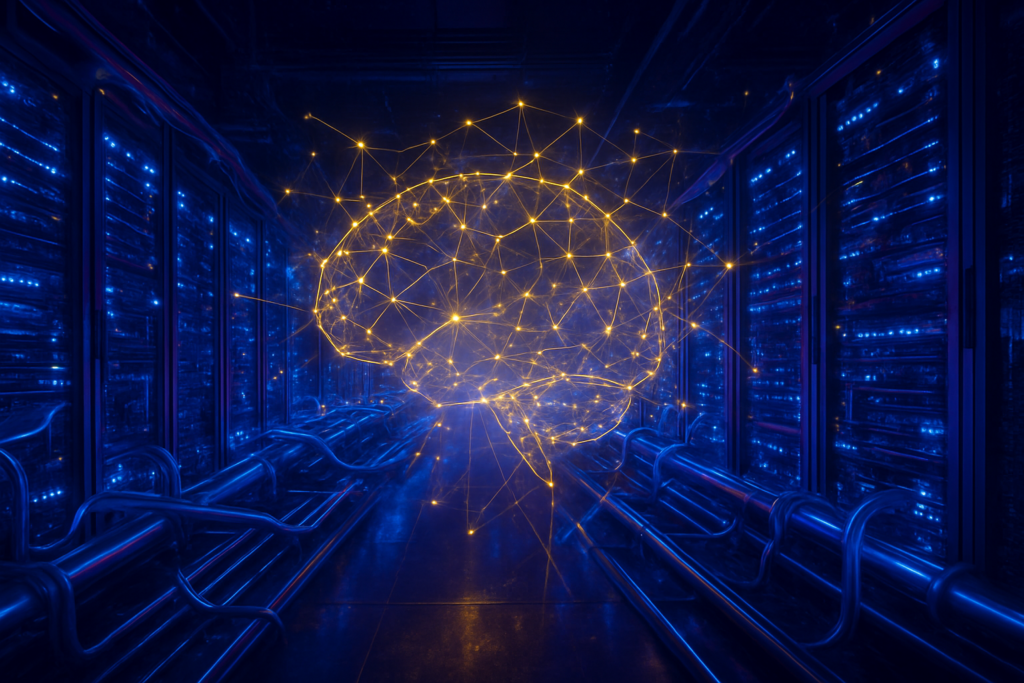
As of December 31, 2025, the artificial intelligence landscape has been fundamentally reshaped by a single industrial site in Memphis, Tennessee. Elon Musk’s xAI has officially reached a historic milestone with its "Colossus" supercomputer, now operating at a staggering capacity of 200,000 Nvidia H100 and H200 GPUs. This massive concentration of compute power has served as the forge for Grok-3, a model that has stunned the industry by achieving near-perfect scores on high-level reasoning benchmarks and introducing a new era of "agentic" search capabilities.
The significance of this development cannot be overstated. By successfully scaling a single cluster to 200,000 high-end accelerators—supported by a massive infrastructure of liquid cooling and off-grid power generation—xAI has challenged the traditional dominance of established giants like OpenAI and Google. The deployment of Grok-3 marks the moment when "deep reasoning"—the ability for an AI to deliberate, self-correct, and execute multi-step logical chains—became the primary frontier of the AI race, moving beyond the simple "next-token prediction" that defined earlier large language models.
Technical Mastery: Inside the 200,000-GPU Cluster
The Colossus supercomputer is a marvel of modern engineering, constructed in a record-breaking 122 days for its initial phase and doubling in size by late 2025. The cluster is a heterogeneous powerhouse, primarily composed of 150,000 Nvidia (NASDAQ: NVDA) H100 GPUs, supplemented by 50,000 of the newer H200 units and the first major integration of Blackwell-generation GB200 chips. This hardware configuration delivers a unified memory bandwidth of approximately 194 Petabytes per second (PB/s), utilizing the Nvidia Spectrum-X Ethernet platform to maintain a staggering 3.6 Terabits per second (Tbps) of network bandwidth per server.
This immense compute reservoir powers Grok-3’s standout features: "Think Mode" and "Big Brain Mode." Unlike previous iterations, Grok-3 utilizes a chain-of-thought (CoT) architecture that allows it to visualize its logical steps before providing an answer, a process that enables it to solve PhD-level mathematics and complex coding audits with unprecedented accuracy. Furthermore, its "DeepSearch" technology functions as an agentic researcher, scanning the web and the X platform in real-time to verify sources and synthesize live news feeds that are only minutes old. This differs from existing technologies by prioritizing "freshness" and verifiable citations over static training data, giving xAI a distinct advantage in real-time information processing.
The hardware was brought to life through a strategic partnership with Dell Technologies (NYSE: DELL) and Super Micro Computer (NASDAQ: SMCI). Dell assembled half of the server racks using its PowerEdge XE9680 platform, while Supermicro provided the other half, leveraging its expertise in Direct Liquid Cooling (DLC) to manage the intense thermal output of the high-density racks. Initial reactions from the AI research community have been a mix of awe and scrutiny, with many experts noting that Grok-3’s 93.3% score on the 2025 American Invitational Mathematics Examination (AIME) sets a new gold standard for machine intelligence.
A Seismic Shift in the AI Competitive Landscape
The rapid expansion of Colossus has sent shockwaves through the tech industry, forcing a "Code Red" at rival labs. OpenAI, which released GPT-5 earlier in 2025, found itself in a cycle of rapid-fire updates to keep pace with Grok’s reasoning depth. By December 2025, OpenAI was forced to rush out GPT-5.2, specifically targeting the "Thinking" capabilities that Grok-3 popularized. Similarly, Alphabet (NASDAQ: GOOGL) has had to lean heavily into its Gemini 3 Deep Think models to maintain its position on the LMSYS Chatbot Arena leaderboard, where Grok-3 has frequently held the top spot throughout the latter half of the year.
The primary beneficiaries of this development are the hardware providers. Nvidia has reported record-breaking quarterly net incomes, with CEO Jensen Huang citing the Memphis "AI Factory" as the blueprint for future industrial-scale compute. Dell and Supermicro have also seen significant market positioning advantages; Dell’s server segment grew by an estimated 25% due to its xAI partnership, while Supermicro stabilized after earlier supply chain hurdles by signing multi-billion dollar deals to maintain the liquid-cooling infrastructure in Memphis.
For startups and smaller AI labs, the sheer scale of Colossus creates a daunting barrier to entry. The "compute moat" established by xAI suggests that training frontier-class models may soon require a minimum of 100,000 GPUs, potentially consolidating the industry around a few "hyper-labs" that can afford the multi-billion dollar price tags for such clusters. This has led to a strategic shift where many startups are now focusing on specialized, smaller "distilled" models rather than attempting to compete in the general-purpose LLM space.
Scaling Laws, Energy Crises, and Environmental Fallout
The broader significance of the Memphis cluster lies in its validation of "Scaling Laws"—the theory that more compute and more data consistently lead to more intelligent models. However, this progress has come with significant societal and environmental costs. The Colossus facility now demands upwards of 1.2 Gigawatts (GW) of power, nearly half of the peak demand for the entire city of Memphis. To bypass local grid limitations, xAI deployed dozens of mobile natural gas turbines and 168 Tesla (NASDAQ: TSLA) Megapack battery units to stabilize the site.
This massive energy footprint has sparked a legal and environmental crisis. In mid-2025, the NAACP and Southern Environmental Law Center filed an intent to sue xAI under the Clean Air Act, alleging that the facility’s methane turbines are a major source of nitrogen oxides and formaldehyde. These emissions are particularly concerning for the neighboring Boxtown community, which already faces high cancer rates. While xAI has attempted to mitigate its impact by constructing an $80 million greywater recycling plant to reduce its reliance on the Memphis Sands Aquifer, the environmental trade-offs of the AI revolution remain a flashpoint for public debate.
Comparatively, the Colossus milestone is being viewed as the "Apollo Program" of the AI era. While previous breakthroughs like GPT-4 focused on the breadth of knowledge, Grok-3 and Colossus represent the shift toward "Compute-on-Demand" reasoning. The ability to throw massive amounts of processing power at a single query to "think" through a problem is a paradigm shift that mirrors the transition from simple calculators to high-performance computing in the late 20th century.
The Road to One Million GPUs and Beyond
Looking ahead, xAI shows no signs of slowing down. Plans are already in motion for "Colossus 2" and a third facility, colloquially named "Macrohardrr," with the goal of reaching 1 million GPUs by late 2026. This next phase will transition fully into Nvidia’s Blackwell architecture, providing the foundation for Grok-4. Experts predict that this level of compute will enable truly "agentic" AI—models that don't just answer questions but can autonomously navigate software, conduct scientific research, and manage complex supply chains with minimal human oversight.
The near-term focus for xAI will be addressing the cooling and power challenges that come with gigawatt-scale computing. Potential applications on the horizon include real-time simulation of chemical reactions for drug discovery and the development of "digital twins" for entire cities. However, the industry must still address the "data wall"—the fear that AI will eventually run out of high-quality human-generated data to train on. Grok-3’s success in using synthetic data and real-time X data suggests that xAI may have found a temporary workaround to this looming bottleneck.
A Landmark in Machine Intelligence
The emergence of Grok-3 and the Colossus supercomputer marks a definitive chapter in the history of artificial intelligence. It is the moment when the "compute-first" philosophy reached its logical extreme, proving that massive hardware investment, when paired with sophisticated reasoning algorithms, can bridge the gap between conversational bots and genuine problem-solving agents. The Memphis facility stands as a monument to this ambition, representing both the incredible potential and the daunting costs of the AI age.
As we move into 2026, the industry will be watching closely to see if OpenAI or Google can reclaim the compute crown, or if xAI’s aggressive expansion will leave them in the rearview mirror. For now, the "Digital Delta" in Memphis remains the center of the AI universe, a 200,000-GPU engine that is quite literally thinking its way into the future. The long-term impact will likely be measured not just in benchmarks, but in how this concentrated power is harnessed to solve the world's most complex challenges—and whether the environmental and social costs can be effectively managed.
This content is intended for informational purposes only and represents analysis of current AI developments.
TokenRing AI delivers enterprise-grade solutions for multi-agent AI workflow orchestration, AI-powered development tools, and seamless remote collaboration platforms.
For more information, visit https://www.tokenring.ai/.