

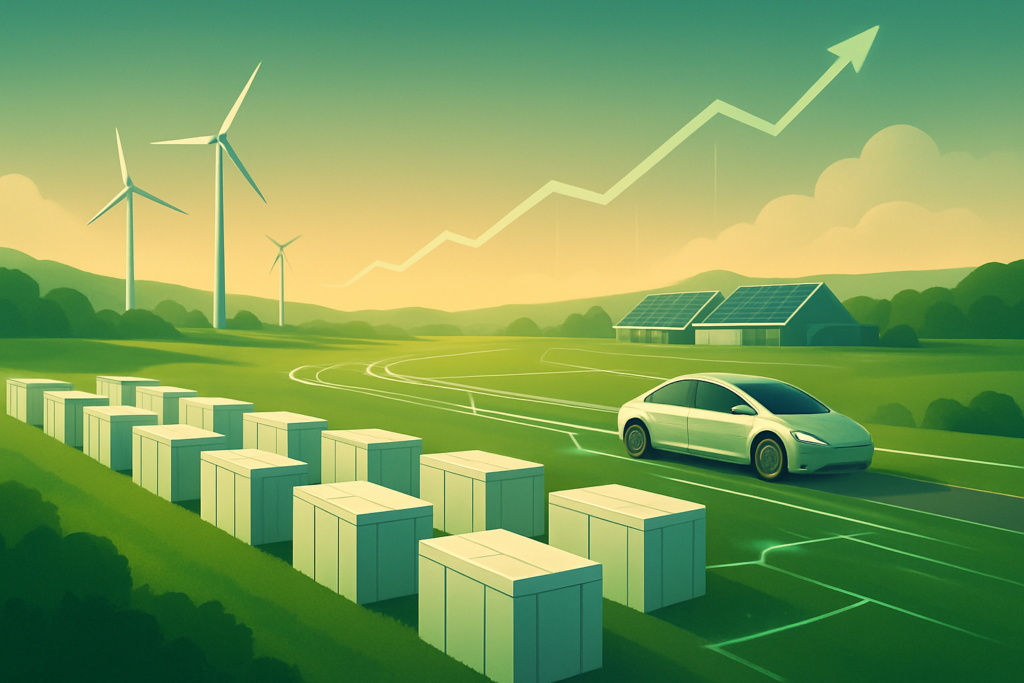
As of December 24, 2025, Tesla, Inc. (NASDAQ: TSLA) stands at a pivotal juncture in its corporate history. While long perceived primarily as an electric vehicle (EV) manufacturer, the company is undergoing a fundamental transformation into a diversified powerhouse of energy storage and physical artificial intelligence. This shift has propelled the stock to record-breaking highs, even as the global automotive sector faces cooling demand. Tesla’s resilience is increasingly attributed to its "Energy" segment—a formerly quiet division that has now become a primary driver of margin expansion and investor euphoria. With its Megafactories operating at unprecedented scales and a strategic pivot toward autonomous transport, Tesla remains the most scrutinized and significant name in the global tech and industrial landscape.
Historical Background
Founded in 2003 with the mission to accelerate the world's transition to sustainable energy, Tesla’s journey has been anything but linear. From the niche release of the Roadster in 2008 to the production "hell" of the Model 3 in 2017-2018, the company has narrowly escaped bankruptcy on multiple occasions.
The most significant historical turning point occurred in 2020, when Tesla achieved its first full year of profitability and was subsequently added to the S&P 500. Since then, the company has expanded its footprint with Gigafactories in Berlin, Texas, and Shanghai. However, 2024 and 2025 will likely be remembered as the era of "Master Plan Part 3," where the focus shifted from mass-producing passenger cars to scaling the infrastructure of a renewable grid. The acquisition of SolarCity in 2016, once a point of contention for shareholders, laid the groundwork for the integrated energy ecosystem that is now bearing financial fruit in the form of the Powerwall and Megapack product lines.
Business Model
Tesla’s revenue model is currently divided into three primary segments:
- Automotive: Sales of Model 3, Y, S, X, Cybertruck, and the newly unveiled Cybercab. This also includes regulatory credits and FSD (Full Self-Driving) software subscriptions.
- Energy Generation and Storage: The design, manufacture, and installation of lithium-ion battery energy storage systems (Megapack and Powerwall) and solar energy products.
- Services and Other: Vehicle insurance, supercharging network access, and retail merchandise.
What distinguishes Tesla’s model in late 2025 is the "Valuation Decoupling." While automotive sales provide the bulk of top-line revenue, the Energy segment and AI-related services (FSD and the nascent Robotaxi network) are viewed as high-margin recurring revenue streams that justify a premium technology valuation rather than a traditional industrial multiple.
Stock Performance Overview
Tesla has defied traditional market gravity throughout 2025. On December 16, 2025, the stock reached an all-time closing high of $489.88, a massive recovery from the volatility seen in early 2024.
- 1-Year Performance: The stock is up approximately 120% from its 2025 lows, fueled by the scaling of the Shanghai Megafactory and progress in autonomous vehicle (AV) regulation.
- 5-Year Performance: Investors have seen a staggering appreciation as Tesla evolved from a high-volume carmaker to an AI platform.
- 10-Year Performance: Since 2015, TSLA remains one of the greatest wealth-creation engines in history, rewarding long-term holders with returns that have outpaced every major index by orders of magnitude.
The record prices in late 2025 are driven by "Sum-of-the-Parts" (SOTP) analysis, where analysts are increasingly valuing the Energy and AI segments more highly than the car business itself.
Financial Performance
The Q3 2025 earnings report highlighted the shifting financial tides within the company.
- Revenue Growth: While automotive revenue grew a modest 6% Year-over-Year (YoY), the Energy segment surged by 44%, reaching $3.4 billion for the quarter.
- Margins: Automotive gross margins have stabilized around 17-18%. However, Energy gross margins reached a record 30.5%, significantly boosting the company’s overall profitability.
- Storage Deployments: Tesla deployed a record 12.5 GWh of storage in Q3 2025, an 81% increase YoY.
- Cash Position: Tesla maintains one of the strongest balance sheets in the industry, with significant cash reserves and minimal long-term debt, allowing for aggressive R&D spending on the Cortex supercluster and Optimus humanoid robot.
Leadership and Management
Elon Musk remains the polarizing yet visionary figurehead of Tesla. In late 2025, the governance landscape settled following the legal reinstatement of Musk’s 2018 compensation package, which many analysts believe "re-anchored" his commitment to the company.
Beyond Musk, the leadership team has been bolstered by a focus on operations and AI. Musk’s recent involvement in the Department of Government Efficiency (DOGE) under the current U.S. administration has created a unique dynamic where Tesla’s leadership is directly influencing the regulatory environment for autonomous driving and energy policy. The board, while often criticized for its proximity to Musk, has overseen a period of unprecedented capital efficiency.
Products, Services, and Innovations
The "Product Roadmap 2025" has shifted toward the Megapack and the Cybercab.
- Megapack 2 XL: Produced at the Lathrop and Shanghai Megafactories, these units are the backbone of utility-scale energy storage. The Shanghai facility, which launched in February 2025, is already ramping toward its 40 GWh annual capacity.
- Cybercab: In a strategic pivot, Tesla deprioritized the traditional steering-wheel-based "$25,000 car" in favor of the Cybercab—a dedicated two-seater autonomous vehicle designed for the Tesla Network.
- Cortex Supercluster: Tesla has moved away from its in-house "Dojo" hardware in favor of the Cortex cluster, utilizing up to 90,000 Nvidia H100 GPUs to train the FSD v13 and v14 neural networks.
- Optimus: The humanoid robot is currently in "internal pilot" phase, with several thousand units working within Giga Texas to assist in battery cell production.
Competitive Landscape
In the automotive sector, Tesla faces its stiffest competition from BYD (SHE: 002594), which briefly surpassed Tesla in total revenue during 2025. In the premium segment, legacy automakers like BMW and Mercedes-Benz have made significant inroads.
However, in the Energy Storage sector, Tesla’s competition is different. Rivals include Fluence Energy (NASDAQ: FLNC) and various Chinese battery giants like CATL (SHE: 300750). Tesla’s advantage lies in its software integration (Autobidder), which allows utilities to autonomously trade energy for maximum profit, a capability that most traditional hardware manufacturers lack.
Industry and Market Trends
The macro environment of 2025 is defined by "The Great Grid Upgrade." As AI data centers proliferate, the demand for stable, 24/7 power has skyrocketed. Since wind and solar are intermittent, utility-scale storage (batteries) has become the most critical infrastructure of the decade. This tailwind has benefited Tesla more than any other firm.
Conversely, the EV market has matured. The expiration of the $7,500 federal tax credit in late 2025 has slowed domestic car sales, making the growth of the Energy and AI segments even more vital for maintaining Tesla’s premium stock valuation.
Risks and Challenges
Despite record stock prices, several risks loom:
- Regulatory Bottlenecks: The Cybercab’s success depends on state-by-state approval of steering-wheel-less vehicles. While federal exemptions have been granted, local hurdles remain.
- Geopolitical Tensions: Potential "mega-tariffs" on components from China could disrupt the supply chain for Tesla’s U.S.-based Megafactory in Lathrop.
- Key Person Risk: The company’s valuation is inextricably tied to Elon Musk. His multi-company commitments (SpaceX, xAI, DOGE) continue to raise concerns about split focus.
- AI Execution: If the Robotaxi network or Optimus fails to reach commercial viability within the next 24 months, the 200x P/E ratio could face a severe correction.
Opportunities and Catalysts
- Robotaxi Licensing: Management has hinted at licensing FSD to other automakers, which would provide pure-margin software revenue.
- Energy as a Service: As more homes adopt Powerwalls and participate in "Virtual Power Plants" (VPPs), Tesla is evolving into a distributed utility company.
- Regulatory Tailwinds: Musk’s influence in the current administration has already led to NHTSA rule changes that favor Tesla’s autonomous vision.
Investor Sentiment and Analyst Coverage
Wall Street is currently divided but leaning bullish. Analysts from firms like Morgan Stanley and Wedbush have shifted their focus to "Physical AI," arguing that Tesla should be valued more like a robotics and software company than an automaker. Retail sentiment remains intensely loyal, often serving as a floor for the stock price during periods of market volatility. Conversely, institutional bears point to the declining market share in the EV space and the high execution risk of the Robotaxi fleet.
Regulatory, Policy, and Geopolitical Factors
The policy landscape in late 2025 is remarkably favorable for Tesla’s domestic operations. The issuance of FMVSS exemptions for autonomous vehicles by the NHTSA in April 2025 was a landmark moment, clearing the path for the Cybercab. Furthermore, Tesla’s "Energy" business is benefiting from global mandates to decarbonize the grid, even as traditional EV subsidies fade. However, the threat of a trade war with China remains a "black swan" risk that could impact the Shanghai Megafactory's output.
Conclusion
Tesla enters 2026 as a company that has successfully "crossed the chasm" from a car company to an energy and AI titan. The record stock prices of late 2025 reflect the market's belief in a future where Tesla controls the energy storage infrastructure of the grid and the autonomous software of the road. While the automotive business faces headwinds from saturated markets and the loss of tax credits, the explosive 80%+ growth in energy deployments offers a new foundation for the company’s financials. Investors should watch the 2026 ramp-up of the Cybercab and the continued margin expansion in the Energy segment as the ultimate indicators of whether Tesla can sustain its trillion-dollar-plus valuation.
This content is intended for informational purposes only and is not financial advice.