
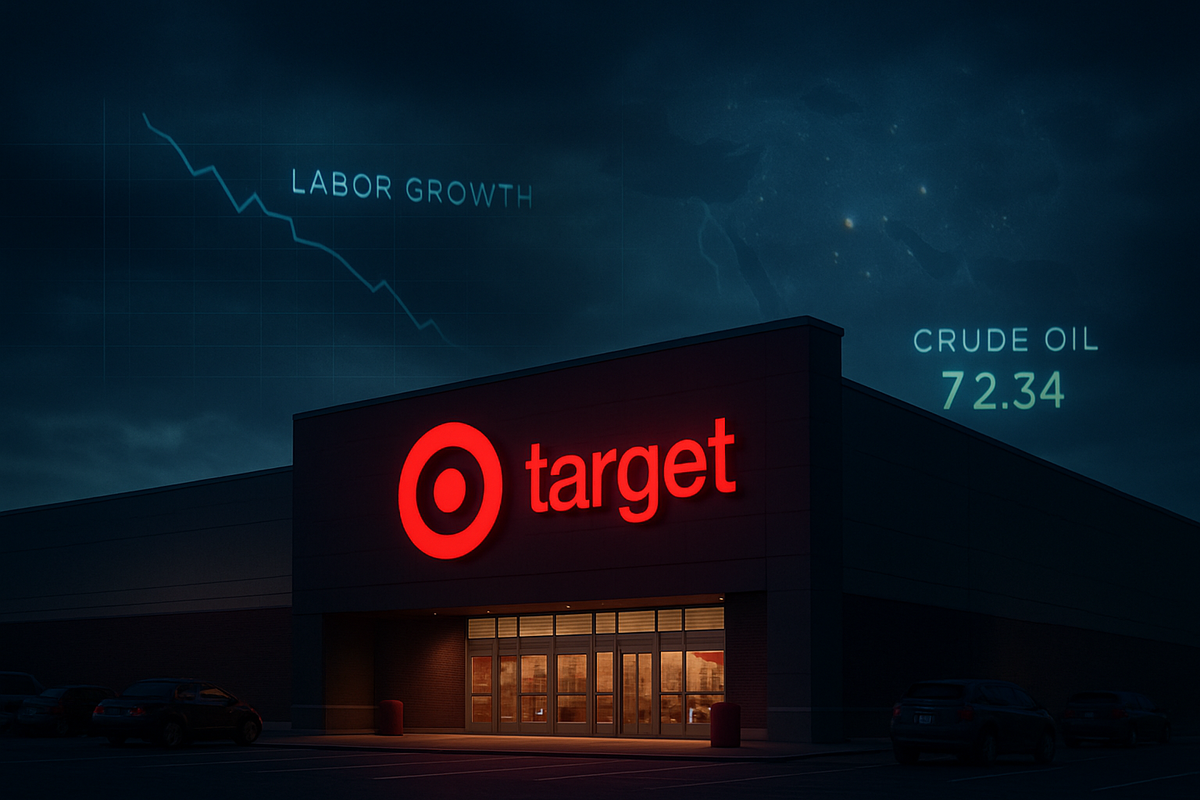
Target Corporation (NYSE: TGT) is set to report its fourth-quarter fiscal 2025 earnings this Tuesday morning, March 3, 2026, in what analysts are calling a "litmus test" for the American middle-class consumer. As the Minneapolis-based retailer prepares to unveil its performance, the backdrop is increasingly grim: a volatile Middle East conflict has sent fuel prices surging, while a cooling U.S. labor market threatens to dampen the "Jobs Week" optimism that usually defines the start of March.
Investors are bracing for a report that reflects the growing "K-shaped" divide in American spending habits. While discount-heavy competitors have thrived, Target (NYSE: TGT) has struggled to maintain foot traffic in its high-margin discretionary categories like home decor and apparel. With crude oil prices flirting with $81 per barrel and the threat of a $100-plus spike looming if the Strait of Hormuz is disrupted, the pressure on Target's logistics costs and its customers' wallets has reached a fever pitch.
The quarterly report, scheduled for release before the opening bell on Tuesday, arrives at a pivotal moment of leadership transition. This marks the first earnings call under new CEO Michael Fiddelke, who stepped into the role during a period of intense competitive pressure. Wall Street is expecting a consensus Earnings Per Share (EPS) of $2.16, which would represent a 10.4% decline from the $2.41 reported during the same holiday period last year. Revenue is projected to hit approximately $30.5 billion, a year-over-year dip of about 1.5%.
The timeline leading to this report has been marked by a steady erosion of Target’s (NYSE: TGT) "cheap-chic" dominance. Throughout late 2025, foot traffic data indicated a migration of shoppers toward value-focused rivals. In November and December 2025, Target saw traffic declines of 1.6% and 4.2%, respectively, even as the broader retail sector benefited from holiday promotions. Stakeholders are particularly concerned with how much "newness" and AI-driven personalization—Fiddelke's key initiatives—can offset the macro-economic headwinds that have intensified since January.
Initial market reactions ahead of the report have been cautious. Target’s (NYSE: TGT) stock has seen increased volatility as traders weigh the company’s inventory management against the rising cost of shipping. The escalation of military tensions in the Middle East, specifically U.S.-Israeli strikes on Iranian targets in late February, has introduced a "risk premium" that few retailers were prepared for in their 2026 guidance.
The current economic climate is creating a clear set of winners and losers within the retail and energy sectors. Walmart (NYSE: WMT) remains the primary beneficiary of the "flight to value," consistently stealing market share from Target as middle-income families prioritize groceries and essentials over discretionary spending. Similarly, discount retailers like Dollar General (NYSE: DG) and Five Below (NASDAQ: FIVE) are poised to gain as consumers "trade down" to manage the rising cost of living.
Conversely, Target (NYSE: TGT) and other department store-adjacent retailers like Kohl’s (NYSE: KSS) are in a defensive crouch. Because Target’s profit margins rely heavily on discretionary categories—items consumers can easily skip when gas prices rise—the company is uniquely exposed to the current energy spike. On the flip side, energy giants such as ExxonMobil (NYSE: XOM) and Chevron (NYSE: CVX) are seeing windfall gains from the $80+ per barrel Brent crude price, though these gains for shareholders come at the direct expense of the retail consumer's discretionary budget.
Logistics and shipping firms are also in a state of flux. While higher fuel surcharges can be passed on, the avoidance of the Suez Canal due to regional instability is adding weeks to transit times for imported goods. This puts retailers like Amazon (NASDAQ: AMZN) and Target in a difficult position, as they must choose between eating the higher shipping costs or raising prices and risking further traffic declines.
Target’s struggle is a microcosm of a broader shift in the global economy. The era of "sticky" inflation has returned, driven not by post-pandemic supply chain kinks, but by geopolitical instability and shifting trade policies. The renewed conflict in the Middle East has reminded the market that energy security is inextricably linked to retail performance. Historically, every major oil price shock has been followed by a contraction in discretionary retail spending, a precedent that 2026 seems destined to repeat.
This earnings report also coincides with "Jobs Week," a critical period for economic data. With the February Jobs Report looming on Friday, March 6, the market is looking for signs of a "soft landing." However, analysts forecast a modest gain of only 60,000 to 65,000 jobs—a sharp slowdown that suggests the labor market is finally cooling under the weight of high interest rates. For Target (NYSE: TGT), a slowing labor market means its core customer base is feeling less secure in their employment, further curbing the appetite for non-essential purchases.
The regulatory environment is also shifting. Potential new tariffs and trade restrictions are forcing retailers to reconsider their long-term sourcing strategies. If Target (NYSE: TGT) cannot diversify its supply chain away from volatile shipping routes or regions subject to new duties, its margin recovery could be delayed by years rather than quarters.
Looking ahead, Target (NYSE: TGT) must execute a strategic pivot to survive a potentially stagnant 2026. In the short term, investors will be listening for guidance on how the company plans to mitigate the fuel-driven "stealth tax" on its customers. A shift toward more aggressive private-label branding—similar to its successful "Good & Gather" line—could help capture value-conscious shoppers who would otherwise defect to Walmart (NYSE: WMT) or Aldi.
In the long term, the success of Michael Fiddelke’s tenure will be judged on Target’s ability to integrate AI into its supply chain and customer experience. If Target can use predictive analytics to perfectly time its markdowns and optimize its inventory for local demand, it might claw back the margins lost to rising logistics costs. However, if the Middle East conflict escalates further and oil moves toward the $100 threshold, the "discretionary recession" could become a prolonged reality for the entire retail sector.
The takeaway for investors this Tuesday is clear: Target (NYSE: TGT) is fighting a multi-front war. It is battling a more efficient rival in Walmart, a more cautious consumer, and a global energy market that is increasingly unpredictable. While the company remains a powerhouse of American retail, its traditional strengths in apparel and home goods have become its biggest liabilities in an era dominated by high gas prices and cooling job growth.
Moving forward, the market will be hyper-focused on Target’s (NYSE: TGT) comparable sales guidance for the remainder of 2026. If the company can demonstrate a path to positive traffic despite the macro-economic headwinds, it may signal that the worst of the retail slump is over. For now, however, the "Jobs Week" context and the shadow of Middle Eastern instability suggest that the road to recovery will be long, winding, and increasingly expensive.
This content is intended for informational purposes only and is not financial advice