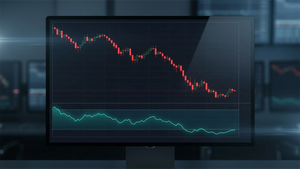

The global energy landscape reached a fever pitch this week as Brent Crude oil officially broke through the critical $105 per barrel resistance level, a move driven by the most severe disruption to maritime oil transit in decades. As of March 16, 2026, the international benchmark is trading at levels not seen since the height of the 2022 energy crisis, fueled by a "de facto" closure of the Strait of Hormuz. With approximately 20% of the world’s daily oil consumption effectively trapped behind a wall of military hostilities, the market is bracing for a supply shock that could redefine global inflation and economic growth trajectories for the remainder of the year.
The breach of $105 is more than just a psychological milestone; it represents a technical breakout that has caught many institutional shorts off guard. The rapid ascent follows a series of kinetic military strikes in the Middle East that have transitioned from regional skirmishes into a full-scale maritime blockade. Analysts warn that if the chokepoint remains impassable for more than 30 days, the "risk premium" currently baked into prices could escalate into a structural deficit, potentially driving prices toward the $130-$150 range.
Chaos in the Chokepoint: The Road to $105
The current crisis traces back to late February 2026, when a coordinated military operation, dubbed "Operation Epic Fury," targeted strategic Iranian infrastructure. In immediate retaliation, Tehran announced the formal closure of the Strait of Hormuz on March 2, 2026. While the U.S. Navy and regional allies initially attempted to maintain a safe corridor for commercial traffic, the situation deteriorated rapidly as Iranian forces deployed land-based anti-ship missiles and "suicide" drone boats against non-military vessels.
The timeline of the escalation has been relentless. By March 13, over 16 commercial tankers had been struck or harassed, including a high-profile attack on a Marshall Islands-flagged vessel in the Gulf of Oman that resulted in several fatalities. Furthermore, a major fire at the Jebel Ali Port in Dubai—a critical hub for global logistics—following a drone strike has brought regional shipping to a standstill. These events have effectively neutralized the "security of supply" that the market had priced in during the relatively stable period of late 2025.
Technical indicators are screaming "overbought," yet momentum shows no signs of flagging. The Relative Strength Index (RSI) for Brent Crude has surged past 81.0, reflecting intense panic buying. From a technical standpoint, the market has entered a "golden cross" configuration, with the 50-day moving average crossing sharply above the 200-day average. While $105 was once a ceiling, it has now flipped to a floor, with the next significant technical resistance sitting at the $110.00 psychological mark and then the $115.00 Fibonacci extension level.
Winners and Losers in a Triple-Digit Oil World
The sudden spike in energy costs has created a stark divide in the equity markets between those who harvest the commodity and those who consume it. Domestic U.S. upstream producers are the primary beneficiaries, as they are largely insulated from the physical disruptions in the Middle East while benefiting from the global price surge. ExxonMobil (NYSE: XOM) and Chevron (NYSE: CVX) have seen their valuations jump by double digits in the last two weeks, as investors bet on record-breaking quarterly cash flows and high price realizations from their Permian Basin assets. Similarly, ConocoPhillips (NYSE: COP) has outpaced the broader market, viewed as a "clean play" on oil prices without the logistical exposure of the European majors.
Conversely, global energy giants with heavy footprints in the Persian Gulf find themselves in a more precarious position. Shell (NYSE: SHEL) and BP p.l.c. (NYSE: BP) have faced significant volatility; while they benefit from high prices, their exposure to disrupted Qatari LNG and regional transit routes has introduced massive insurance and operational risks. Shipping companies are also feeling the heat. While tanker operator Frontline (NYSE: FRO) has seen day rates skyrocket, the physical risk to its fleet and the refusal of many insurers to cover Hormuz transits have tempered investor enthusiasm. Container giants like Maersk (OTC: MAERSK-B) and Hapag-Lloyd (XETRA: HLAG.DE) have been forced to reroute vessels around the Cape of Good Hope, adding up to 14 days to transit times and introducing massive "war risk" surcharges.
The most severe "losers" are found in the transportation and travel sectors. U.S. major airlines, including United Airlines (NASDAQ: UAL) and Delta Air Lines (NYSE: DAL), have seen their stock prices hammered as jet fuel prices threaten to consume over 30% of their operating costs. In Asia, Korean Air (KRX: 003490) has been hit particularly hard due to its reliance on long-haul routes that now must bypass the Middle East entirely. Logistics leaders like FedEx (NYSE: FDX) have already suspended operations in several Gulf nations, signaling a broader slowdown in global trade efficiency.
Broader Economic Significance and Historical Echoes
This event fits into a worrying broader trend of the "weaponization of chokepoints," similar to the Red Sea disruptions of 2024 but on a much larger scale. The Strait of Hormuz is the world's most vital oil artery; unlike the Suez Canal, there are few viable bypasses. The current crisis draws haunting parallels to the oil shocks of 1973 and 1979, as well as the initial weeks of the 2022 invasion of Ukraine. However, the 2026 crisis is unique because it occurs at a time when global spare capacity—largely held by OPEC+ members in the very region under fire—is physically inaccessible.
The ripple effects are already being felt in the policy world. Central banks, which had finally begun to ease interest rates as inflation cooled in late 2025, are now facing the prospect of "stagflation" 2.0. Regulatory bodies in the U.S. and EU are reportedly discussing emergency releases from Strategic Petroleum Reserves (SPR), though experts warn that SPR releases are a "band-aid" if the physical blockade of the Strait persists. The shift is also likely to accelerate government mandates for energy independence and a renewed push for renewable infrastructure, though these transitions offer little relief for the immediate supply crunch.
The Road Ahead: Scenarios and Strategic Pivots
In the short term, the market will remain hyper-sensitive to any news regarding "safe passage" negotiations. If a diplomatic off-ramp is found, oil could see a "relief sell-off" back toward $90. However, the more likely scenario involves a prolonged period of high volatility. Energy companies are already beginning to pivot their capital allocation strategies, moving away from shareholder buybacks toward increased exploration and production in "safe" jurisdictions like the Americas and the North Sea.
Long-term, this crisis may permanently alter global trade routes. We may see the emergence of a "two-tier" energy market: one for "secure" oil sourced from the Western Hemisphere and another for "high-risk" oil from the Middle East. For investors, the challenge will be navigating the transition from a growth-oriented market to one defined by supply-side constraints. Strategic pivots by automotive manufacturers toward even faster EV adoption or hydrogen freight could emerge as the only way to insulate the global economy from future "Hormuz-style" shocks.
Wrap-Up: What to Watch in the Coming Months
The break past $105 for Brent Crude is a watershed moment for the 2026 economy. It marks the end of the "low inflation" hopes that characterized the start of the year and signals a period of intense geopolitical risk. The key takeaway for investors is that the "geopolitical risk premium" is no longer theoretical—it is a tangible cost reflected in every barrel of oil and every shipping container moved across the globe.
Moving forward, the market will be watching three primary factors: the duration of the Hormuz blockade, the effectiveness of the U.S.-led naval escort missions, and the response of non-OPEC producers to fill the supply gap. If Brent holds above $100 for a full quarter, the resulting "demand destruction" could trigger a global recession. Investors should remain defensive, focusing on domestic energy producers and companies with the pricing power to pass on surging fuel costs, while maintaining a cautious eye on the technical support level of $100. The coming months will determine if this is a temporary spike or the beginning of a new, high-cost energy era.
This content is intended for informational purposes only and is not financial advice