
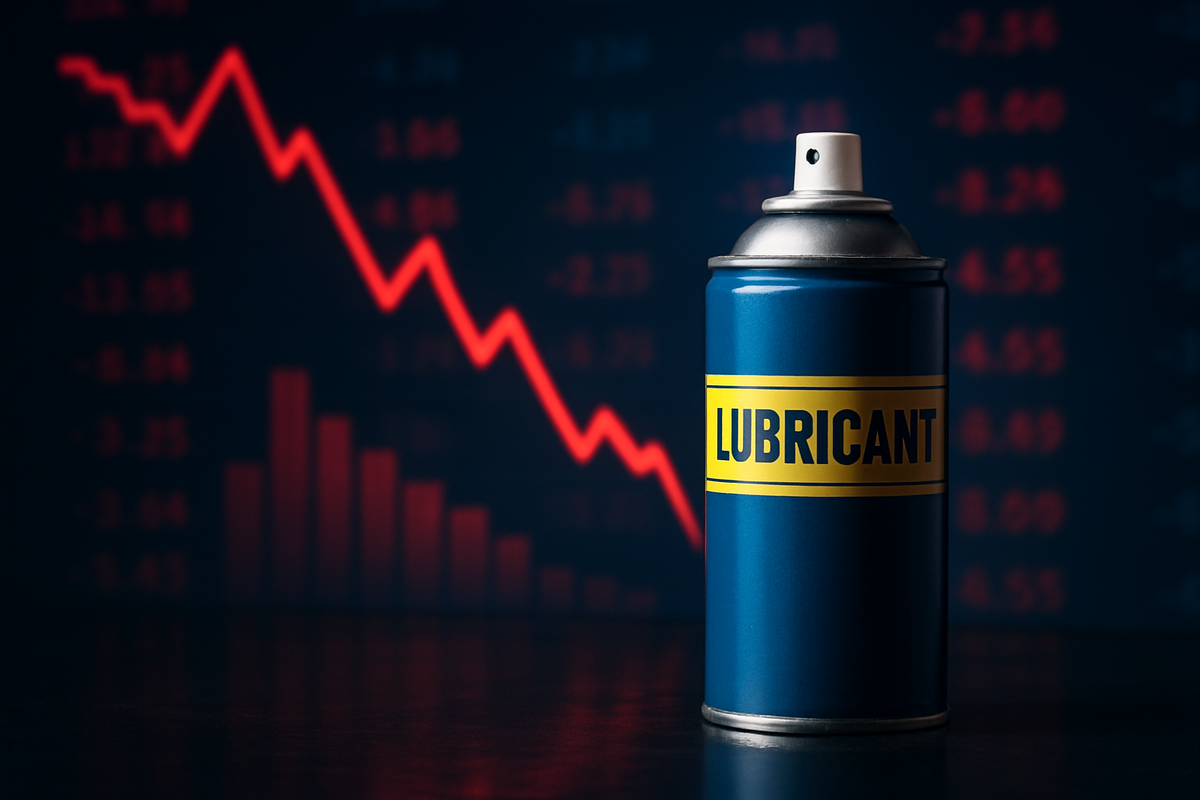
The WD-40 Company (NASDAQ: WDFC) saw its stock price skid sharply on January 8, 2026, following the release of its first-quarter fiscal 2026 financial results. Despite a strong finish to the previous year, the iconic blue-and-yellow-can maker reported essentially flat sales growth and an earnings-per-share (EPS) miss that caught Wall Street off guard. The report, characterized by a significant slowdown in international markets and rising operational costs, triggered a wave of selling that wiped out months of steady gains for the San Diego-based manufacturer.
Investors reacted with immediate skepticism to management's decision to reaffirm its full-year guidance, viewing the targets as overly optimistic in the face of a "soft" start to the year. The stock, which had been trading near its 52-week highs, fell as much as 13% in the hours following the announcement. The market's harsh verdict reflects a growing concern that the company’s "Project 60" growth initiatives may be hitting a wall as global economic headwinds and shifting competitive dynamics in the maintenance, repair, and overhaul (MRO) sector begin to take their toll.
A Stalled Start: Dissecting the Q1 Miss
The financial data released for the quarter ending November 30, 2025, painted a starkly different picture than the optimistic "beat and raise" narrative seen in late 2025. WD-40 reported net sales of $154.4 million, representing a meager 0.6% increase year-over-year—a figure that analysts described as "functionally flat." This fell significantly short of the $161.2 million consensus estimate. On the profitability front, the company reported an EPS of $1.28, missing the analyst target of $1.45 by nearly 12%. This also marked a year-over-year decline from the $1.39 earned in the same period the previous year.
The primary culprit for the sales stagnation was a sudden chill in the Asia-Pacific region, where sales plummeted by 10%. Specifically, the Chinese market—a cornerstone of WD-40’s long-term growth strategy—saw an 8% decline, while distributor markets in the region cratered by 31% due to what management called "timing-related softness." While the company did manage to expand its gross margin to 56.2%, thanks to lower tactical promotion costs and favorable mix, these gains were entirely offset by a spike in the "cost of doing business." Operating expenses rose to 40% of sales, up from 37% a year ago, driven by higher employee-related costs and increased investments in marketing and R&D.
The timeline leading up to this moment had been one of cautious optimism. Throughout fiscal 2025, WD-40 had successfully navigated inflationary pressures, achieving its 55% margin recovery goal ahead of schedule. However, the January 2026 report suggests that the "premiumization" strategy—moving customers toward higher-priced "Specialist" products and the "Smart Straw" delivery system—may be reaching a point of diminishing returns in a price-sensitive global economy.
Winners and Losers in the MRO Shakeup
The immediate "losers" of this event are undoubtedly the shareholders of the WD-40 Company (NASDAQ: WDFC). The stock’s double-digit percentage drop represents a significant blow to the "steady-eddie" reputation the company has enjoyed. Management, led by CEO Steve Brass, also faces intensified pressure to justify the heavy spending on "Must-Win Battles" that have yet to translate into the high-single-digit sales growth promised to the market. Furthermore, retail and industrial distributors in China are feeling the pinch as inventory cycles lengthen and demand for premium lubricants softens amidst a broader regional slowdown.
Conversely, the "winners" in this scenario may be the larger, more diversified conglomerates that have been aggressively courting the MRO sector with digital and sustainable innovations. 3M (NYSE: MMM) has recently gained momentum, leveraging its massive R&D budget to launch over 250 new products in the past year, many of which integrate with AI-powered maintenance platforms. Similarly, Henkel (OTC:HENKY), the maker of Loctite, has reported robust organic growth in its adhesive technologies unit, successfully capturing market share from WD-40’s "Specialist" line by pivoting toward "Green Chemistry" and bio-based products that appeal to ESG-conscious industrial clients.
Illinois Tool Works (NYSE: ITW) also stands as a relative winner, maintaining record-high operating margins by focusing on "critical failure" applications where performance reliability outranks brand recognition. As WD-40 struggles with volume growth, these competitors are proving that the MRO market is increasingly shifting toward specialized, high-tech solutions rather than the "one-can-fits-all" legacy model.
Wider Significance: The End of the "Brand Fortress" Era?
This event fits into a broader trend affecting the consumer staples and industrial maintenance sectors: the rising "cost of doing business" in a fragmented global market. WD-40’s struggle to maintain sales momentum despite a dominant brand suggests that even "brand fortresses" are not immune to the volatility of international distribution networks and the slowing pace of the Chinese economy. The 10% drop in Asia-Pacific sales is a potential bellwether for other American manufacturers who have relied on the region for growth.
Historically, WD-40 has been a defensive play for investors—a company with a product so ubiquitous it could weather any storm. However, the current shift toward "connected" maintenance and digital MRO solutions represents a technological hurdle that legacy brands must clear. The ripple effect on competitors is clear: there is a vacuum at the top of the growth ladder that 3M and Henkel are eager to fill. This earnings miss may signal a pivot in investor preference away from pure-play legacy brands toward diversified industrial giants that can absorb regional volatility through broader product portfolios.
Furthermore, the "soft" guidance reaffirmed by WD-40 highlights a precarious trend in corporate reporting. By sticking to its full-year targets of $630 million to $655 million in sales, the company is essentially betting on a massive "back-half rebound" in the summer of 2026. If that rebound fails to materialize, the credibility of management’s forecasting could be permanently damaged, leading to further valuation compression.
What Comes Next: The Road to Redemption
In the short term, WD-40 must address the "timing issues" in its distributor markets to prove that the Q1 slump was an anomaly rather than a trend. Investors will be watching the Q2 results (expected in April 2026) with extreme scrutiny. A strategic pivot may be required, potentially involving a more aggressive push into e-commerce or a restructuring of its Chinese distribution network to bypass the bottlenecks that plagued the first quarter.
Longer term, the company faces the challenge of maintaining its "Must-Win Battles" while reining in operating expenses. If the cost of doing business remains at 40% of sales, the margin expansion that investors cheered in 2025 will be rendered meaningless. Market opportunities may emerge in the "Green" sector, but WD-40 will need to accelerate its R&D to compete with Henkel’s bio-based offerings. Failure to do so could see the "Specialist" line—once the engine of growth—become a drag on the core brand.
Summary and Investor Outlook
The takeaway from WD-40’s Q1 2026 report is clear: brand loyalty alone is no longer a guarantee of market outperformance. The combination of flat sales, a significant EPS miss, and a regional collapse in Asia-Pacific has cracked the company's veneer of invincibility. While the gross margin remains a bright spot, the inability to control operational costs and the reliance on a future "rebound" to meet guidance has left the market deeply skeptical.
Moving forward, the market will likely trade WDFC with a "show me" attitude. Investors should watch for two key indicators in the coming months: a stabilization of sales in China and a reduction in operating expenses as a percentage of revenue. Until WD-40 can prove that its growth engine has regained its lubrication, the stock may remain in a penalty box, overshadowed by more agile competitors like 3M and Henkel who are successfully navigating the new digital and sustainable industrial landscape.
This content is intended for informational purposes only and is not financial advice.