
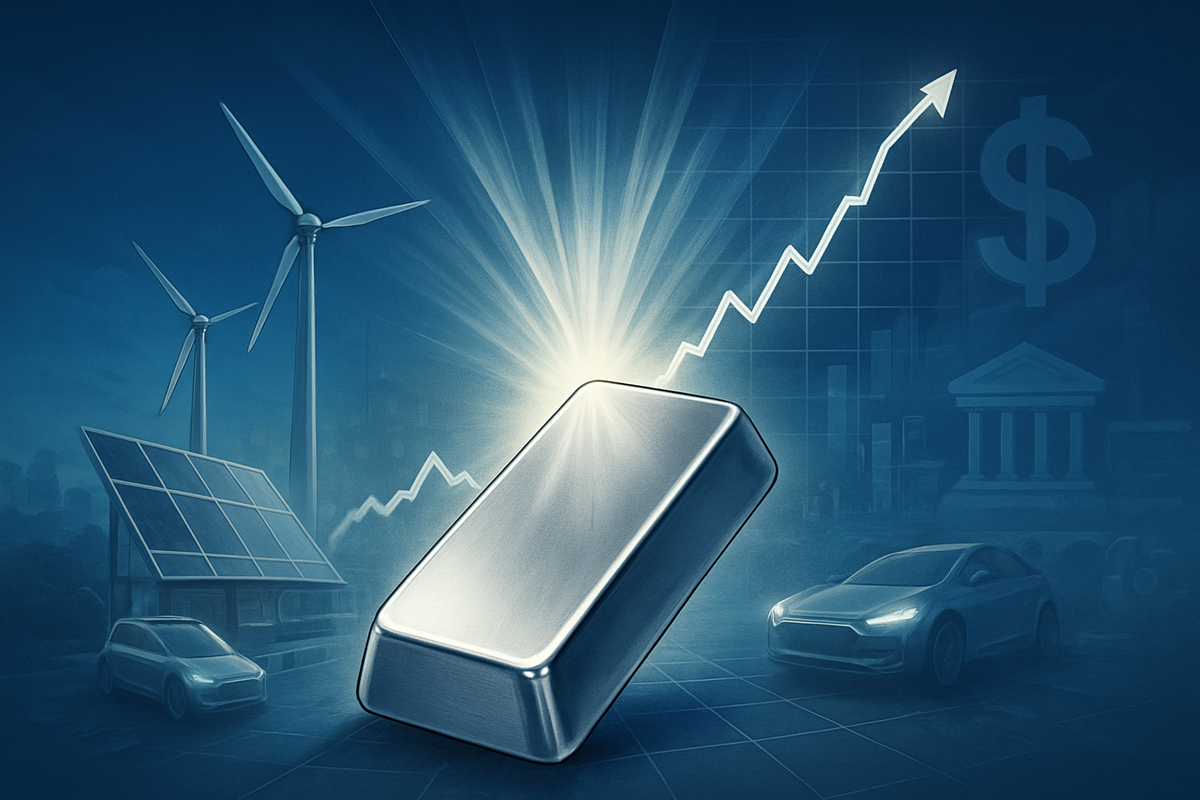
Silver has exploded onto the financial stage in an unprecedented rally throughout 2025, reaching historic highs and becoming a dominant force in the commodities market. As of December 8, 2025, the precious metal's price has surged, driven primarily by an insatiable industrial demand stemming from the burgeoning green energy transition and robust expectations of imminent Federal Reserve interest rate cuts. This dual-pronged catalyst has propelled silver to outperform its precious metal counterpart, gold, and signals a significant shift in market dynamics, with profound implications for investors and industries globally.
The immediate implications are clear: a sustained bullish sentiment for silver, increased investment activity reflected in strong ETF inflows, and a re-evaluation of its role beyond a mere safe-haven asset. While the rally promises high growth potential, its inherent volatility, often dubbed "gold on steroids," also necessitates caution for market participants navigating this exciting yet unpredictable landscape.
The White Metal's Meteoric Rise: A Deep Dive into the Surge
Silver's journey to unprecedented heights in 2025 has been nothing short of spectacular. The metal recorded an all-time high of $59.33 per ounce on December 5, 2025, with intraday trading briefly touching an astounding $61.44 per ounce. This monumental surge represents an extraordinary year-to-date increase of approximately 102%, significantly eclipsing gold's 60% gain over the same period. November 2025 alone saw prices jump 17.2% month-over-month, closing at a then-record of $56.445/oz. The past year has effectively seen silver prices double, breaking through crucial long-term resistance levels in the $50-$55 range, with technical analysts now eyeing targets of $62 and potentially even $100 per ounce in the coming months.
The primary force behind this meteoric rise is the escalating industrial demand, particularly from sectors vital to the global clean energy transition. Silver's unparalleled electrical and thermal conductivity makes it indispensable for solar panels (photovoltaics), electric vehicles (EVs), 5G networks, and a myriad of advanced electronics found in smartphones, tablets, and data centers – all critical components of the "net-zero economy." This surging industrial appetite has created a structural market deficit, with demand consistently outstripping mine production for five consecutive years. The cumulative shortfall from 2021 to 2025 is estimated at nearly 800 million ounces. Compounding this issue is silver's inelastic supply; 70-80% of global silver is a by-product of mining other metals like lead, zinc, copper, or gold, meaning its supply cannot easily scale up independently to meet its own rising demand.
Adding further fuel to the fire are strong expectations of Federal Reserve interest rate cuts. Markets are pricing in an 86% chance of a 25 basis point cut at the upcoming December 10, 2025 meeting. Lower interest rates typically reduce the opportunity cost of holding non-yielding assets such as precious metals, making them more attractive to investors compared to interest-bearing bonds. This sentiment is further bolstered by the expectation of a weaker U.S. dollar, which traditionally makes dollar-denominated commodities like silver more affordable and appealing to international buyers. Investors are keenly awaiting signals for further rate cuts in 2026, which could provide additional impetus for the ongoing rally.
Beyond these core drivers, other factors contributing to silver's ascent include substantial capital inflows into silver-backed Exchange Traded Funds (ETFs), with the first week of December 2025 witnessing the strongest ETF inflows since July. The declining gold-to-silver ratio also indicates a shift in market leadership, suggesting silver's continued outperformance. Ongoing geopolitical uncertainties, economic risks, and inflation concerns continue to drive safe-haven demand, while silver's recent inclusion on the U.S. critical mineral list underscores its strategic importance.
Corporate Fortunes in the Silver Rush
The unprecedented surge in silver prices is poised to create clear winners and losers across various industries. Companies involved in silver mining and exploration stand to gain significantly, as higher prices directly translate into increased revenues and profitability. Conversely, industries heavily reliant on silver as an input material, such as solar panel manufacturers, electronics producers, and electric vehicle companies, will face rising production costs, potentially impacting their margins if they cannot pass these costs on to consumers.
Potential Winners:
Silver mining companies are at the forefront of the beneficiaries. Major players like Pan American Silver Corp. (NASDAQ: PAAS), First Majestic Silver Corp. (NYSE: AG), and Wheaton Precious Metals Corp. (NYSE: WPM), which derive a substantial portion of their revenue from silver, are experiencing a boom. Higher silver prices enhance their financial performance, allowing for increased investment in exploration and development, debt reduction, or shareholder returns. Even diversified miners like BHP Group (NYSE: BHP) or Rio Tinto (NYSE: RIO), which produce silver as a by-product, will see a positive impact on their overall commodity portfolios. These companies could see their stock prices appreciate significantly as investors flock to capitalize on the silver rally.
Companies holding substantial silver inventories or those with significant hedging strategies that benefit from rising prices could also see an uplift. Furthermore, firms providing technology or services to the mining sector, such as equipment manufacturers or geological consulting firms, might experience increased demand as miners ramp up operations.
Potential Losers:
Industries with high silver consumption face the challenge of escalating input costs. Solar panel manufacturers, such as First Solar, Inc. (NASDAQ: FSLR) and JinkoSolar Holding Co., Ltd. (NYSE: JKS), use silver paste in photovoltaic cells. While demand for solar energy remains robust, a sustained increase in silver prices could squeeze profit margins unless they can innovate to reduce silver content or pass costs to consumers. Similarly, electronics giants like Apple Inc. (NASDAQ: AAPL), Samsung Electronics Co., Ltd. (KRX: 005930), and automotive manufacturers producing electric vehicles, such as Tesla, Inc. (NASDAQ: TSLA), rely on silver for connectors, circuitry, and various electronic components. These companies might face pressure to absorb higher costs or find alternative, less conductive materials, which could compromise product performance.
While the demand for green technologies is strong, the rising cost of a critical component like silver could force these companies to re-evaluate their supply chains, potentially leading to increased R&D into silver-saving technologies or a search for new suppliers. The impact will largely depend on the elasticity of demand for their end products and their ability to innovate and adapt to the changing cost structure.
Wider Significance: A New Era for the White Metal
Silver's unprecedented surge marks a pivotal moment, signaling a re-evaluation of its role within the global financial and industrial landscape. This event is not merely an isolated commodity rally but a powerful indicator of broader industry trends, particularly the accelerating global push towards decarbonization and the "net-zero economy." As a critical component in renewable energy infrastructure, electric vehicles, and advanced electronics, silver's price action underscores the tangible economic implications of the green transition. It highlights the increasing strain on raw material supplies as the world collectively shifts away from fossil fuels, creating potential ripple effects across various sectors.
The rally also underscores the growing recognition of silver's dual nature: a precious metal offering safe-haven appeal amidst geopolitical uncertainties and inflation fears, and an indispensable industrial commodity. This dual utility differentiates it from pure monetary metals like gold, suggesting that silver's future price movements may be increasingly driven by its industrial fundamentals rather than solely by monetary policy or safe-haven demand. This could lead to a decoupling of the gold-silver ratio as a primary predictive tool, with silver forging its own path based on structural supply deficits and burgeoning technological demand.
Regulatory and policy implications are also significant. With silver now recognized on the U.S. critical mineral list, governments may increasingly focus on securing domestic supplies or fostering international partnerships to ensure stable access. This could lead to new mining incentives, environmental regulations tailored to critical mineral extraction, or even strategic national stockpiling. The rising cost of silver could also spur innovation in material science, encouraging research into more efficient use of silver or the development of viable substitutes, though silver's unique properties make broad substitution challenging.
Historically, silver has been known for its volatility, often referred to as "gold on steroids" due to its smaller market size and sensitivity to economic cycles. While past surges have been driven primarily by monetary factors or speculative bubbles, the current rally appears to be underpinned by a more fundamental, structural shift in industrial demand, combined with accommodative monetary policy expectations. This blend suggests a more robust foundation for the current price levels compared to previous speculative peaks, though its inherent volatility remains a key characteristic.
What Comes Next: Navigating the Silver Horizon
Looking ahead, the trajectory of silver prices will largely hinge on the interplay of continued industrial demand growth and the Federal Reserve's monetary policy decisions. In the short term, market participants will be keenly watching the Fed's December 10, 2025 meeting for confirmation of the anticipated rate cut and any forward guidance regarding future policy. A dovish stance from the Fed, signaling further rate cuts in 2026, could provide additional impetus for the rally, potentially pushing prices towards the $62-$70 per ounce range. Conversely, any hawkish surprises or delays in rate cuts could trigger short-term profit-taking and increased volatility.
In the long term, the structural supply deficit, driven by the relentless demand from green technologies, is expected to remain a significant bullish factor. Analysts are increasingly confident that silver could reach $100 per ounce in the medium term, provided industrial consumption continues its upward trend and mine supply remains constrained. This creates significant opportunities for investors willing to weather the volatility, particularly in silver mining equities and specialized silver ETFs. However, challenges include the potential for increased recycling efforts, which could partially offset the supply deficit, and the risk of technological advancements that reduce silver content in key applications.
Companies in the solar, EV, and electronics sectors will need to strategically pivot, focusing on supply chain resilience, long-term procurement contracts, and continued innovation to minimize silver usage or explore cost-effective alternatives. Market opportunities may emerge for firms specializing in silver recycling technologies or those developing new, silver-efficient industrial processes. Potential scenarios include a sustained bull market driven by green demand, a more moderate appreciation influenced by central bank policies, or periods of significant correction if global economic growth falters or if unforeseen technological breakthroughs reduce silver's industrial indispensability. Investors should monitor industrial output data, central bank statements, and geopolitical developments closely.
Wrap-Up: Silver's Enduring Impact
Silver's unprecedented surge in 2025 marks a defining moment for the white metal, fundamentally reshaping its market perception and economic significance. The key takeaways from this rally are its dual drivers: a robust and structural industrial demand fueled by the global green energy transition, coupled with the anticipated tailwinds from Federal Reserve interest rate cuts. This combination has propelled silver to historic highs, showcasing its critical role not just as a safe-haven asset but as an indispensable commodity for modern technology and sustainable development.
Moving forward, the market is poised for continued dynamism. While the inherent volatility of silver ("gold on steroids") will persist, the underlying fundamentals suggest a more enduring bullish trend compared to past speculative surges. The structural supply deficit, particularly given silver's status as a by-product metal, implies that price pressures are unlikely to abate quickly, even with potential increases in recycling. Investors should recognize silver's unique position at the intersection of monetary policy, industrial growth, and environmental initiatives.
The lasting impact of this event will likely be a heightened awareness of critical mineral dependencies and the true cost of the green transition. It will compel industries to innovate in material efficiency and supply chain management, while governments may intensify efforts to secure vital resources. Investors should watch for continued capital flows into silver, further developments in clean energy technologies, and, crucially, the Federal Reserve's interest rate decisions in the coming months. Silver's journey is far from over; its current ascent signals a new era where its industrial utility may increasingly dictate its market value, making it a compelling, albeit volatile, asset for the foreseeable future.
This content is intended for informational purposes only and is not financial advice