
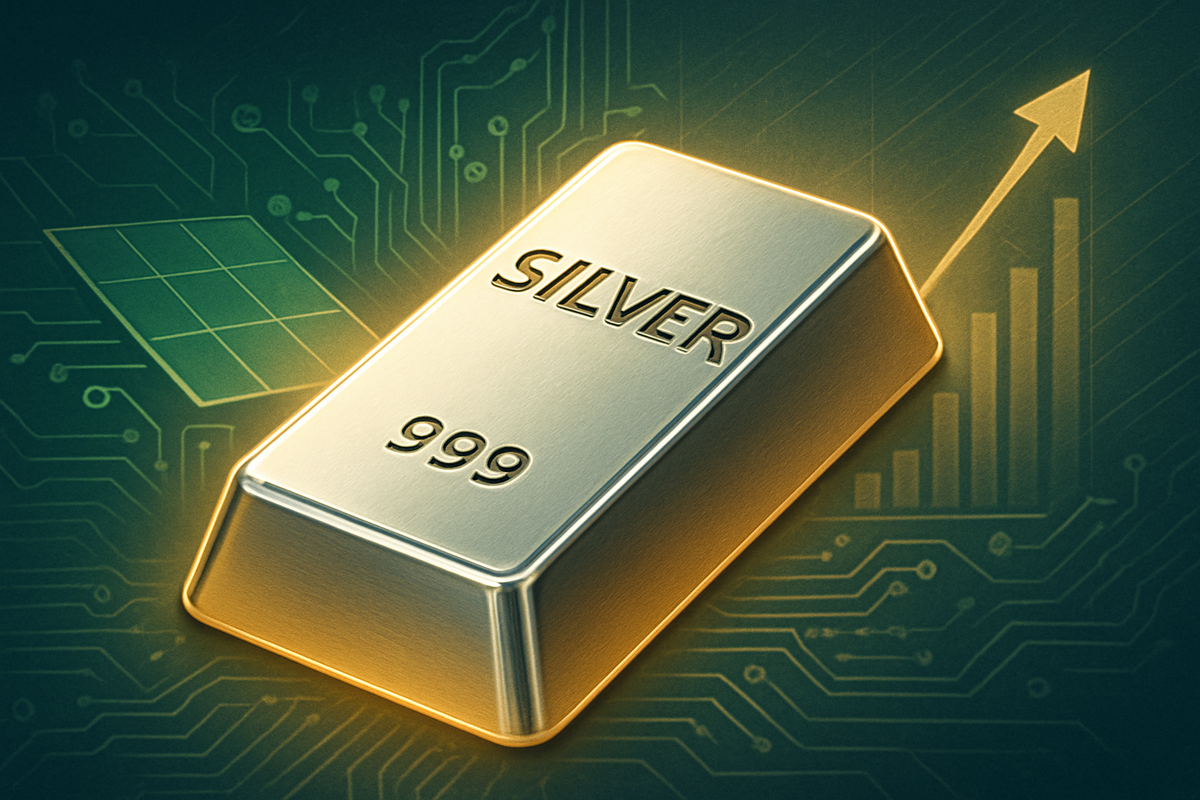
London, UK – December 8, 2025 – The precious metals market is abuzz as silver, often overshadowed by its glittering counterpart gold, achieved a historic milestone last week, surging to an all-time high of $59.33 an ounce on Friday, December 5, 2025. This remarkable ascent, with some reports even indicating a peak of $61.44 an ounce earlier in the week, marks a pivotal moment for the white metal, signaling a profound shift in investor sentiment and market dynamics. The rally is a confluence of robust industrial demand, tightening supply conditions, and mounting expectations of impending interest rate cuts by the Federal Reserve, positioning silver as a frontrunner in the commodities boom.
The immediate implications of this record-breaking performance are far-reaching. Investors are pouring capital into silver-backed Exchange Traded Funds (ETFs) at levels not seen since July, underscoring a strong bullish outlook and potentially setting the stage for short-term short squeezes. This surge not only highlights silver's intrinsic value but also its critical role in the accelerating global green energy transition, particularly in solar technology and electric vehicle batteries. As silver outpaces gold's gains significantly this year, market observers are keenly watching for sustained momentum and the potential for further re-evaluation of its market position.
A Week of Unprecedented Gains: Unpacking Silver's Historic Rally
Silver's journey to its record high was characterized by a rapid and decisive upward trajectory throughout the first week of December 2025. The metal's price began its aggressive climb, surpassing the $59 per troy ounce mark on Monday, December 1, 2025, and culminating in a new all-time high of $59.33 an ounce by the close of trading on Friday, December 5, 2025. Some intraday trading even saw silver briefly touch $61.44, illustrating the intense buying pressure. This surge represents a doubling of silver prices over the past year, significantly outperforming gold's substantial 60% increase during the same period.
Several critical factors converged to fuel this historic rally. A primary driver has been the relentless industrial demand, which has consistently outstripped mine supply for the fifth consecutive year. Silver is an indispensable component in a myriad of high-growth sectors, including solar panels, 5G technology, electric vehicles, and various medical applications. The global push towards decarbonization and sustainable energy solutions has amplified this demand, cementing silver's status as a vital green metal. Concurrently, the market has grappled with a historic supply squeeze, particularly evident in the London market, even as some pressures have reportedly eased. Inventories in key regions like China are near decade lows, further exacerbating supply tightness and pushing up the cost to lease physical silver.
Adding to the bullish sentiment are the macroeconomic expectations surrounding the Federal Reserve. With markets increasingly pricing in a high probability of imminent interest rate cuts, the appeal of non-yielding assets like silver grows. Lower interest rates reduce the opportunity cost of holding precious metals, making them more attractive to investors seeking safe havens and inflation hedges. This anticipated monetary policy shift has provided a significant tailwind for the entire precious metals complex, with silver leading the charge.
Key players and stakeholders involved in this rally include major institutional investors, who have been actively accumulating silver-backed ETFs, and industrial consumers who face rising input costs. Mining companies are also significant stakeholders, potentially benefiting from higher prices, though they also contend with the challenges of increasing production to meet burgeoning demand. Initial market reactions have been overwhelmingly positive, with analysts from prominent financial institutions like Citigroup Inc. (NYSE: C) revising their price targets upwards, with some forecasting silver could reach $62 an ounce within three months and potentially $95-$100 an ounce in the longer term, driven by sustained demand and physical shortages. The gold-to-silver ratio has also seen a notable decline, signaling silver's robust relative outperformance.
Corporate Fortunes: Winners and Losers in Silver's Ascent
The unprecedented surge in silver prices is poised to create distinct winners and losers across various industries, reshaping corporate strategies and investment outlooks. Mining companies with significant silver operations are undoubtedly among the primary beneficiaries. Firms like Pan American Silver Corp. (NASDAQ: PAAS), Fresnillo PLC (LSE: FRES), and Hecla Mining Company (NYSE: HL) stand to see substantial increases in their revenue and profitability. Higher silver prices directly translate to improved margins on their extracted metal, potentially leading to increased capital for exploration, development, and shareholder returns. These companies might accelerate existing projects or greenlight new ones that were previously deemed marginal, aiming to capitalize on the favorable pricing environment.
Conversely, industries heavily reliant on silver as a raw material will face increased cost pressures. Manufacturers of solar panels, such as First Solar Inc. (NASDAQ: FSLR), electronics companies like Apple Inc. (NASDAQ: AAPL) and Samsung Electronics Co., Ltd. (KRX: 005930), and medical device producers will contend with higher input costs. While some of these costs might be absorbed or passed on to consumers, sustained high silver prices could impact their profitability and competitive positioning. Companies with robust supply chain management and hedging strategies might be better equipped to mitigate these impacts, while those without could see their margins squeezed.
Beyond direct producers and consumers, the financial sector also experiences ripple effects. Investment banks and commodity traders, including JPMorgan Chase & Co. (NYSE: JPM) and Goldman Sachs Group Inc. (NYSE: GS), are actively involved in the silver market through derivatives, financing, and advisory services. Volatility and price surges create opportunities for trading profits but also introduce risks. Furthermore, companies focused on green energy technologies, while potentially facing higher material costs for silver in their products, also benefit from the broader market recognition of silver's critical role in the energy transition. This could attract more investment into the sector, indirectly benefiting companies across the renewable energy value chain.
The retail investment sector, including bullion dealers and coin manufacturers, will also experience a mixed bag. While increased investor interest in physical silver can boost sales, the rapid price appreciation can also make products less affordable for some buyers, potentially impacting sales volumes. Companies like APMEX and JM Bullion will need to carefully manage inventory and pricing strategies to navigate this volatile environment. Ultimately, the companies best positioned to win are those with strong operational efficiencies, diversified revenue streams, and the agility to adapt to shifting commodity prices, while those with high dependency on fixed-price contracts or thin margins could face significant challenges.
Broader Implications: Silver's Role in a Shifting Global Landscape
Silver's dramatic ascent to record highs is not an isolated event but rather a potent indicator of broader industry trends and shifting global economic dynamics. This rally underscores the growing importance of "green metals" in the transition towards a sustainable future. As nations worldwide commit to aggressive decarbonization targets, the demand for materials essential for renewable energy infrastructure, such as solar panels and electric vehicles, will only intensify. Silver, with its unparalleled conductivity and reflectivity, is uniquely positioned at the forefront of this industrial revolution, solidifying its role as a critical strategic commodity rather than merely a precious metal.
The ripple effects of silver's surge extend across the entire precious metals complex and beyond. While gold has also seen significant gains, silver's outperformance suggests a re-evaluation of its relative value. This could lead to increased investor interest in other industrial metals that are crucial for green technologies, such as copper, lithium, and nickel, potentially sparking a broader commodities supercycle. Competitors in the investment space, particularly those focused on traditional safe havens, might find themselves reallocating capital to assets with stronger industrial demand narratives. For partners in the supply chain, from refiners to distributors, the higher prices necessitate adjustments in inventory management, risk assessment, and contractual agreements.
Regulatory and policy implications are also noteworthy. Governments and international bodies, recognizing the strategic importance of silver, might explore measures to secure supply chains, encourage domestic mining, or even consider stockpiling. Trade policies related to critical minerals could become more stringent, impacting global supply flows. Furthermore, the increased volatility and speculative interest in silver could draw the attention of financial regulators, who might scrutinize market activities to ensure stability and prevent manipulation. The emphasis on environmental, social, and governance (ESG) factors in mining operations will also likely intensify, as companies seek to meet sustainability standards while ramping up production.
Historically, periods of significant commodity price appreciation have often coincided with inflationary pressures or geopolitical instability. While the current rally is strongly driven by industrial demand and monetary policy expectations, it also serves as a reminder of precious metals' role as a hedge against economic uncertainty. Comparisons can be drawn to past commodity booms, though the unique confluence of green energy demand and anticipated monetary easing sets this rally apart. The long-term implications could be a permanent re-rating of silver's value, reflecting its dual role as both an investment asset and an indispensable industrial component in the 21st century economy.
What Comes Next: Navigating Silver's Future Trajectory
The path forward for silver is brimming with both opportunities and challenges, with analysts and investors keenly observing key indicators for short-term and long-term possibilities. In the short term, the market will likely continue to be influenced by investor sentiment, particularly the ongoing inflows into silver ETFs, and any new developments regarding the Federal Reserve's interest rate policy. Should the Fed proceed with anticipated rate cuts, silver's appeal as a non-yielding asset will strengthen further, potentially pushing prices towards the $62 an ounce mark projected by some experts. However, the metal's 14-day Relative Strength Index (RSI) hovering around 70 suggests it may be technically overbought, hinting at potential for short-term pullbacks or increased volatility as the market digests its rapid gains.
Looking further ahead, the long-term trajectory for silver appears robust, underpinned by structural demand trends. The relentless global push towards green energy and technological advancement guarantees a sustained and growing need for silver in solar panels, electric vehicles, and electronics. This inherent industrial demand, coupled with persistent supply deficits, suggests that prices could continue their upward trend, with some long-term forecasts even eyeing the $95-$100 an ounce range. Mining companies will face strategic imperatives to increase exploration and production to meet this demand, potentially requiring significant capital expenditure and technological innovation to unlock new reserves.
Potential strategic pivots or adaptations will be crucial across various sectors. For industrial consumers, securing long-term supply contracts and exploring alternative materials or recycling initiatives will become paramount to mitigate cost volatility. Investors might increasingly diversify their portfolios to include physical silver or silver-backed assets, recognizing its dual role as a precious metal and an industrial commodity. New market opportunities may emerge in silver recycling technologies and efficient extraction methods, driven by the economic incentive of higher prices. Challenges will include managing increased price volatility, ensuring liquidity in physical markets, and navigating potential regulatory scrutiny if speculative activity intensifies.
Several scenarios could unfold. A "bull case" sees silver continuing its ascent, driven by strong industrial demand, consistent supply deficits, and a dovish Fed, potentially establishing a new, higher price floor. A "bear case," though less likely given current fundamentals, could involve a significant global economic slowdown impacting industrial demand, or an unexpected hawkish shift from central banks, leading to a correction. A "base case" suggests continued volatility but with an underlying upward trend, as market forces gradually adjust to silver's re-evaluated value and critical role in the modern economy.
Comprehensive Wrap-Up: Silver's Enduring Impact
Silver's recent surge to a record high is a landmark event that encapsulates a confluence of powerful economic and technological forces, signaling a significant re-evaluation of its market position. The key takeaways from this historic rally are clear: silver is no longer merely gold's lesser counterpart but a critical industrial metal indispensable to the global green energy transition and technological advancement. Its robust performance, significantly outperforming gold, highlights the market's recognition of its intrinsic value, structural supply deficits, and the macroeconomic tailwinds of anticipated interest rate cuts.
Moving forward, the market for silver is poised for continued dynamism. While short-term volatility is to be expected, the long-term outlook remains overwhelmingly bullish, driven by an insatiable industrial appetite and persistent supply constraints. This fundamental imbalance suggests that the current high prices may not be a fleeting phenomenon but rather the establishment of a new, elevated trading range for the metal. The gold-to-silver ratio will be a crucial metric to watch, as its continued decline would further affirm silver's independent strength and growing prominence.
The lasting impact of this event will likely be a permanent shift in how investors, industries, and policymakers perceive silver. It solidifies its status as a strategic commodity vital for national economic and environmental objectives. For investors, the message is to remain vigilant: monitor central bank policies, global industrial growth trends, and the ongoing supply-demand dynamics in the physical silver market. The coming months will offer further clarity on the sustainability of this rally and the extent to which silver can solidify its new role as a leading indicator of the broader commodities market and the green economy.
This content is intended for informational purposes only and is not financial advice