

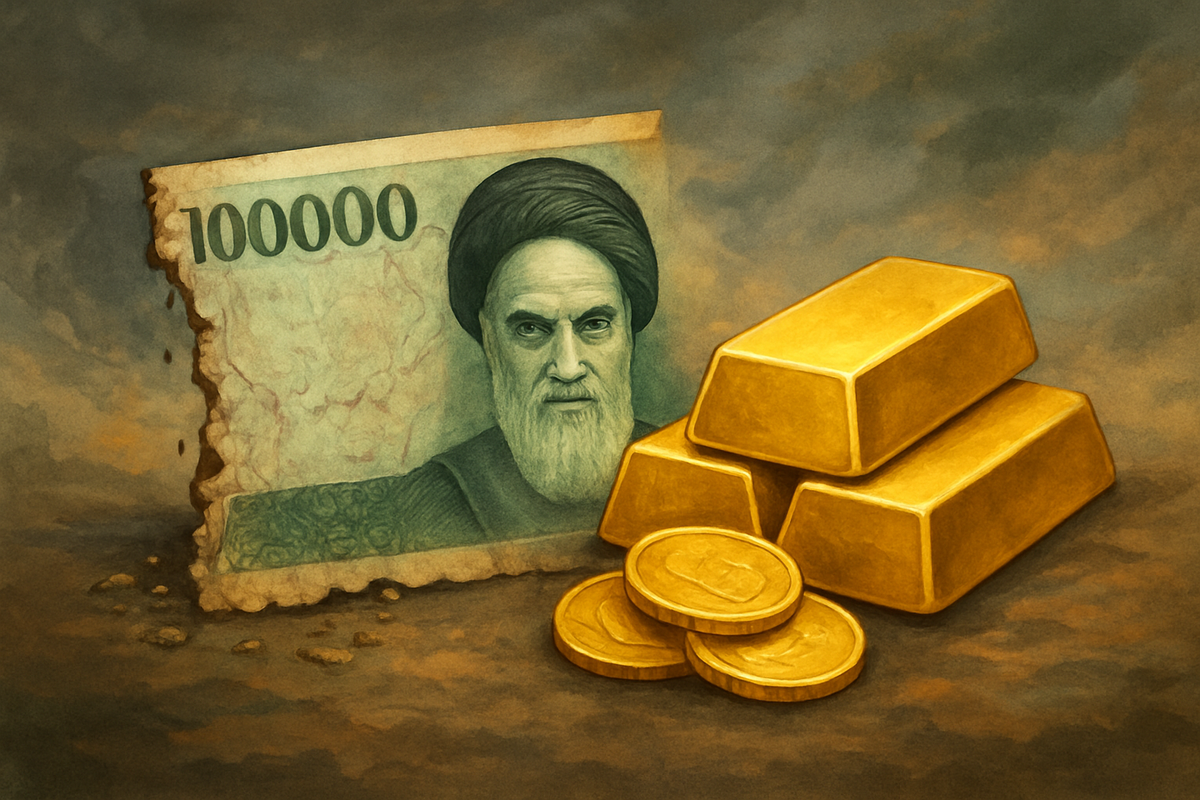
The persistent geopolitical instability stemming from the protracted conflict between Israel and Iran has ignited a significant surge in demand for gold within Iran. As the shadow of regional tensions lengthens, particularly following escalations in late 2024 and mid-2025, the Iranian Rial (IRR) has experienced a precipitous decline against major international currencies. This currency weakening has driven Iranian citizens and investors to seek refuge in tangible assets, with gold emerging as the paramount safe-haven against inflation, sanctions, and economic uncertainty.
This flight to gold underscores a deep-seated public anxiety regarding Iran's economic future. The escalating conflict has not only devalued the national currency but also eroded public trust in traditional financial instruments, pushing a growing segment of the population to convert their savings into precious metals. The phenomenon highlights the profound economic consequences of geopolitical strife, transforming global conflicts into direct pressures on household wealth and investment strategies within affected nations.
The Rial's Retreat: A Detailed Look at Geopolitical Fallout
The recent history of the Israel-Iran conflict, particularly the events of late 2024 and mid-2025, provides a stark illustration of how geopolitical tensions can directly translate into economic instability. Following Israeli strikes in Lebanon and Iran's retaliatory missile attack on Israel in October 2024, the Iranian Rial began a sharp descent. Its value dropped by over 5% in just two weeks, moving from 592,000 IRR to the US dollar in late September to 630,000 IRR by early October. This depreciation accelerated, with the dollar climbing to 686,500 IRR by October 23, 2024, on the official market, and even higher on the parallel market, reaching 684,500 rials from 618,000 rials at the beginning of the month.
The situation dramatically worsened with the outbreak of the "Iran-Israel War" in June 2025. This 12-day conflict, marked by intense Israeli airstrikes and retaliatory actions, inflicted significant economic damage and sent the Rial into a further freefall. By mid-June 2025, the US dollar surged by over 100,000 rials, reaching approximately 938,000 rials. The cumulative effect of these conflicts, compounded by the reimposition of UN sanctions in late September 2025 and ongoing nuclear sanctions, saw the Iranian Rial hit a new record low of 1.2 million to the U.S. dollar by December 2025.
Key players in this unfolding drama include the Iranian government, grappling with the dual challenges of managing a war economy and a depreciating currency, and the Iranian populace, who are bearing the brunt of rising living costs and eroding savings. International bodies, particularly the United Nations and the United States, have also played a significant role through sanctions, further isolating Iran's economy. The initial market reactions within Iran were characterized by a frantic rush to convert liquid assets into gold and other portable forms of wealth, while global markets saw a temporary surge in gold prices, reflecting its universal appeal as a safe-haven asset during times of crisis.
Market Movers: Companies Poised to Win or Lose
The current geopolitical climate, particularly the Israel-Iran conflict and its impact on the Iranian Rial, creates a complex landscape for various companies, both within and outside Iran. While direct investment in Iranian public companies is largely restricted by sanctions, global entities involved in the gold market and those exposed to commodity price fluctuations are directly affected.
Companies in the gold mining sector stand to benefit significantly from the increased demand and rising prices of gold. Major global gold producers such as Barrick Gold Corporation (NYSE: GOLD), Newmont Corporation (NYSE: NEM), and Agnico Eagle Mines Limited (NYSE: AEM) could see enhanced profitability. As gold prices have surged globally, reaching near record highs of $3,500 per ounce in April 2025 and forecasted to hit $3,000 per ounce by year-end by analysts from Goldman Sachs Group Inc. (NYSE: GS) and JPMorgan Chase & Co. (NYSE: JPM), these companies benefit from higher revenue per ounce extracted. Furthermore, companies involved in gold refining, distribution, and exchange-traded funds (ETFs) that track gold, such as SPDR Gold Shares (NYSE Arca: GLD), could also experience increased inflows and trading volumes.
Conversely, companies heavily reliant on international trade with Iran or those with significant exposure to the Iranian market, particularly those dealing in non-essential goods or services, face substantial headwinds. The weakening Rial makes imports prohibitively expensive for Iranian consumers and businesses, drastically reducing purchasing power. While specific publicly traded Iranian companies are difficult to track due to sanctions, any international firm with lingering commercial ties, however indirect, might find their operations curtailed or profitability reduced due to currency volatility and heightened risk. Additionally, companies in the financial services sector that might have facilitated transactions with Iran prior to stricter sanctions could face increased scrutiny and compliance costs. The overall instability also deters foreign direct investment into the region, impacting companies that might have considered expansion or partnerships in the broader Middle East.
Wider Significance: A Return to Hard Assets
The current scramble for gold in Iran is not an isolated event but rather a potent illustration of broader industry trends and historical precedents. In times of profound geopolitical uncertainty and economic instability, there is a consistent flight to tangible, universally recognized assets. This phenomenon underscores gold's enduring role as the ultimate safe-haven, a store of value that transcends national currencies and political volatility. The Iranian situation serves as a stark reminder that when fiat currencies are perceived as vulnerable, whether due to inflation, sanctions, or conflict, hard assets become the preferred medium for preserving wealth.
This event fits into a broader trend of central banks globally increasing their gold reserves, as noted by analysts, signaling a collective effort to diversify away from traditional reserve currencies and hedge against systemic risks. The ripple effects extend beyond Iran's borders; the sustained demand from regions experiencing instability contributes to the upward pressure on global gold prices, affecting producers and investors worldwide. Competitors in the precious metals market, such as silver and platinum, also tend to benefit from this renewed interest, albeit to a lesser extent than gold. The regulatory implications are significant, with governments often attempting to control capital flight or the trade of precious metals during crises, which can lead to the emergence of robust black markets, as seen with the parallel market for the Rial and gold in Iran.
Historically, the Iranian experience echoes similar patterns observed during periods of hyperinflation or conflict in other nations. During the Iran-Iraq War in the 1980s or the 1979 Iranian Revolution, citizens similarly converted their savings into gold and other portable wealth to protect against economic collapse. This historical precedent highlights a deep-seated behavioral response to crisis: when trust in institutions and currency erodes, individuals revert to fundamental forms of value. The current situation in Iran reinforces the timeless economic principle that in times of extreme uncertainty, the intrinsic value and liquidity of gold make it an unparalleled asset.
What Comes Next: Navigating a Volatile Future
Looking ahead, the short-term and long-term possibilities stemming from the Israel-Iran conflict and its impact on Iran's economy suggest continued volatility and strategic adaptations. In the short term, as long as geopolitical tensions persist and sanctions remain in place, the demand for gold within Iran is likely to remain robust. The Iranian Rial is expected to continue facing depreciation pressures, prompting further conversion of savings into precious metals. This scenario presents ongoing market opportunities for global gold miners and investors in gold-backed assets, while simultaneously posing significant challenges for the Iranian government in stabilizing its economy and managing inflation.
In the long term, the trajectory of the conflict and the effectiveness of international diplomacy will be crucial. A de-escalation of tensions or a breakthrough in nuclear negotiations could potentially ease sanctions and bring some stability to the Rial, thereby reducing the immediate urgency for gold as a safe-haven. However, given the deep-rooted nature of the conflict and the complex geopolitical landscape, such an outcome is highly uncertain. More likely, Iran will continue to grapple with economic isolation, necessitating strategic pivots towards self-sufficiency and alternative trade mechanisms. This could involve further development of domestic industries and exploration of non-traditional financial pathways.
Potential scenarios range from a continued low-intensity conflict maintaining the current economic pressures, to further escalation leading to even more severe economic consequences. In any scenario, the Iranian public's learned behavior of hedging against currency depreciation with gold is likely to persist, shaping investment patterns for years to come. Market opportunities may emerge for innovative financial instruments that can navigate sanction environments, while challenges will remain for traditional banking and investment sectors within Iran. Investors globally should watch for shifts in diplomatic efforts, the enforcement of sanctions, and any internal economic reforms in Iran, as these will be key determinants of future market directions for gold and the Rial.
Wrap-Up: Gold's Enduring Role in a Turbulent Market
The Israel-Iran conflict has served as a powerful catalyst, driving an unprecedented demand for gold in Iran as citizens desperately seek to shield their wealth from a rapidly depreciating Rial. The key takeaway from this event is the reaffirmation of gold's timeless role as a safe-haven asset, particularly in the face of geopolitical instability, currency devaluation, and economic sanctions. The Iranian experience, with the Rial plummeting to record lows and gold prices soaring to historical highs, offers a stark contemporary example of how global conflicts translate into immediate and profound economic consequences for ordinary citizens.
Moving forward, the market will continue to be shaped by the intricate interplay of geopolitical developments, the enforcement of international sanctions, and Iran's domestic economic policies. While the immediate surge in gold demand is a direct response to crisis, it also reflects a deeper erosion of trust in the national currency and financial system. This trend is likely to persist as long as the underlying causes of instability remain unresolved.
For investors, the situation underscores the importance of diversification and the strategic allocation of assets during periods of heightened global risk. The sustained demand for gold, both from individual investors in affected regions and from central banks globally, suggests that its appeal as a hedge against uncertainty is stronger than ever. What investors should watch for in the coming months are any signs of de-escalation in the Israel-Iran conflict, changes in international sanctions regimes, and any significant shifts in Iran's economic policies. These factors will ultimately dictate the long-term trajectory of the Rial and the sustained demand for gold in the region, continuing to shape both local and global financial markets.
This content is intended for informational purposes only and is not financial advice