
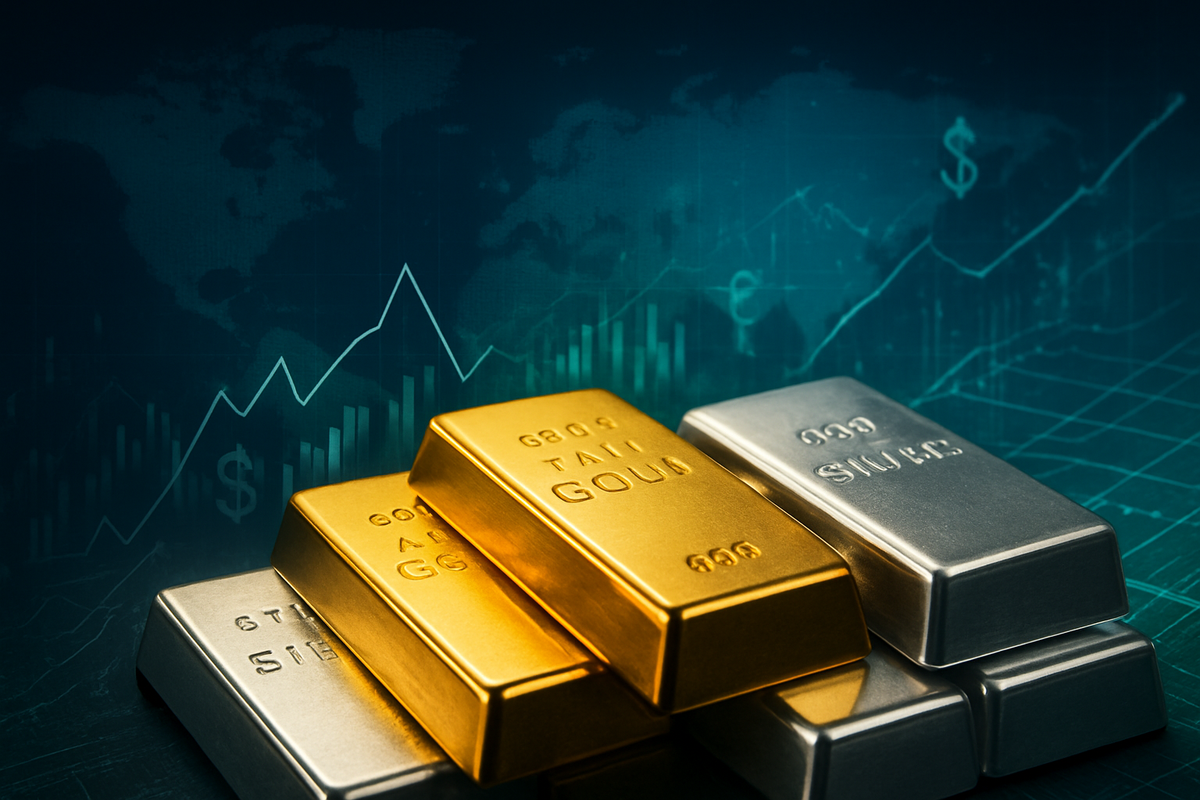
As December 2025 unfolds, the gold and silver markets continue to exhibit remarkable strength, captivating investors and analysts alike. This sustained bullish momentum is not merely a fleeting trend but rather a deeply rooted phenomenon driven by a complex interplay of geopolitical anxieties, aggressive central bank accumulation, persistent inflationary pressures, and the looming prospect of interest rate cuts by the U.S. Federal Reserve. Silver, in particular, has emerged as a standout performer, often outpacing gold due to its dual appeal as both a monetary metal and a critical industrial commodity facing significant supply deficits. The ongoing rally underscores the precious metals' enduring role as safe havens and inflation hedges in an increasingly uncertain global economic landscape.
The immediate implications of this robust performance are manifold. For investors, it reinforces the strategic importance of precious metals in portfolio diversification, offering a hedge against market volatility and currency depreciation. For the broader financial markets, the strength in gold and silver can signal underlying concerns about the health of fiat currencies and the efficacy of conventional monetary policies. This environment suggests a continued reallocation of capital towards tangible assets, reflecting a cautious sentiment among global financial actors as they navigate a period marked by elevated risks and evolving economic paradigms.
A Confluence of Factors Fueling the Precious Metals Surge
The current strength in gold and silver is underpinned by several powerful, interconnected factors. Geopolitical instability, characterized by ongoing conflicts in the Middle East and Eastern Europe, along with broader international tensions, continues to fuel safe-haven demand. Investors are increasingly turning to gold and silver as reliable stores of value amidst global turbulence, seeking refuge from the uncertainties plaguing equity and bond markets.
A significant driver of gold's ascent is the unprecedented buying spree by central banks worldwide. For the third consecutive year in 2024, central bank gold purchases have exceeded 1,000 tonnes, a trend that continued robustly into 2025, with October alone seeing central banks acquire 53 tonnes. This strategic accumulation is driven by a desire to diversify national reserves away from the U.S. dollar and a growing mistrust in traditional fiat currencies. This institutional commitment provides a strong floor for gold prices, signaling long-term confidence in the metal's value.
Furthermore, expectations of impending interest rate cuts by the U.S. Federal Reserve are acting as a powerful tailwind for both gold and silver. Lower interest rates reduce the opportunity cost of holding non-yielding assets like precious metals, making them more attractive compared to interest-bearing alternatives. As of early December 2025, market sentiment indicates an 87-89% probability of a Fed rate cut, spurred by softening U.S. economic data and increasingly dovish signals from central bank officials. Coupled with persistent inflation rates that remain above central bank targets, the traditional role of gold as an inflation hedge has been revitalized, prompting investors to protect their purchasing power.
The silver market, in particular, is experiencing a unique dynamic driven by a structural supply deficit. For four consecutive years (2021-2024), demand has outstripped supply, with a deficit of 148.9 million ounces (Moz) in 2024, projected to be 117.6 Moz in 2025. This scarcity is exacerbated by slowed mine production due to lower ore quality, higher costs, and project delays. Industrial demand for silver reached a record high of 680.5 Moz in 2024, largely propelled by the "green economy" initiatives, including significant investments in grid infrastructure, electric vehicles, and photovoltaic (solar) applications, alongside growing demand from AI-related consumer electronics. This robust industrial appetite, combined with declining inventories on major exchanges like the Shanghai Futures Exchange and COMEX, is a primary reason for silver's exceptional price performance.
Companies Poised to Win or Lose in a Shining Market
The sustained strength in gold and silver markets creates a distinct landscape of winners and losers across various industries. Unsurprisingly, precious metals mining companies are among the primary beneficiaries. Firms such as Barrick Gold (NYSE: GOLD), Newmont (NYSE: NEM), Wheaton Precious Metals (NYSE: WPM), and Pan American Silver (NASDAQ: PAAS) stand to see significant improvements in their revenues and profit margins as the value of their core products appreciates. Higher commodity prices can lead to increased capital expenditure in exploration and development, potentially extending mine lives and boosting future production. Investors in precious metals-focused Exchange Traded Funds (ETFs) are also experiencing robust returns, reflecting strong investor interest and a "Fear of Missing Out" (FOMO) factor.
Conversely, while the overall sentiment is positive for precious metals, some sectors could face challenges. Industries heavily reliant on silver as an industrial input, particularly those with tight margins or where silver constitutes a significant portion of their material costs, might experience pressure. However, the current surge in industrial demand for silver, particularly from the burgeoning "green economy" and AI sectors, suggests that many of these industries are absorbing the higher costs due to strong underlying growth and strategic importance. For instance, manufacturers of solar panels or electric vehicle components are likely to prioritize supply continuity, even at elevated prices, given the strategic imperative of these technologies.
Furthermore, companies that have significant hedging strategies in place might see their gains capped if their hedges are structured to lock in lower prices. On the other hand, those with unhedged or minimally hedged production are positioned to fully capitalize on the rising market. The financial services sector, particularly those involved in commodity trading and investment banking, will also see increased activity and potential revenue streams from the heightened interest and volatility in precious metals markets.
Broader Significance and Historical Context
The current rally in gold and silver is more than just a market event; it reflects profound shifts in the global economic and geopolitical order. It signals a growing trend of de-dollarization among central banks, as nations seek to diversify their reserves and reduce reliance on a single dominant currency. This move towards gold accumulation represents a strategic pivot, driven by a desire for greater financial autonomy and resilience against potential geopolitical weaponization of financial systems.
The robust industrial demand for silver, particularly from the "green economy" and Artificial Intelligence sectors, highlights its critical role in the ongoing energy transition and technological revolution. This demand positions silver as a strategic metal, essential for achieving global sustainability goals and advancing cutting-edge technologies. The ripple effects extend to related industries, stimulating innovation in materials science and potentially accelerating the development of alternative, more cost-effective materials if prices become prohibitive in the long term. However, for now, the demand appears inelastic due to the irreplaceable properties of silver in these applications.
Regulatory and policy implications are also significant. Central bank monetary policies, especially regarding interest rates, will continue to be a primary determinant of precious metal prices. Any unexpected hawkish shifts could temper the rally, while continued dovishness would likely sustain it. Trade policies and supply chain regulations could also impact the availability and cost of precious metals, particularly for silver, given its globalized supply chain. Historically, gold and silver have served as crucial safe havens during periods of economic instability and high inflation, such as the 1970s oil crises and the 2008 financial crisis. The current environment, with its mix of geopolitical tensions, inflationary pressures, and a potential pivot in monetary policy, draws strong parallels to these historical precedents, reinforcing the metals' traditional roles.
What Comes Next: Navigating the Precious Metals Frontier
Looking ahead, the trajectory of gold and silver markets will likely remain highly sensitive to a few critical factors. In the short term, immediate market movements will be heavily influenced by pronouncements from the U.S. Federal Reserve regarding interest rates. Any unexpected hawkish signals could introduce volatility, while confirmation of rate cuts would likely provide further impetus to the rally. Geopolitical developments, particularly in conflict zones and major power rivalries, will also continue to drive safe-haven demand, creating potential for rapid price swings.
In the long term, the structural drivers for both metals appear robust. Central bank gold accumulation is expected to continue, driven by ongoing diversification strategies. For silver, the "green economy" and AI boom are projected to sustain and even accelerate industrial demand, with forecasts indicating 5-7% annual growth through 2026. This sustained demand, coupled with persistent supply deficits, suggests a strong underlying bullish trend for silver. Strategic pivots for mining companies might include increased investment in exploration and development to capitalize on higher prices, alongside efforts to optimize existing operations and manage cost inflation.
Market opportunities will emerge for investors seeking diversification, inflation protection, and exposure to the energy transition theme. Challenges could include increased price volatility and the potential for regulatory interventions if market dynamics become overly speculative. Potential scenarios range from a continued steady ascent, particularly if the Fed implements multiple rate cuts and geopolitical tensions persist, to periods of consolidation or even temporary pullbacks if global economic growth surprises on the upside, leading to a stronger U.S. dollar. However, the fundamental underpinnings of demand and supply imbalances, especially for silver, suggest that any dips may be viewed as buying opportunities.
A Glimmering Future: Key Takeaways and Investor Watch Points
The sustained strength in gold and silver markets as of December 2025 is a multifaceted narrative, woven from threads of geopolitical uncertainty, strategic central bank actions, robust industrial demand, and shifting monetary policy expectations. The key takeaway is that both precious metals are playing critical roles in a transforming global economy, serving as essential safe havens, inflation hedges, and, particularly for silver, indispensable industrial commodities driving the green energy and technological revolutions.
Moving forward, the market appears poised for continued bullish sentiment, albeit with inherent volatility. The interplay between U.S. monetary policy, the strength of the U.S. dollar, and global geopolitical stability will dictate much of the short-to-medium term price action. However, the underlying structural demand for silver, coupled with ongoing central bank gold buying, provides a strong foundation for a positive long-term outlook.
Investors should closely watch several key indicators in the coming months. Foremost among these are the Federal Reserve's interest rate decisions and accompanying forward guidance, as these will directly impact the opportunity cost of holding precious metals and influence the U.S. dollar's strength. Geopolitical developments, particularly any escalations or de-escalations of conflicts, will also be crucial. Furthermore, monitoring reports on industrial demand for silver, especially from the solar, EV, and AI sectors, and tracking central bank gold purchasing data will provide valuable insights into the ongoing health and direction of these shining markets.
This content is intended for informational purposes only and is not financial advice