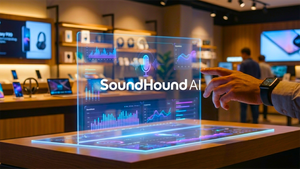


As the final bells of 2025 ring across global exchanges, the financial story of the year is not the resurgence of big banks or the maneuvers of private equity giants, but the unprecedented dominance of the individual trader. Today, December 31, 2025, data confirms that retail participation has reached its highest level in history, fundamentally altering the mechanics of price discovery and market volatility. No longer just a "meme stock" curiosity, the retail investor has evolved into a sophisticated, AI-equipped structural force that now dictates the rhythm of the "roller-coaster" trading sessions that defined the past twelve months.
Throughout 2025, individual investors consistently accounted for between 20% and 25% of daily U.S. equity trading volume, a figure that peaked at a staggering 35% during the market turbulence of April. This surge was fueled by a combination of "AI co-pilot" trading tools, the mass adoption of zero-day-to-expiration (0DTE) options, and a new generation of traders who treat the market as a 24/7 ecosystem. The result has been a year of extreme intraday swings, where retail-led "buy-the-dip" campaigns repeatedly rescued the market from institutional sell-offs, most notably during the "Liberation Day" tariff scare in the spring.
The Year of the "U-Shaped" Recovery: A Timeline of Volatility
The "roller-coaster" of 2025 began in earnest on April 2, a day now dubbed "Liberation Day" by market participants. Following a sudden administration announcement of sweeping global tariffs, the S&P 500 plummeted 12.1% in just four sessions. While institutional hedge funds and pension funds moved to the sidelines or shorted the market, retail investors utilized real-time sentiment analysis and AI-driven pattern recognition to execute a massive counter-offensive. By the end of April, retail inflows had driven an 11.8% rally, nearly erasing the losses and proving that the "dumb money" era was officially over.
This newfound sophistication was powered by the "Year of the AI Co-pilot." In 2025, an estimated 58% of retail investors integrated AI agents into their trading workflows. Platforms like RockFlow introduced conversational AI that allowed users to build complex, multi-leg options strategies through simple voice prompts. These tools leveled the playing field, allowing individuals to react with the speed and precision of high-frequency trading (HFT) firms. This was evident in the mid-year short squeeze of Kohl’s (KSS: NYSE), where retail traders, alerted by AI-scanned social media sentiment and high short-interest data, triggered a 40% single-day surge that forced multiple trading halts and sent short-sellers scrambling.
The volatility was further amplified by the dominance of 0DTE options, which by late 2025 accounted for over 50% of the total S&P 500 options volume. Retail traders became the primary drivers of these ultra-short-term contracts, creating "gamma squeezes" that forced market makers to hedge aggressively. This dynamic was particularly visible in high-beta favorites like Nvidia (NVDA: NASDAQ) and Tesla (TSLA: NASDAQ), where retail-led options flows caused intraday "flash" swings that often defied traditional fundamental analysis.
Winners and Losers in the Retail Renaissance
The primary beneficiaries of this retail surge have been the digital-first brokerage platforms and the market makers who facilitate their order flow. Robinhood (HOOD: NASDAQ) emerged as a titan of the 2025 market, reporting a 50% year-over-year increase in net revenue by the first quarter. Its transaction-based revenue, particularly from cryptocurrency and options, reached levels not seen since the 2021 frenzy. Similarly, Charles Schwab (SCHW: NYSE) capitalized on the trend, reporting record Q3 revenues of $6.1 billion as it successfully integrated high-frequency retail traders from its TD Ameritrade acquisition.
Market makers like Virtu Financial (VIRT: NASDAQ) and the privately held Citadel Securities also saw windfall profits. Virtu reported a 53% surge in net trading income, largely attributed to the high-margin liquidity opportunities provided by retail 0DTE flows. Interactive Brokers (IBKR: NASDAQ) also thrived, maintaining a pretax profit margin of 79% as its commission revenue grew by 23% on the back of a 67% increase in stock trading volume.
On the losing side of the ledger were traditional short-sellers and hedge funds that failed to adapt to the speed of retail-led momentum. The resurgence of "Meme 2.0" stocks, such as Opendoor (OPEN: NASDAQ), which surged over 500% in July despite weak fundamentals, served as a painful reminder that retail coordination can override traditional valuation metrics. Additionally, while brokerages won on revenue, they faced stiff regulatory headwinds. Robinhood was hit with $71 million in combined fines from the SEC and FINRA for recordkeeping and oversight failures, highlighting the growing pains of a rapidly scaling industry.
Wider Significance: The Professionalization of the Individual
The events of 2025 signify a permanent shift in market structure. The "democratization of finance" has moved beyond simple access to sophisticated execution. The withdrawal of the SEC’s proposed "Predictive Data Analytics" (PDA) rule in June 2025 was a watershed moment. By choosing not to "neutralize" AI-driven conflicts of interest, the SEC effectively cleared the path for brokerages to continue deploying advanced AI tools, provided they adhere to existing "Best Interest" (Reg BI) standards. This has encouraged a "technology-neutral" regulatory environment where the focus is on outcomes rather than the algorithms themselves.
Furthermore, the 2025 retail boom has accelerated the move toward 24/7 trading. With platforms like Robinhood and Schwab expanding their overnight windows, the distinction between "market hours" and "after hours" has blurred. This has profound implications for global liquidity, as retail traders in the U.S. now react instantly to overnight news from Asia and Europe, often setting the tone for the New York open before the first bell even rings.
The historical precedent for this shift is often compared to the 1975 "May Day" abolition of fixed commissions, which birthed the discount brokerage industry. However, 2025 represents something more radical: the "quantification" of the retail investor. When individuals have access to the same sentiment data and execution speeds as institutional desks, the very definition of "market efficiency" must be rewritten.
What Comes Next: The 2026 Horizon
Looking ahead to 2026, the market is entering unchartered territory. The short-term focus will likely be on the implementation of T+0 (same-day) settlement, a move heavily pushed by the retail community to reduce counterparty risk and free up capital faster. This change will require a massive technological overhaul for traditional banks but will be a natural fit for the digital-native brokerages that dominated 2025.
Strategic pivots are already underway. We expect to see a "professionalization" of retail portfolios, with a shift away from individual stock picking toward actively managed and thematic ETFs that target sectors like Quantum Computing and Uranium. As AI tools become even more autonomous, the next challenge will be "algorithmic collusion"—the risk that thousands of independent AI agents, trained on the same data, might move in unison to create systemic "flash crashes" or artificial bubbles.
The challenge for investors in the coming months will be navigating a market where sentiment can shift in milliseconds. The "roller-coaster" is not likely to slow down; if anything, the tracks are being extended into a 24/7 global loop.
Final Reflections on a Record-Breaking Year
The year 2025 has proven that the retail investor is no longer a guest in the house of finance—they are one of its primary architects. From the "Liberation Day" recovery to the 0DTE options explosion, the individual trader has shown a remarkable ability to absorb shocks and drive momentum. The key takeaway for the market moving forward is that retail participation is now a structural, not cyclical, component of the financial system.
As we move into 2026, investors should keep a close watch on the SEC’s "technology-neutral" enforcement actions and the potential for a "liquidity crisis" in the 24/7 trading windows. The market has become faster, smarter, and more volatile than ever before. For those who can harness the tools of the "Algorithmic Individual," the opportunities are limitless, but for those still playing by the rules of 2020, the risks have never been higher.
This content is intended for informational purposes only and is not financial advice.