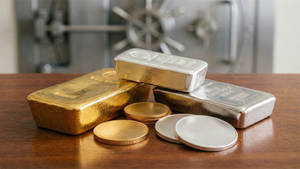


NEW YORK — Shares of major precious metals mining companies are mounting a significant recovery in U.S. premarket trading this Tuesday, December 30, 2025. The sector-wide bounce follows a tumultuous 24 hours in which gold and silver prices suffered their sharpest single-day decline in months, triggered by sudden regulatory shifts and aggressive profit-taking. As the dust settles, investors are once again flocking to the sector, buoyed by dovish signals from the Federal Reserve and escalating geopolitical tensions that underscore the enduring appeal of safe-haven assets.
The rebound has seen industry leaders like Newmont (NYSE: NEM) and Barrick Gold (NYSE: GOLD) climb more than 2% in early activity, erasing a portion of the losses sustained during Monday’s "flash crash." With silver prices also stabilizing after a double-digit percentage drop, the mining sector is poised to end 2025 on a high note, despite the late-December volatility that briefly rattled the confidence of retail and institutional traders alike.
The "Boxing Day" Hangover and the December 30 Recovery
The volatility began in earnest on Monday, December 29, when gold prices plummeted nearly 5% from an all-time high of $4,550 per ounce, eventually finding a floor near $4,300. Silver’s descent was even more dramatic, with the metal plunging as much as 14% to the low $70s within hours of the opening bell. The primary catalyst for this "flash crash" was a surprise announcement from the CME Group, which hiked margin requirements for gold and silver futures. The move forced highly leveraged traders to liquidate positions or inject massive amounts of capital, sparking a cascade of sell orders across the precious metals complex.
However, the narrative shifted early this morning following the release of the minutes from the Federal Reserve’s December 9–10 Federal Open Market Committee (FOMC) meeting. The minutes revealed a growing consensus among policymakers to prioritize economic stability over further tightening, hinting at a potential pause or even a "dovish pivot" in the first half of 2026. This sentiment, combined with a weakening U.S. dollar, provided the necessary tailwind for metals to regain their footing. By 8:00 AM ET, gold had recovered to approximately $4,415 per ounce, while silver surged 7% to trade near $75.50.
The recovery is also being fueled by a "perfect storm" of geopolitical friction. A naval blockade involving U.S. forces in the Caribbean and renewed escalations in Eastern Europe have kept the "fear trade" alive. Furthermore, the market is bracing for January 1, 2026, when China—the world’s largest refiner of silver—is set to implement stringent new export licensing requirements. This looming supply-side shock has created a "buy the dip" mentality among industrial users and speculators who fear a prolonged global deficit.
Winners and Losers in the Mining Sector
The premarket surge has been particularly kind to diversified majors. Newmont (NYSE: NEM) saw its shares rise 2.3% to $102.12, as the company continues to benefit from its massive scale and low-cost production profile. Similarly, Barrick Gold (NYSE: GOLD) gained 1.8%, with investors looking past the recent volatility toward the company's strong free cash flow projections for the upcoming fiscal year.
In the silver space, Wheaton Precious Metals (NYSE: WPM) has emerged as a standout performer. As a streaming company, Wheaton is largely insulated from the inflationary pressures of labor and fuel that plague traditional miners. With gross profit margins hovering near a staggering 84% in the fourth quarter of 2025, WPM has become a preferred vehicle for investors seeking pure-play exposure to silver prices without the operational risks. Pan American Silver (NASDAQ: PAAS) also saw a notable uptick, supported by the successful ramp-up of its Juanicipio mine, even as it navigates complex regulatory environments in Latin America.
Not all players have escaped unscathed, however. Agnico Eagle Mines (NYSE: AEM) experienced a sharper 7% drop during Monday’s sell-off, partly due to a timely downgrade by analysts at RBC Capital who cited concerns over increasing capital intensity at its Canadian projects. While the stock has stabilized this morning, it remains a focal point for investors debating whether the current gold price justifies the massive infrastructure investments required for deep-level mining. Meanwhile, Kinross Gold (NYSE: KGC) continues to show resilience, recently receiving a credit rating upgrade to Baa2 from Moody’s, reflecting its robust balance sheet and aggressive share buyback program.
A New Era of Supply Constraints and Safe-Haven Demand
The current market dynamics fit into a broader trend of "resource nationalism" and supply chain fragmentation that has defined the mid-2020s. China’s decision to restrict silver exports is not an isolated event; it follows similar moves in rare earth elements and lithium. By requiring exporters to meet high production and financial thresholds, Beijing is effectively securing its own domestic supply for the green energy transition, leaving Western markets to scramble for alternative sources. This "Silver Squeeze 2.0" is expected to be a dominant theme throughout 2026.
Historically, margin hikes by the CME have often marked short-term peaks in precious metals rallies, but the speed of the current recovery suggests a fundamental shift in market psychology. Unlike previous cycles where gold was primarily a hedge against inflation, it is now being treated as a critical geopolitical insurance policy. Central banks, particularly in the "Global South," have continued to diversify away from the U.S. dollar at a record pace, providing a permanent floor for gold prices that did not exist a decade ago.
Furthermore, the ripple effects of this volatility are being felt in the industrial sector. Companies involved in solar panel manufacturing and electric vehicle production—both heavy users of silver—are reportedly seeking long-term "offtake" agreements directly with miners like Freeport-McMoRan (NYSE: FCX) and Coeur Mining (NYSE: CDE) to bypass the increasingly volatile spot markets. This shift toward direct sourcing could fundamentally change how mining stocks are valued, moving them from cyclical commodities to essential utility-like providers for the modern economy.
The Road to 2026: Strategic Pivots and Scenarios
As the market enters the final trading day of the year tomorrow, the focus will shift toward how mining companies adapt their 2026 strategies. Many firms are expected to increase their exploration budgets, specifically targeting "tier-one" jurisdictions like Canada, Australia, and parts of West Africa, where geopolitical risk is perceived to be lower. Investors should anticipate a wave of consolidation in the junior mining sector, as cash-rich majors look to replenish their reserves in a high-price environment.
The primary challenge for the sector remains the "cost-push" inflation that has plagued the industry since 2022. While gold prices at $4,400 offer healthy margins, the rising costs of electricity, cyanide, and specialized labor could eat into those profits if prices were to stagnate. A potential scenario for 2026 involves a "bifurcated" market: companies with low-cost, automated mines will thrive, while older, labor-intensive operations may struggle to maintain profitability despite record metal prices.
Short-term, the market will be hyper-sensitive to the actual implementation of China’s export ban on January 1. If the "vault drain" on Western exchanges continues at its current pace, silver could see another explosive move upward, potentially dragging the entire mining complex with it. Conversely, any surprise de-escalation in global flashpoints could lead to a deeper correction as the "fear premium" evaporates.
Conclusion: A Resilient Sector in a Volatile World
The events of late December 2025 serve as a stark reminder of the inherent volatility in the precious metals markets, but also of the sector's remarkable resilience. The rapid rebound of mining stocks like Newmont, Barrick, and Wheaton Precious Metals suggests that the underlying bull case—driven by monetary policy uncertainty and supply-side constraints—remains firmly intact.
Moving forward, investors should keep a close eye on the "physical vs. paper" divide. As exchange inventories dwindle, the premium for physical delivery is likely to grow, benefiting miners who can guarantee consistent supply. The coming months will be a test of management execution; with prices at historic levels, the market will no longer forgive operational missteps or cost overruns. For the savvy investor, the current rebound may not just be a year-end rally, but the prologue to a transformative 2026 for the entire mining industry.
This content is intended for informational purposes only and is not financial advice.