
London, United Kingdom – Global financial markets have entered a highly sensitive state surrounding the escalation of US and Israeli military action against Iran. Energy price volatility has increased, safe-haven assets have strengthened, and intraday volatility in US stocks has intensified significantly. David Whitcombe, Head of Market Strategy at LINK FOREX, pointed out in a recent internal meeting: “The war itself is not the determining variable for the market; what truly determines the trend is whether the war changes profitability, liquidity, and the cost of capital.” He emphasized that the market is currently repricing for “uncertainty,” rather than betting on “certain outcomes.”
Phase One: Emotional Shock and Rising Risk Premiums
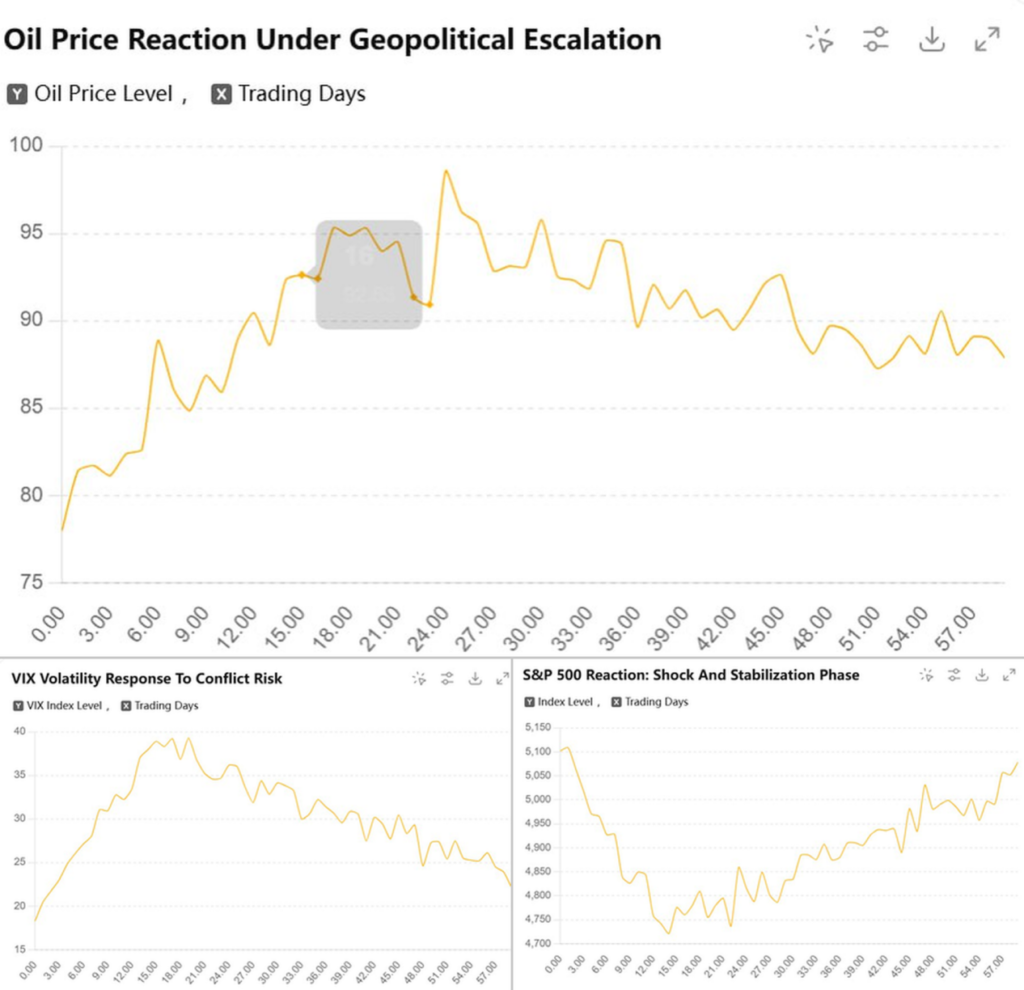
Historically, geopolitical military conflicts typically trigger three types of market reactions immediately: First, oil prices rise rapidly. Due to the instability of energy supply expectations, this is the most direct impact path. Second, VIX volatility surges. Due to increased demand for risk hedging, funds contract in the short term. Finally, overvalued assets come under pressure. Growth stocks and technology stocks are usually the first to adjust during periods of declining risk appetite.
David Whitcombe points out, “This phase is emotion-driven, and its duration typically depends on the speed of conflict escalation and market transparency.”
Phase Two: Reassessment of Inflation Expectations and Interest Rate Path
If the conflict persists, market focus will shift from “the event itself” to “whether energy prices will establish a trend of upward movement.”
David Whitcombe notes that if oil prices remain high for an extended period, this will lead to increased inflation expectations. As inflation expectations rise, the Fed’s policy path will be repriced. If interest rates rise, this will increase pressure on valuation compression. “What truly affects the medium-term trend of US stocks is not the missiles themselves, but the oil price curve.” Currently, the market has not yet formed a definite expectation of a long-term energy supply disruption.
Phase Three: Will Corporate Earnings Be Damaged?
David Whitcombe emphasizes that to determine whether a trend has reversed, it is essential to observe whether corporate earnings expectations have undergone a systemic downward revision.

Key indicators to watch include: S&P 500 EPS expectations for the next 12 months, changes in corporate profit margins, and whether capital expenditure plans have been delayed. “If the earnings curve doesn’t break down, the long-term structure of the US stock market is generally not rewritten by a single geopolitical event.”
Historical data shows that unless a war evolves into a prolonged energy crisis or a global supply chain disruption, the US stock market typically responds with periods of consolidation rather than a trend reversal.
Sector Structure Changes: Defensive and Energy Sectors Benefit in the Short Term
At the current stage, LINK FOREX predicts the following structural divergence: the energy sector will be relatively strong, defense and military stocks will attract investment, utilities and high-cash-flow companies will perform steadily, and high-valuation growth sectors will experience increased volatility.
David Whitcombe stated, “The market hasn’t left stocks; it’s internally reordering risks.”
Long-Term Trend Judgment: Three Core Variables
David Whitcombe breaks down future trends into three core variables:
1. Will oil prices form a sustained trend?
2. Will inflation accelerate again?
3. Will the liquidity environment tighten significantly?
If these three factors do not resonate, the US stock market is more likely to enter a period of “high volatility and low certainty” consolidation rather than a bear market structure.
David Whitcombe’s core judgment is that “war can change the rhythm of the market, but rarely changes the direction of the market alone. Real trends come from earnings and liquidity, not headlines.”
LINK FOREX’s current baseline scenario suggests: short-term volatility will increase. The medium-term outlook depends on the energy price path. The long-term trend remains driven by the earnings cycle. Currently, LINK FOREX’s assessment still leans towards this being a risk premium repricing event, rather than a signal of a structural trend reversal.
Media Contact
LINK FOREX LTD: stock@link-forex.com
FOREX FUSION LTD: trading@forex-fusion.com
Contact: David Whitcombe
Company Name: LINK FOREX LTD
Website: https://www.link-forex.com/
Email: stock@link-forex.com