Date: March 12, 2026
Introduction
In the rapidly evolving landscape of enterprise technology, few narratives are as compelling as the reinvention of Oracle (NYSE: ORCL). Long considered a "legacy" database provider, Oracle has spent the last three years executing a pivot that has silenced its detractors and positioned it at the epicenter of the generative AI revolution. Today’s Q3 FY2026 results represent a "watershed moment" for the Austin-based giant. With total revenue surging 22% to $17.2 billion and Oracle Cloud Infrastructure (OCI) revenue growing a staggering 84% year-over-year, the company has officially entered the ranks of the "hyperscalers."
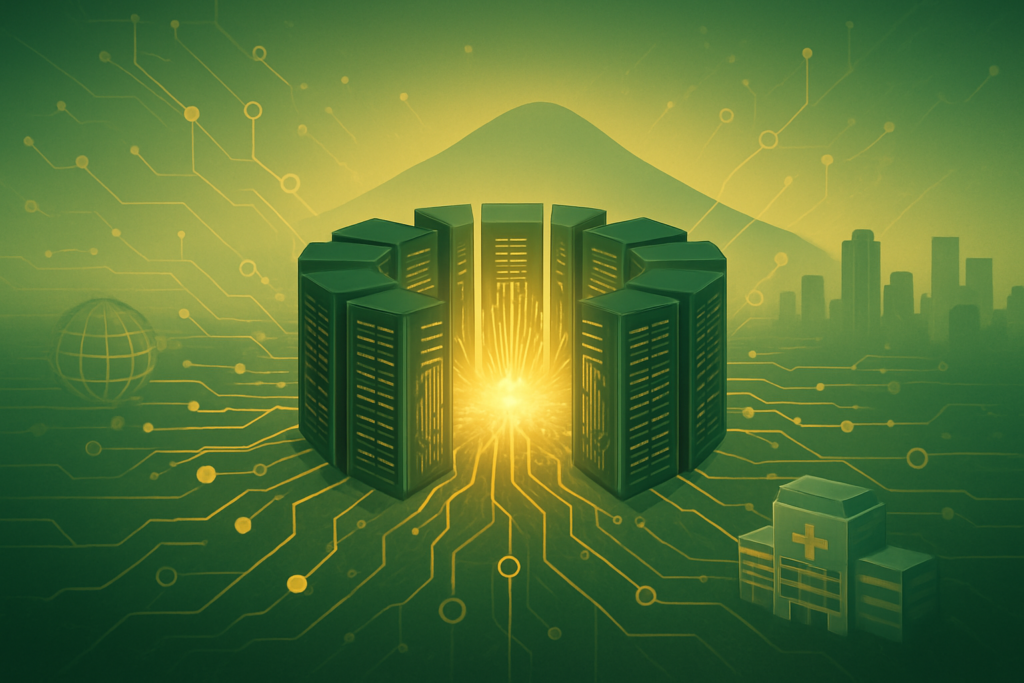
Oracle is no longer just a software vendor; it has become a primary architect of the physical and logical infrastructure required to train the world’s most advanced AI models. This research feature explores how Oracle transformed its "Gen2" cloud into a high-performance engine for AI, the strategic leadership transition that defined 2025, and the massive $553 billion backlog that provides multi-year visibility into its future.
Historical Background
Oracle’s journey began in 1977 as Software Development Laboratories (SDL), founded by Larry Ellison, Bob Miner, and Ed Oates. The company’s first major contract was a project for the CIA, code-named "Oracle." By the 1980s, Oracle had revolutionized the database market with the first commercial relational database (RDBMS), eventually dominating the sector for decades.
Throughout the 1990s and 2000s, Oracle expanded through aggressive acquisitions, including PeopleSoft, Siebel Systems, and Sun Microsystems. However, the early 2010s were marked by a slow response to the rise of cloud computing. Critics argued that Oracle was "late to the cloud," stuck in a legacy model of on-premise licensing. This narrative began to shift in 2018 with the launch of Oracle Cloud Infrastructure (OCI) Gen2, a complete architectural rebuild designed specifically for high-performance computing and enterprise-grade security.
Business Model
Oracle operates a multi-faceted business model that has successfully transitioned from one-time license sales to high-margin recurring subscriptions. Its revenue streams are now categorized into four primary segments:
- Cloud Services (SaaS/PaaS/IaaS): The fastest-growing segment, encompassing applications like ERP (Fusion, NetSuite) and the OCI infrastructure layer.
- Cloud License and On-Premise License: Higher-margin software licenses that allow customers to run Oracle databases in their own data centers or specialized environments.
- Hardware: High-end servers and storage systems, including the Exadata database machine.
- Services: Consulting and support for large-scale enterprise deployments.
The core of Oracle's modern strategy is the "Cloud within a Cloud" approach, where Oracle places its database hardware directly inside rival data centers (AWS, Azure, Google Cloud) to capture workloads that were previously unreachable.
Stock Performance Overview
Over the past decade, Oracle’s stock has evolved from a steady dividend-payer to a high-growth momentum play.
- 10-Year Horizon: A story of two halves. The 2016-2021 period saw steady but unspectacular growth as the market discounted Oracle’s cloud potential.
- 5-Year Horizon: The stock began outperforming the S&P 500 significantly starting in 2023, as the AI-training capabilities of OCI Gen2 became widely recognized.
- 1-Year Horizon (2025-2026): Driven by the "Stargate" AI data center partnership and massive growth in Remaining Performance Obligations (RPO), the stock has reached all-time highs, with a 1-year return exceeding 65% as of March 2026.
Financial Performance
The Q3 FY2026 results released today highlight a massive scale-up in Oracle’s financial engine.
- Total Revenue: $17.2 billion, a 22% increase year-over-year.
- OCI Revenue: $4.9 billion, growing at 84%. This is the sixth consecutive quarter of accelerating infrastructure growth.
- Non-GAAP EPS: $1.79, beating analyst estimates by $0.12.
- Total RPO (Backlog): A record $553 billion, up 325% over two years, fueled by massive AI training contracts with OpenAI and sovereign government cloud deals.
- Valuation: While the P/E ratio has expanded significantly from its historical range of 15x-18x to over 35x today, bulls argue the $553B backlog justifies a "hyperscaler premium."
Leadership and Management
In September 2025, Oracle underwent its most significant leadership shift in a decade. Long-time CEO Safra Catz, who provided the financial discipline and centralization that stabilized Oracle during its cloud transition, stepped down to become Executive Vice Chair.
The company returned to a co-CEO model, appointing Clay Magouyrk (former OCI head) and Mike Sicilia (former Applications head). This move signaled a shift from "financial optimization" to "product-led growth." Larry Ellison remains the dominant figure as Chairman and CTO, personally spearheading the design of the "Stargate" AI cluster and the company’s pivot to "Data Center as a Product."
Products, Services, and Innovations
Oracle’s competitive edge lies in its "Gen2" cloud architecture and its focus on automation.
- OCI Gen2: Unlike first-generation clouds, OCI Gen2 uses a non-blocking network and off-box virtualization, making it significantly faster and cheaper for massive AI training workloads.
- Autonomous Database: A self-driving, self-repairing database that utilizes machine learning to automate tuning and security, drastically reducing operational costs for enterprises.
- HeatWave GenAI: An integrated service that allows developers to run generative AI queries directly against their data without moving it, a major advantage for security-conscious firms.
- Cerner (Oracle Health): The integration of Cerner has moved toward a native OCI-based EHR (Electronic Health Record) system featuring an "AI Clinical Agent" to reduce physician burnout.
Competitive Landscape
Oracle competes in the "Hyperscaler Big Four" alongside Amazon Web Services (AWS), Microsoft Azure, and Google Cloud Platform (GCP).
- Strengths: Oracle wins on price-performance for high-scale database workloads and AI training. Its "multi-cloud" openness (putting Oracle hardware in Azure/AWS) has turned competitors into partners.
- Weaknesses: Oracle still lags in developer ecosystem size and the sheer breadth of generic cloud services (e.g., serverless, IoT) compared to AWS.
- Market Share: While Oracle’s overall cloud market share remains fourth, it has captured an estimated 35% of the new AI training workload market in 2025.
Industry and Market Trends
Three macro trends are currently driving Oracle's growth:
- The Industrialization of AI: Enterprises are moving from "experimental AI" to "industrial AI," requiring massive, dedicated clusters that Oracle specializes in building.
- Sovereign Cloud: Governments increasingly demand that their data reside within their borders on isolated infrastructure. Oracle’s "Dedicated Region" and "Alloy" products allow nations to run their own Oracle Cloud.
- Decentralized Data: As data becomes too large to move, the cloud is moving to the data. Oracle’s strategy of placing data centers inside corporate facilities and partner clouds aligns with this shift.
Risks and Challenges
Despite the recent success, Oracle faces significant headwinds:
- Debt Load: To fund its massive expansion, Oracle’s non-current debt has climbed above $120 billion. High interest rates make this debt more expensive to service.
- Capex Intensity: Oracle’s planned FY2026 capital expenditure of $35B–$50B is unprecedented for the company and has led to negative free cash flow in several recent quarters.
- Cerner Execution: While the VA (Veterans Affairs) contract is slated to restart in April 2026, any further technical delays or political pushback could hurt Oracle’s credibility in the massive healthcare sector.
- Reliance on Ellison: At age 81, Larry Ellison remains the visionary heart of the company. Any sudden leadership change would create significant uncertainty.
Opportunities and Catalysts
- Stargate AI Cluster: The completion of the world’s largest AI supercomputing cluster in partnership with OpenAI and Microsoft remains the primary near-term catalyst.
- Healthcare AI: If the "AI Clinical Agent" achieves broad adoption in 2026, Oracle Health could transform from a low-margin legacy acquisition into a high-margin AI software business.
- Sovereign Growth: With over 20 nations currently in negotiations for "Sovereign Cloud" regions, Oracle has a unique opportunity to become the "National Security Cloud" of choice for the G20.
Investor Sentiment and Analyst Coverage
Wall Street sentiment has shifted from skeptical to overwhelmingly bullish over the last 18 months. Major institutions like BlackRock and Vanguard have increased their positions, and hedge funds have treated ORCL as a "proxy play" for AI infrastructure alongside Nvidia.
- Analyst Ratings: Currently, 72% of analysts covering Oracle have a "Buy" or "Outperform" rating.
- Target Prices: Consensus price targets hover around $360, with "blue-sky" scenarios reaching as high as $420 following the Q3 report.
- Retail Chatter: Social sentiment reflects a shift in perception—retail investors who once viewed Oracle as "boring" now track its data center expansion and GPU cluster sizes with the same fervor as they do Nvidia's.
Regulatory, Policy, and Geopolitical Factors
Oracle operates in a complex regulatory environment:
- Data Sovereignty: Laws like the EU Data Act and China’s data security regulations favor Oracle’s "Dedicated Region" strategy, which allows for local data residency.
- Antitrust: While most antitrust focus remains on Google and Amazon, Oracle’s dominance in the database market remains under periodic scrutiny from the FTC and EU regulators.
- Government Contracts: The $10 billion JWCC (Joint Warfighting Cloud Capability) contract with the DoD remains a stable revenue pillar, though it subjects Oracle to intense federal oversight and political shifts.
Conclusion
Oracle’s Q3 FY2026 results confirm that the company has successfully shed its legacy skin to emerge as a powerhouse of the AI era. By doubling down on infrastructure that others were slow to build and embracing a multi-cloud strategy that its rivals initially resisted, Larry Ellison has orchestrated perhaps the greatest "Act II" in corporate history.
However, for investors, the path forward is not without peril. The transition has required an enormous amount of debt and capital expenditure that has strained free cash flow. The "hyperscaler" valuation Oracle now enjoys leaves little room for execution errors, particularly in the delicate integration of Cerner and the high-stakes build-out of its AI clusters.
Investors should closely monitor the April 2026 restart of the VA EHR contract and the company’s ability to manage its debt-to-EBITDA ratio as the massive $553B backlog begins to convert into recognized revenue. For now, Oracle stands as a testament to the idea that in technology, relevance is not given—it is built, one data center at a time.
This content is intended for informational purposes only and is not financial advice.