

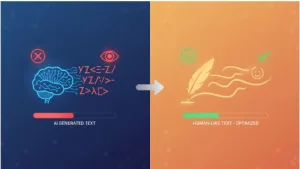
Most AI-assisted writing doesn’t fail because it is inaccurate. It fails because it feels unexamined. Writers sense it in a pause before sending, in the instinct to reread one more time. The draft works, yet something feels exposed. Dechecker exists for that moment. It helps writers regain control over how their text will be judged, not by machines, but by people.
Why “Good Enough” No Longer Feels Safe
When Polished Text Raises Questions
AI has made fluent writing easy. That convenience has shifted expectations. Smooth sentences no longer guarantee trust. In many cases, they trigger doubt instead. Writers notice reviewers slowing down, rereading, asking for clarification even when nothing is technically wrong. That friction often begins before feedback is ever given.
This is where an AI Checker enters the workflow, not as a last defense, but as an early signal.
The Cost of Subtle Uncertainty
Uncertainty wastes time quietly. A manager hesitates to approve. An editor requests “minor tweaks” without clear direction. A student worries after submission. None of these moments are dramatic, but they accumulate. Writers start anticipating resistance instead of focusing on ideas.
Dechecker reduces that friction by exposing potential issues before anyone else sees them.
Confidence Is a Practical Advantage
Confidence isn’t a feeling. It’s operational. When writers trust their drafts, they submit faster and revise less defensively. An AI Checker provides the reassurance that a piece won’t collapse under routine scrutiny.
How Writers Actually Use Dechecker
Checking Selectively, Not Obsessively
Writers don’t paste entire documents every time. They focus on sections that feel fragile: introductions, transitions, or paragraphs generated quickly. Dechecker fits into these short decision points without slowing the process.
That restraint keeps the tool useful instead of intrusive.
Reading Signals, Not Scores
Experienced users don’t chase perfect results. They scan for patterns. If several sentences trigger attention in the same way, that’s a cue to revise. If not, they move on. The AI Checker becomes a reference, not a judge.
This approach preserves voice while improving reliability.
Letting the Draft Lead
The draft always comes first. Dechecker responds to writing rather than shaping it prematurely. Writers stay in charge of tone, argument, and structure, using the tool to test assumptions rather than replace them.
Where AI-Written Text Usually Breaks
Predictable Rhythm
AI often settles into a steady cadence. Sentences are balanced. Paragraphs feel evenly weighted. Human writing rarely behaves that way. When Dechecker flags sections, writers often notice this rhythmic uniformity and break it deliberately.
A shorter sentence here. A sharper turn there.
Over-Clarifying Obvious Points
Another common issue is excessive explanation. AI explains what humans would imply. Dechecker surfaces these moments, prompting writers to trim or compress. The result feels more confident and less instructional.
Less explanation often signals more authority.
Safe Language That Avoids Commitment
AI avoids risk. It hedges. It qualifies. That caution shows up in professional writing as vagueness. Writers use Dechecker to locate these soft spots and replace them with clearer intent.
Turning Assisted Drafts Into Defensible Writing
Revising With Purpose
Once weak areas are identified, revisions become targeted. Writers don’t rewrite everything. They intervene where signals cluster. This keeps the original structure intact while improving credibility.
Efficiency stays intact.
When Manual Edits Aren’t Enough
Some passages resist small changes. They sound artificial no matter how much they’re tweaked. In these cases, tools like the AI Humanizer help reshape phrasing without discarding the underlying idea.
Used sparingly, this approach saves time without flattening voice.
Knowing When to Leave Text Alone
Not every flagged line deserves attention. Over-editing introduces new problems. Dechecker helps writers distinguish between genuine risk and harmless noise, making it easier to stop revising at the right moment.
Academic Writing Under Pressure
Students Write With Consequences in Mind
Most students use AI cautiously. The concern isn’t learning less, but being misunderstood. They want their work judged on ideas, not assumptions about authorship. An AI Checker provides a way to assess that risk privately.
This check often leads to small revisions rather than wholesale changes.
Skill Development Through Feedback Loops
When students see which patterns trigger concern, they adjust future drafts. Over time, they internalize academic tone and structure. The checker becomes less necessary as judgment improves.
That progression supports learning instead of replacing it.
A Quiet Role as an AI Homework Helper
Dechecker functions best when it supports revision, not generation. Students draft, reflect, adjust, and submit. The tool stays in the background, reinforcing good habits without becoming a shortcut.
Professional Writing Where Approval Matters
The Real Delay Happens After Writing
In professional environments, the bottleneck often appears after a draft is finished. Review cycles stretch. Feedback becomes vague. Writers revise defensively. Much of this friction comes from subtle distrust rather than explicit errors.
Running content through an AI Checker before circulation reduces that hesitation.
Fewer Revisions, Clearer Feedback
When obvious AI patterns are addressed early, reviewers focus on substance instead of tone. Comments become more actionable. Writers spend less time decoding feedback and more time improving content.
The entire process accelerates.
Maintaining Consistency Across Teams
Teams using AI at scale face another challenge: drift. Over time, tone shifts. Language patterns repeat. Dechecker helps teams monitor that drift without enforcing rigid rules, keeping output consistent while allowing individual style.
Marketing and Content Creation at Scale
Audience Trust Is Fragile
Readers may not consciously identify AI-written text, but they react to it. Engagement drops. Copy feels generic. Dechecker helps creators spot where content loses specificity before it reaches an audience.
That adjustment protects credibility.
Speed Without Sacrificing Voice
Marketing teams rely on speed. Dechecker supports that need by enabling quick checks rather than slow rewrites. Writers keep momentum while reducing the risk of publishing content that feels manufactured.
Writing That Invites Response
Content that feels human invites replies, comments, and shares. By smoothing out artificial patterns, an AI Checker indirectly improves performance metrics that matter.
Building Judgment Over Time
From Tool to Reference
At first, writers consult Dechecker frequently. Over time, they begin predicting outcomes accurately. The tool confirms intuition rather than guiding it. That shift marks real skill development.
Confidence Changes Behavior
Confident writers submit sooner, revise less defensively, and accept feedback without panic. Dechecker contributes to that confidence by making judgment visible rather than mysterious.
Writing That Feels Settled
A settled draft doesn’t invite endless tweaking. It feels complete. Dechecker helps writers reach that point more consistently by identifying unresolved tension before submission.
When AI Stops Being the Focus
The Goal Is Invisibility
The best outcome isn’t passing a test. It’s writing that doesn’t raise questions. When AI assistance becomes undetectable in practice, it stops being part of the conversation.
That invisibility is deliberate.
A Practical Tool for a Changed Landscape
AI isn’t leaving writing workflows. Neither is skepticism. Dechecker acknowledges both realities, helping writers navigate between efficiency and credibility without choosing one over the other.
Writing That Moves Forward
Ultimately, Dechecker doesn’t replace judgment. It sharpens it. Writers still decide what matters and what doesn’t. The AI Checker simply ensures those decisions hold up when the work finally leaves the draft stage and enters real-world evaluation.